
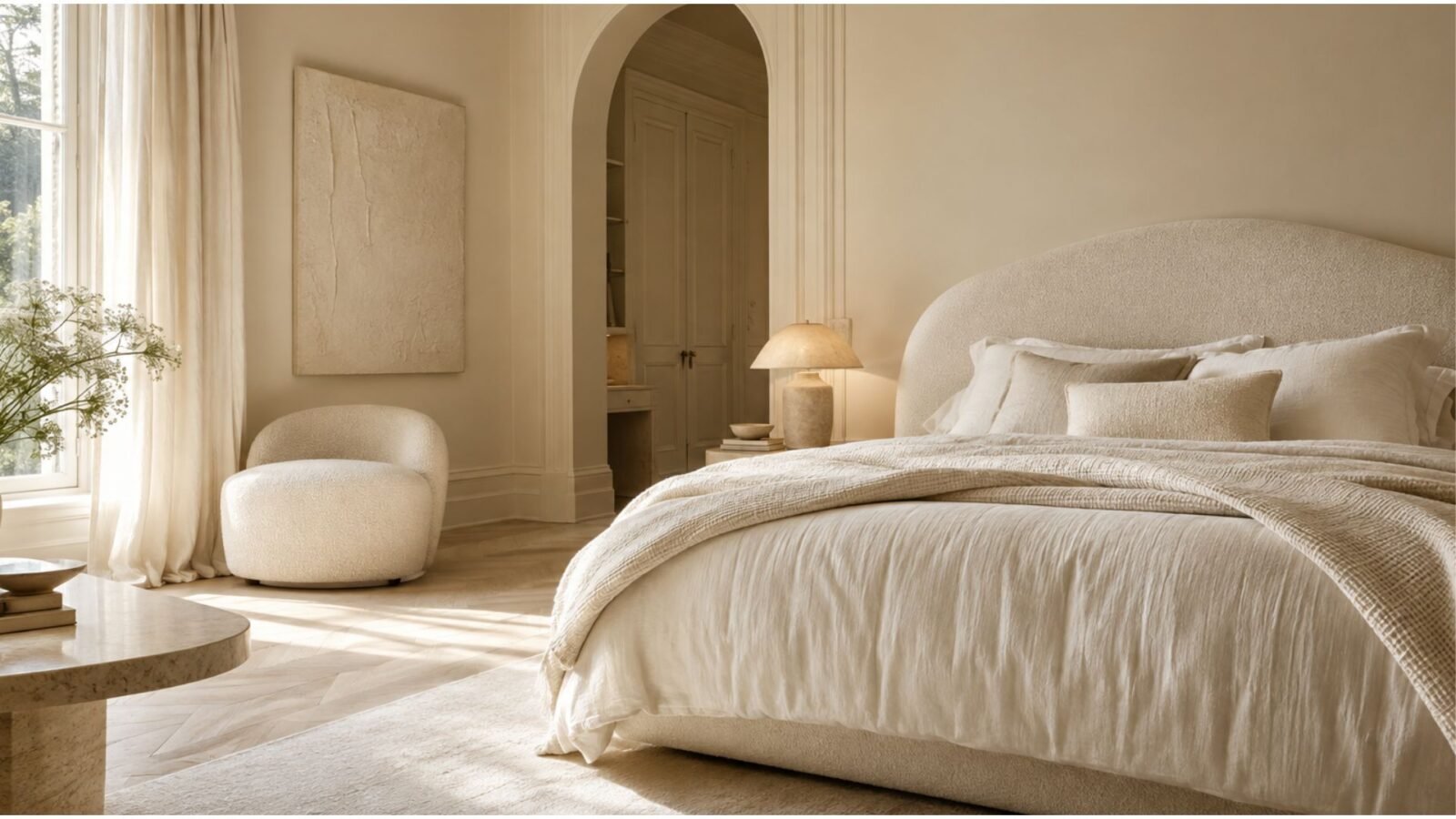

Discover beautiful ways to decorate with cream, from soft contemporary interiors and charming cottage bedrooms to sophisticated color combinations that make a space feel personal.
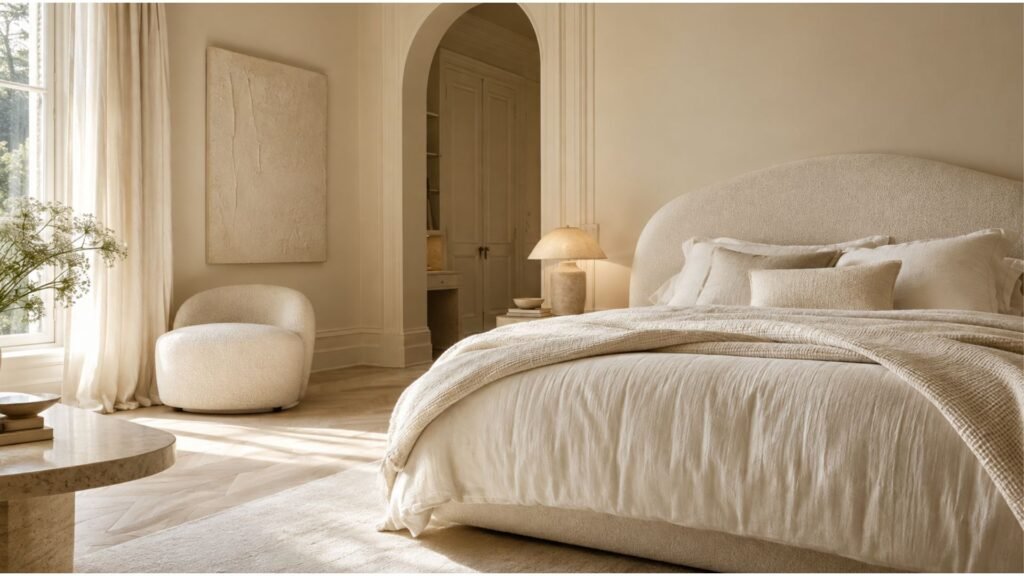
Cream bedroom ideas offer a beautiful alternative to stark white interiors. This soft, warm neutral creates a light and welcoming foundation while allowing furniture, architectural details, and carefully chosen colors to stand out.
Unlike beige, which often has a more noticeable brown or tan influence, cream typically sits closer to warm white. Its subtle yellow, ivory, or peach undertones can give a bedroom a softer appearance without requiring darker wall colors.
A cream bedroom can feel airy and minimalist, colorful and playful, or elegant and traditional. The difference comes from the furniture, materials, and color combinations you choose.
These 11 cream bedroom designs explore genuinely different decorating styles, with practical ideas you can adapt to your own home.
What makes cream a beautiful bedroom color?
Cream works especially well in bedrooms because it provides a light foundation without the sharper contrast associated with some bright whites.
It can highlight architectural details, complement natural materials, and connect furniture pieces from different periods.
Cream also works with an unusually wide range of colors. Powder blue creates a gentle coastal atmosphere, muted sage introduces a garden-inspired character, and deep burgundy produces a much more dramatic traditional interior.
However, the undertone matters.
A buttery cream can look beautiful beside warm timber but noticeably yellow next to certain cool gray finishes. A muted ivory cream may work better with stone, dark metal, or contemporary furniture.
The most successful cream bedrooms consider these relationships before selecting the final paint, bedding, and furniture.
11 cream bedroom ideas for different decorating styles
1. Highlight traditional architecture with cream walls and white trim
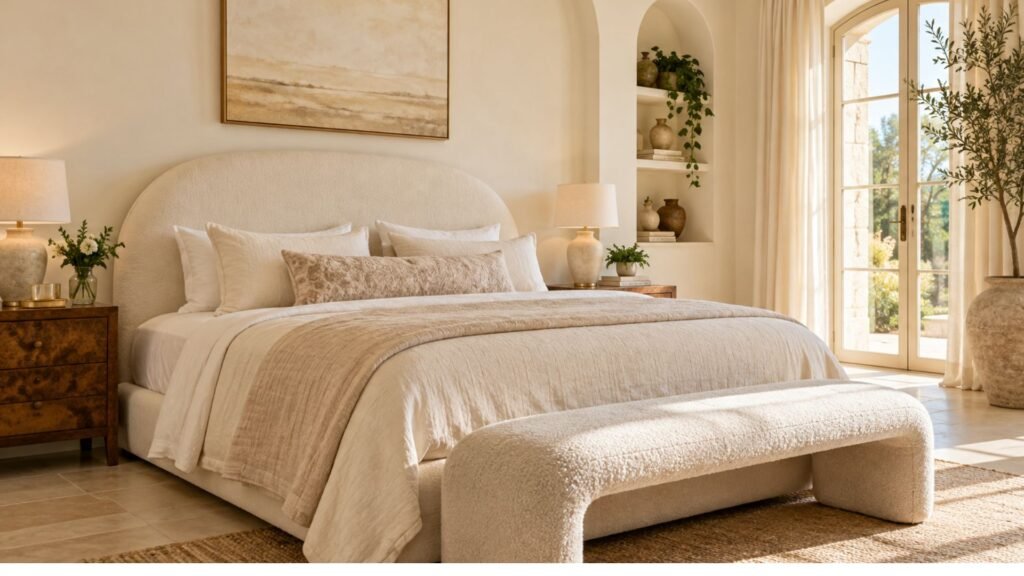
Cream walls paired with white architectural detailing create a classic bedroom that feels elegant without being overly formal.
This combination works particularly well in older homes with decorative molding, substantial skirting boards, and tall windows.
Try soft cream walls with a clearly contrasting warm-white trim, a dark wooden bed, and a small antique chest. The white detailing defines the architecture while the furniture gives the pale palette some weight.
A simple cotton quilt, tailored curtains, and a small vintage lamp can complete the look.
Keep the decorative accessories understated, allowing the architecture and furniture to establish the room’s personality.
Recreate the look: Choose a cream paint with a subtle warm undertone, then compare it against your existing white trim. Introduce one substantial dark wood furnishing and keep the bedding relatively simple.
2. Create a contemporary cream bedroom with sculptural shapes
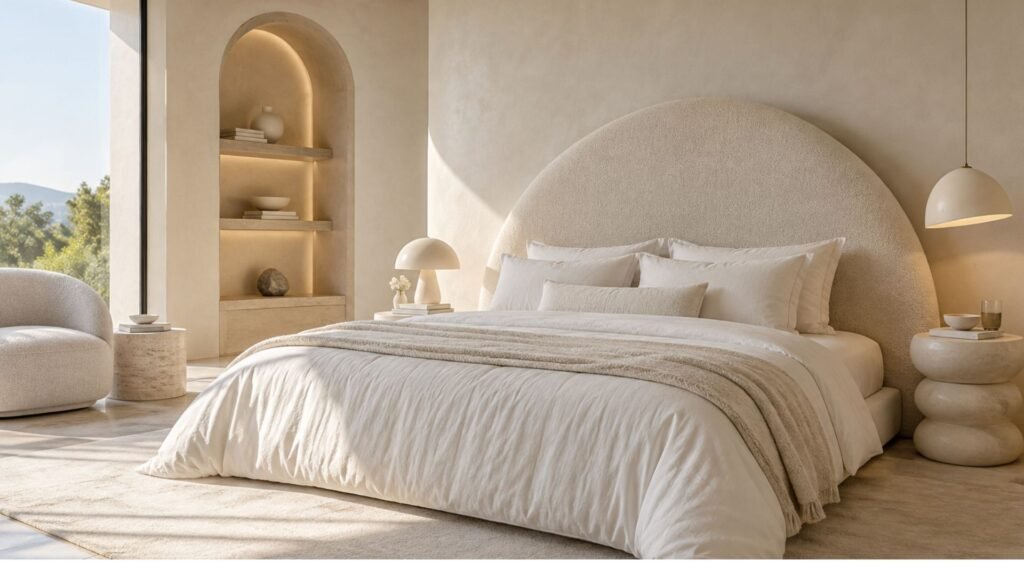
A modern cream bedroom does not need bold colors to feel distinctive.
Instead, use furniture shapes and architectural features to provide visual interest.
An oversized circular upholstered headboard, curved wall detailing, and an unusual bedside table can make a cream bedroom feel contemporary without introducing unnecessary decoration.
Choose a combination of creamy white walls, pale stone flooring, and soft ivory upholstery. A single dark bronze or brushed-metal light fixture can create a subtle focal point.
The key is allowing the proportions and forms to stand out.
Avoid adding multiple decorative objects that compete with the statement furniture.
Recreate the look: Choose one sculptural element, such as a rounded headboard or distinctive pendant. Keep the remaining furniture streamlined and combine smooth, matte, and softly textured surfaces.
3. Bring cheerful character with cream and butter yellow
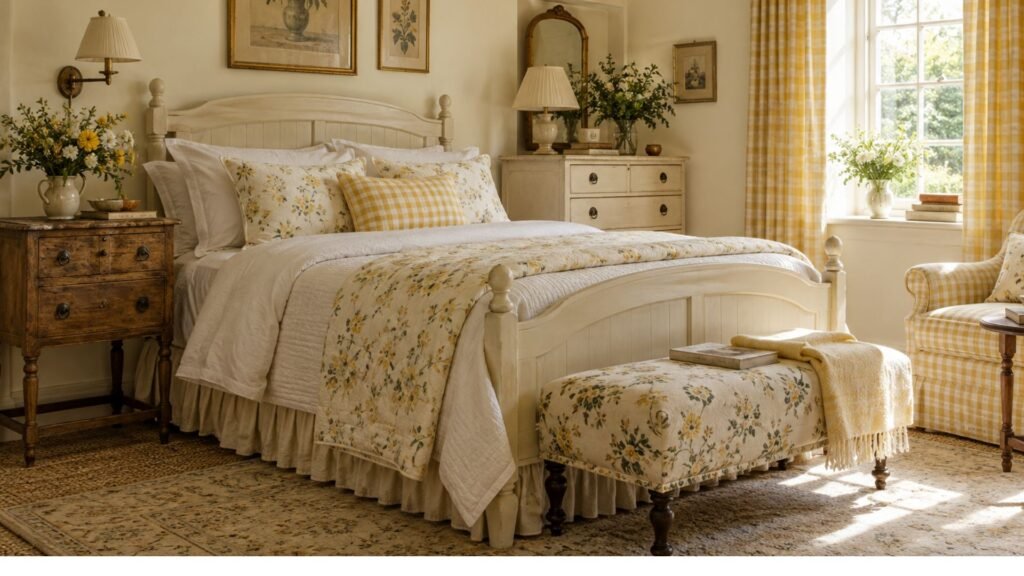
Cream and butter yellow create a charming bedroom combination that feels cheerful without relying on bright, saturated colors.
This pairing is particularly suited to cottage-style bedrooms, where painted furniture, gentle patterns, and vintage textiles are part of the design.
Imagine creamy walls, a simple painted wooden bed, soft yellow gingham curtains, and a vintage floral quilt.
A small antique dresser and traditional wall-mounted lamp add character.
Use the yellow through selected fabrics rather than covering every surface. Cream should remain the foundation, allowing the patterned details to feel lively but controlled.
Recreate the look: Start with warm cream walls and introduce butter yellow through curtains, bedding, or a small painted furniture piece. Combine checks and florals carefully, keeping one pattern noticeably smaller than the other.
4. Pair cream with powder blue for a relaxed coastal bedroom
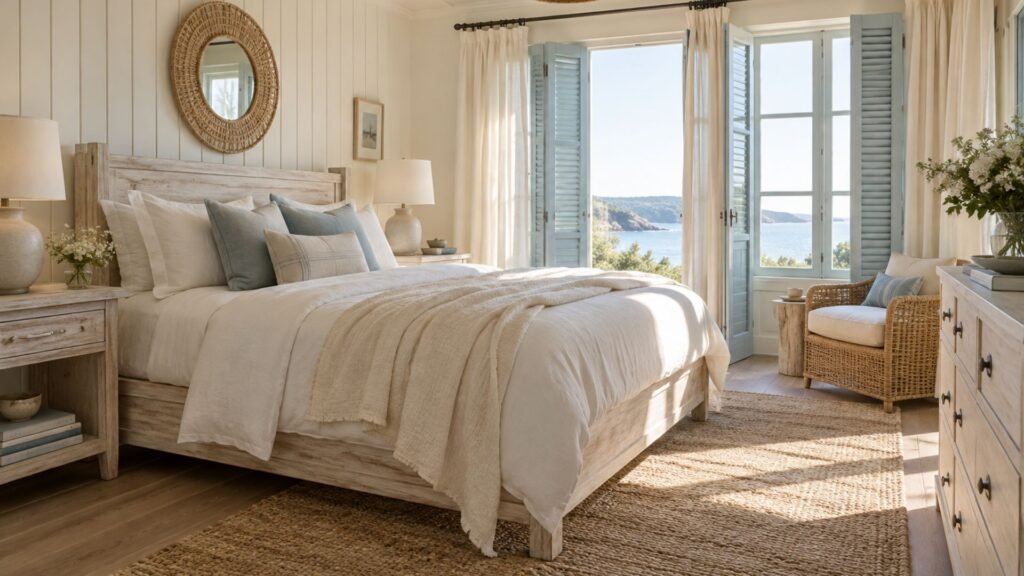
Cream and powder blue create a softer coastal combination than the more familiar navy-and-white palette.
The result can feel airy and relaxed without relying on obvious nautical accessories.
Consider cream shiplap walls, pale blue painted shutters, a whitewashed wooden bed, and natural linen bedding.
A simple wooden chest and understated woven rug can reinforce the coastal character.
The architecture should do much of the work. Wide windows, relaxed curtains, and lightly weathered furniture often communicate the style more effectively than decorative seashells or themed artwork.
Recreate the look: Use cream as the dominant wall color, introduce powder blue through shutters or one significant furnishing, and add light natural wood. Keep accessories practical and restrained.
5. Combine cream and sage green for a garden-inspired retreat
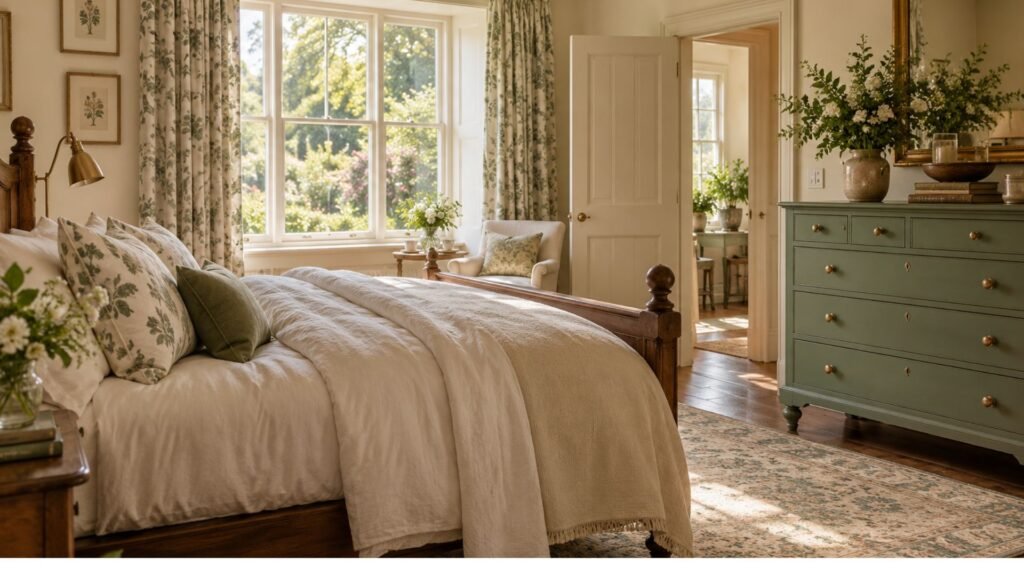
Cream and sage green create a gentle color combination that works especially well in bedrooms with garden views or traditional architectural details.
Instead of using green bedding throughout the room, consider a sage-painted dresser, window shutters, or a distinctive vintage wardrobe.
Cream walls allow the painted furniture to stand out without making the room look overly colorful.
Introduce a small-scale botanical curtain fabric or one meaningful piece of floral artwork to strengthen the garden-inspired character.
Natural wood and aged brass can add another layer of warmth.
Recreate the look: Choose a soft sage with gray undertones, keep the walls cream, and introduce green through one substantial furniture piece. Use botanical patterns sparingly so the room feels collected rather than themed.
For more ideas about creating a warm and welcoming atmosphere, explore our cozy bedroom ideas.
6. Make cream feel dramatic with deep burgundy accents

Cream can also work beautifully in bedrooms with darker, more dramatic furnishings.
Deep burgundy, oxblood, and wine-colored accents create striking contrast against cream walls without losing the lightness of the overall room.
This approach suits heritage interiors, particularly bedrooms with decorative cornices, antique furniture, and generous ceiling heights.
Picture cream walls, burgundy velvet curtains, a dark carved bed, and an antique Persian-style rug.
Keep the bedding mostly ivory to balance the deeper colors.
Dark timber furniture and aged brass lighting can reinforce the traditional character without requiring numerous decorative accessories.
Recreate the look: Choose warm cream walls, introduce deep burgundy through one large textile, and combine it with a dark wooden bed. Keep the remaining bedding light and avoid introducing too many additional colors.
7. Introduce architectural texture with cream plaster and travertine
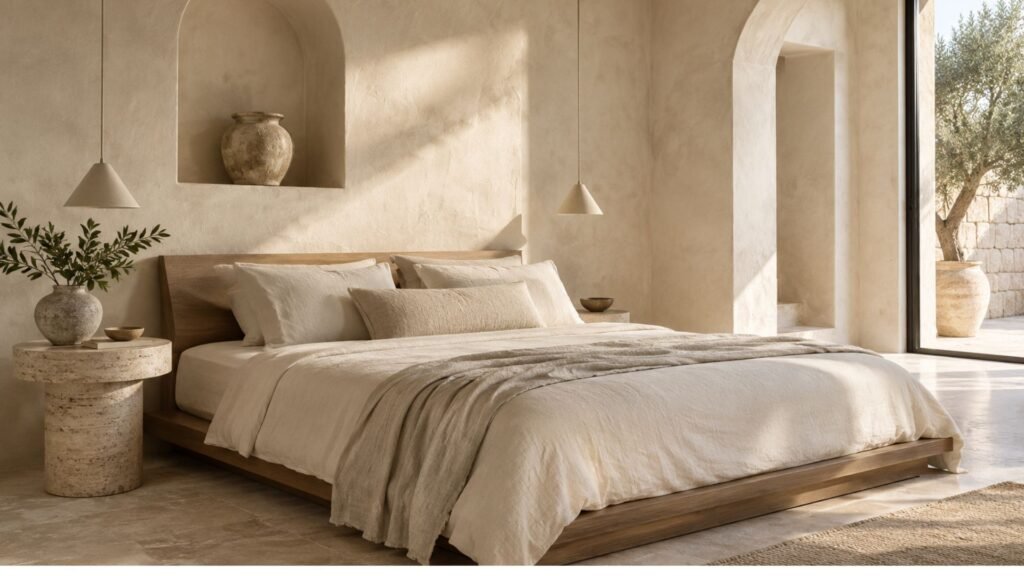
Cream is especially attractive when expressed through textured materials rather than flat paint alone.
In a Mediterranean-inspired bedroom, softly textured plaster walls, pale stone, and natural wood can establish a distinctive architectural atmosphere.
A simple low-profile bed allows the wall finish and surrounding materials to become the focal points.
Travertine or travertine-look bedside tables introduce subtle surface variation, while linen curtains help soften the harder materials.
Keep the palette predominantly cream, ivory, and pale stone.
Instead of filling the room with decorative objects, use architectural details such as an inset niche, curved doorway, or built-in ledge.
Recreate the look: Choose a creamy mineral-style finish suitable for interior walls, a simple timber bed, and one stone or stone-look furnishing. Avoid overly elaborate bedding that distracts from the architectural textures.
8. Give a cream bedroom a fresh twist with muted lavender
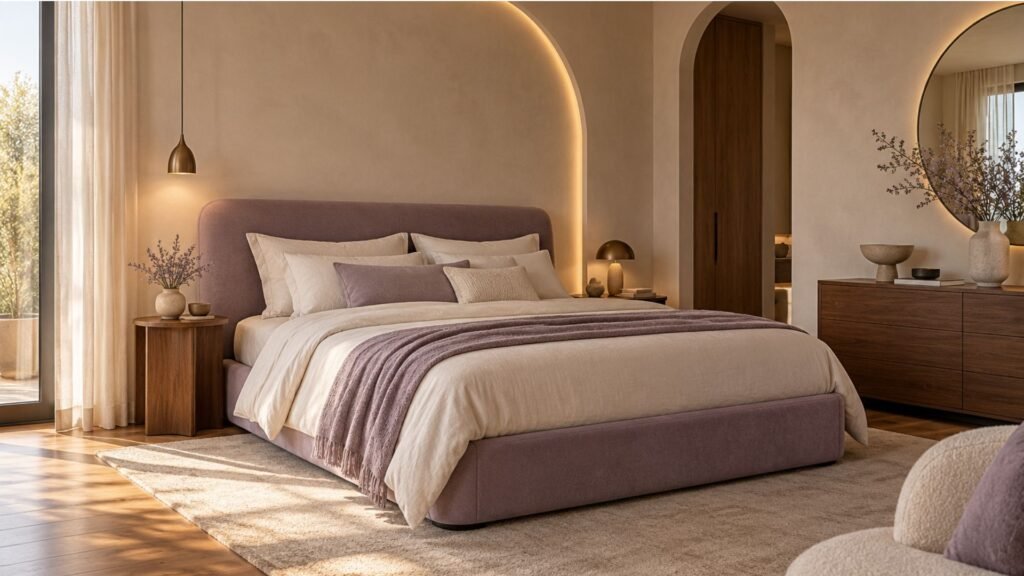
Cream and muted lavender create a distinctive bedroom palette that feels gentle without becoming overly sweet.
This combination works particularly well in contemporary rooms with simple furniture and subtle architectural detailing.
Keep the walls a warm cream and introduce a dusty lavender upholstered bed or a large lavender textile.
Walnut or smoked-oak furniture adds warmth and prevents the palette from feeling overly delicate.
A sculptural lamp, plain curtains, and simple artwork can complete the room.
Choose lavender with a slightly gray undertone rather than a highly saturated purple, particularly if you want a more subdued design.
Recreate the look: Use cream walls and introduce lavender through one main furnishing. Combine it with medium-toned wood and minimal accessories, keeping the room’s shapes clean and contemporary.
9. Create a Japandi-inspired bedroom with cream and pale oak
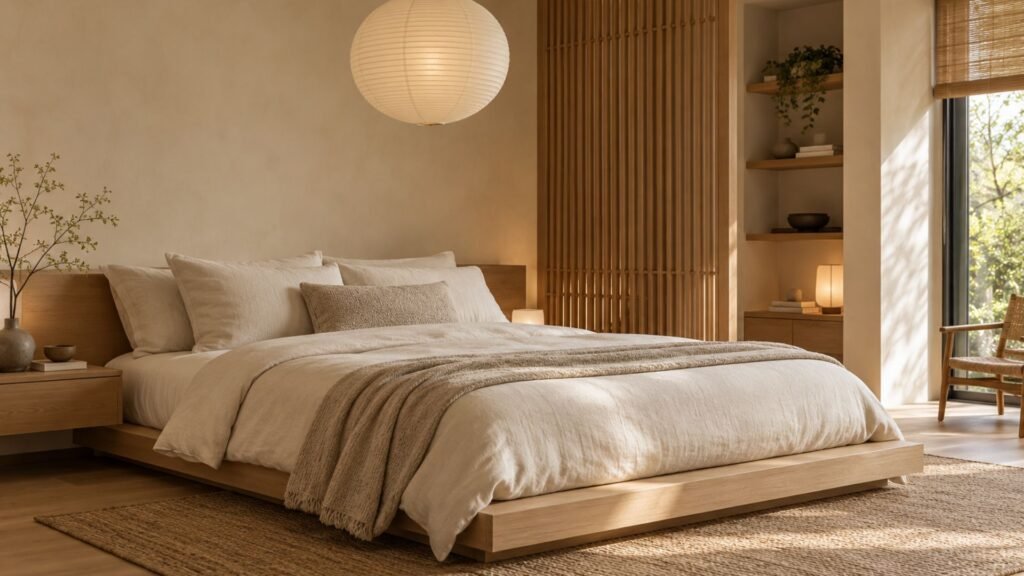
Cream provides an excellent foundation for a Japandi-inspired bedroom because it complements natural materials and restrained furniture silhouettes.
A low pale-oak platform bed, simple paper pendant, and cream walls can establish a quiet, functional space without feeling empty.
Introduce texture through a woven floor mat, linen bedding, or a carefully selected wooden screen.
The furniture should feel purposeful.
Keep circulation clear and avoid purchasing decorative accessories simply to fill empty corners.
A single piece of handmade pottery or a small framed artwork may provide enough detail.
Recreate the look: Choose pale oak, warm cream walls, and simple bedding with very little pattern. Add a paper or fabric light fixture and prioritize practical storage over exposed decorative shelving.
10. Use cream curtains and a fabric canopy for a romantic bedroom
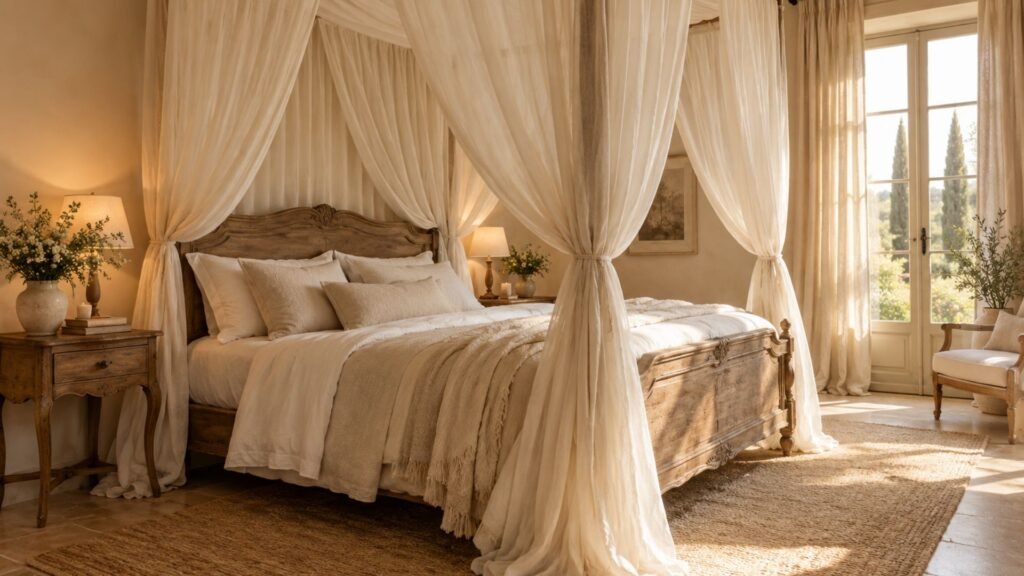
A bedroom can feel romantic without pink walls, elaborate wallpaper, or ornate furniture.
A lightweight cream fabric canopy or a carefully designed draped bed treatment can create a distinctive focal point while keeping the palette understated.
Choose breathable-looking natural fabrics and relaxed folds rather than heavy, formal drapery.
Pair the canopy with a simple vintage wooden bed, warm cream walls, and gently textured bedding.
The surrounding furniture should remain modest so the fabric treatment becomes the room’s main design feature.
Recreate the look: Use a canopy bed frame or a properly installed ceiling-mounted system suitable for the intended load. Keep fabric securely away from heaters, lamps, and moving ceiling fans. Choose simple furniture to balance the softness of the drapery.
11. Design a welcoming cream guest bedroom with twin beds

A cream palette works particularly well in a guest bedroom because it can coordinate different furniture pieces without requiring a fully matching set.
Instead of styling another large primary bedroom, consider a compact room with two wooden twin beds, coordinated ivory bedding, and a shared nightstand.
Small-scale patterned quilts add personality while keeping the overall room light.
Include practical details such as accessible charging points, a reading light for each bed, luggage space, and somewhere to hang clothing.
These everyday conveniences matter more to guests than elaborate decorative styling.
Recreate the look: Use cream walls to unify the furniture, keep bedding coordinated but not necessarily identical, and prioritize space around the beds. Avoid oversized furniture that makes the room difficult to navigate.
For practical layout guidance, see our small bedroom ideas.
How to choose the right cream paint for your bedroom
Cream is often described as a warm white, but not every cream paint looks the same.
Some shades contain noticeable yellow undertones, while others lean toward ivory, peach, or muted beige.
These differences become more apparent when the paint is placed beside existing flooring, furniture, or white trim.
Before choosing a cream bedroom paint, evaluate three things: its undertone, its lightness, and its relationship with the other materials in the room.
Check whether the cream looks yellow
A common frustration is choosing a cream paint that appears softly neutral in a showroom but distinctly yellow once applied.
This can happen when the paint has a pronounced yellow undertone or when surrounding materials and lighting emphasize it.
Compare your cream sample against a relatively neutral white reference.
Then examine it alongside your actual floor and furniture.
If the cream appears more yellow than expected, try a more muted ivory or a shade with less visible warmth.
Compare cream with existing white trim
Cream walls and white trim can work beautifully together, but the distinction should look deliberate.
Very bright, cool white trim can make a warm cream wall appear more yellow by comparison.
A softer white may provide a more coordinated result.
You can also use the same cream on walls and trim, changing only the paint sheen to create a subtle difference.
Benjamin Moore’s guide to white and off-white paints explains why comparing undertones and evaluating colors beside existing furnishings is important.
Consider the room’s natural light
Cream can look different in north-facing and south-facing rooms.
Cool daylight may make certain cream colors appear more subdued, while strong warm sunlight can emphasize yellow or peach undertones.
Artificial lighting matters too.
Before purchasing paint, test samples in several locations and evaluate them during the day and after sunset.
Sherwin-Williams’ explanation of paint undertones provides additional guidance about how surrounding colors and lighting influence paint appearance.
The Wallsaide Cream Contrast Check
One useful way to evaluate a cream bedroom is to examine the relationship between the walls, bedding, and trim.
These are often the largest light-colored surfaces in the room.
Use this simple decorating exercise before making expensive purchases.
First, compare your cream wall sample with a clean white sheet.
Does the cream look softly warm, strongly yellow, pinkish, or nearly identical to the white?
This helps reveal an undertone that may be difficult to notice when viewing the paint alone.
Second, compare your cream walls with your intended bedding.
If both are almost identical, decide whether you want a deliberately tonal room or stronger contrast.
A deeper headboard, patterned coverlet, or darker furniture may be needed to make the bed stand out.
Third, examine the trim and flooring together.
A cream that works beside white bedding may still look awkward against cool gray flooring or existing trim.
Look at the materials as a group rather than individually.
Finally, evaluate the room in evening light.
Turn on the lamps you actually use. Check whether the cream becomes too golden, too muted, or comfortably balanced.
The objective is not to find a universally perfect cream. It is to find a cream that works with your specific materials and lighting.
Cream vs. white vs. ivory vs. beige: What’s the difference?
Although these colors overlap, they can create noticeably different interiors.
| Color | General appearance | Best decorating use |
|---|---|---|
| Cream | Warm off-white, often with yellow or buttery undertones | Soft, light bedroom walls and furnishings |
| White | Can range from crisp and neutral to warm or cool | Bright backdrops, trim, and tonal contrast |
| Ivory | Soft off-white, often with subtle yellow, beige, or peach warmth | Elegant bedding, upholstery, and traditional interiors |
| Beige | Usually more brown- or tan-influenced than cream | Grounded walls, furniture, and earthy schemes |
These descriptions are useful guidelines rather than strict definitions. Paint manufacturers may name visually similar colors differently.
The actual undertone and lightness matter more than the name printed on the sample.
If you prefer a deeper, earthier neutral, explore our beige bedroom ideas article.
For a broader comparison of pale and dark neutral palettes, see neutral bedroom ideas.
Beautiful cream bedroom color combinations
Cream is versatile, but the color you pair with it determines the bedroom’s personality.
Here are six combinations worth considering.
- Cream and white: Light and classic, particularly with architectural trim and traditional furniture.
- Cream and sage green: Gentle and garden-inspired, especially with painted wooden furniture and botanical textiles.
- Cream and powder blue: Airy and coastal, with pale wood and relaxed linen.
- Cream and burgundy: Dramatic and traditional, with dark timber and patterned rugs.
- Cream and butter yellow: Cheerful and cottage-inspired, particularly with checks and small-scale florals.
- Cream and lavender: Soft and contemporary, especially with muted upholstery and clean furniture shapes.
For a wider selection of palettes, see our bedroom color ideas.
How to make a cream bedroom feel sophisticated rather than plain
The main challenge with a cream bedroom is creating enough visual contrast.
Cream walls, ivory bedding, pale curtains, and light furniture can blend together if they share similar textures and proportions.
The solution is not necessarily adding more colors.
Begin with the bed.
A distinctive headboard, substantial wooden frame, or contrasting bedcover can create a clear focal point.
Next, consider material finishes.
Matte paint, smooth cotton, natural linen, wood grain, and subtly textured wall coverings all interact with light differently.
Finally, introduce one element with a stronger visual identity.
It might be a sculptural pendant, an antique dresser, a dark upholstered chair, or a beautiful piece of artwork.
The rest of the room should support that feature rather than compete with it.
A sophisticated cream bedroom feels intentionally composed, not simply decorated with cream-colored objects.
Cream bedroom decorating ideas on a budget
You do not need new furniture or a complete renovation to refresh a cream bedroom.
Start by identifying the largest surfaces that influence the room’s appearance.
Update the bedding first. A well-fitted cream or ivory duvet cover can improve the look of an existing bed without requiring additional furniture.
Reconsider your curtains. Soft cotton or linen-look curtains can bring consistency to a room with mismatched furniture and window treatments.
Use existing dark furniture as contrast. A wooden dresser or traditional bed may be exactly what a pale cream room needs.
Choose one statement feature. Instead of purchasing several decorative accessories, consider a distinctive bedside lamp, artwork, or headboard.
Refresh tired paint carefully. Test several cream shades before repainting, particularly if your existing floor has strong warm undertones.
Avoid unnecessary decorative purchases. Organizing a crowded dresser or bedside table may improve the room more than buying another vase.
The most effective affordable changes are usually those that improve both the room’s appearance and everyday use.
Common mistakes when decorating a cream bedroom
Choosing cream that looks too yellow
Cream paints vary considerably in warmth.
A strongly yellow cream can look unexpected beside cool floors, bright white furniture, or certain gray textiles.
Test the paint with your existing materials before purchasing.
Matching everything in identical cream
Using nearly identical cream shades on walls, bedding, curtains, and furniture can make the room feel undefined.
Introduce contrast through darker wood, another color, or a distinctive furniture silhouette.
Using too many warm finishes
Cream, yellow wood, golden lighting, brass, and tan upholstery can sometimes create more warmth than intended.
Balance these elements with white, muted stone, or a deeper contrasting finish.
Forgetting about lighting
Cream can change noticeably under different light sources.
Evaluate both natural and artificial lighting before deciding whether a particular shade looks right.
Overdecorating with soft furnishings
A cream bedroom does not need numerous cushions, layered throws, and decorative baskets.
Choose textiles that contribute useful comfort, texture, or a defined visual purpose.
Ignoring the room’s architectural style
The same cream bedroom treatment will not suit every room.
Traditional molding, contemporary plaster walls, sloped ceilings, and compact apartment layouts call for different furniture and decorating decisions.
Use inspiration photographs as starting points rather than exact shopping lists.
Frequently asked questions
Is cream a good color for a bedroom?
Yes. Cream is a versatile light neutral that works across traditional, modern, cottage, coastal, and minimalist bedrooms. It can provide warmth without requiring dark walls or a strong accent color.
What colors go best with cream bedroom walls?
White, sage green, powder blue, burgundy, lavender, chocolate brown, and muted yellow can all complement cream. The best combination depends on the cream’s undertone and the furniture already in the room.
How do I make a cream bedroom look modern?
Use clean-lined furniture, simple bedding, and one distinctive architectural or sculptural feature. A low platform bed, curved headboard, or contemporary pendant can give cream walls a modern character.
What is the difference between cream and beige?
Cream generally appears lighter and closer to warm white, while beige typically has a stronger brown or tan influence. However, the categories overlap, and individual paint shades can vary in undertone.
Should cream bedroom walls have white trim?
They can. White trim provides architectural definition, particularly in traditional rooms. Choose a white that complements the cream rather than one that makes it appear unexpectedly yellow.
Does cream work in a small bedroom?
Yes. Cream can provide a light background for compact bedrooms. The more important considerations are furniture scale, storage, lighting, and keeping adequate walking space.
What color curtains look good in a cream bedroom?
Ivory, warm white, sage green, powder blue, muted taupe, and deeper contrasting colors can work with cream walls. Choose the fabric and color based on the bedroom’s style, window dimensions, and desired level of contrast.
How can I stop a cream bedroom from looking boring?
Use differences in material, furniture shape, and color depth. A dark wooden bed, softly patterned curtains, sculptural lamp, or contrasting headboard can add character without introducing excessive decoration.
Final thoughts
Cream bedroom ideas can be much more varied than a simple warm-white color scheme.
Traditional cream walls and dark wooden furniture create classic elegance, while sculptural furnishings introduce a contemporary character. Powder blue produces a relaxed coastal atmosphere, and deep burgundy offers a richer, more dramatic approach.
The most important choice is selecting a cream shade that complements your room.
Pay attention to undertones, daylight, and the existing furniture before deciding on paint or fabrics.
Then build a design around a few distinctive details rather than filling the room with matching accessories.
A successful cream bedroom should feel light and inviting while still reflecting your own decorating style.
About the author
Emma Carter writes interior design inspiration and practical decorating guides for Wallsaide. Her articles help readers understand how color, furniture, materials, and lighting work together to create beautiful, functional homes.