
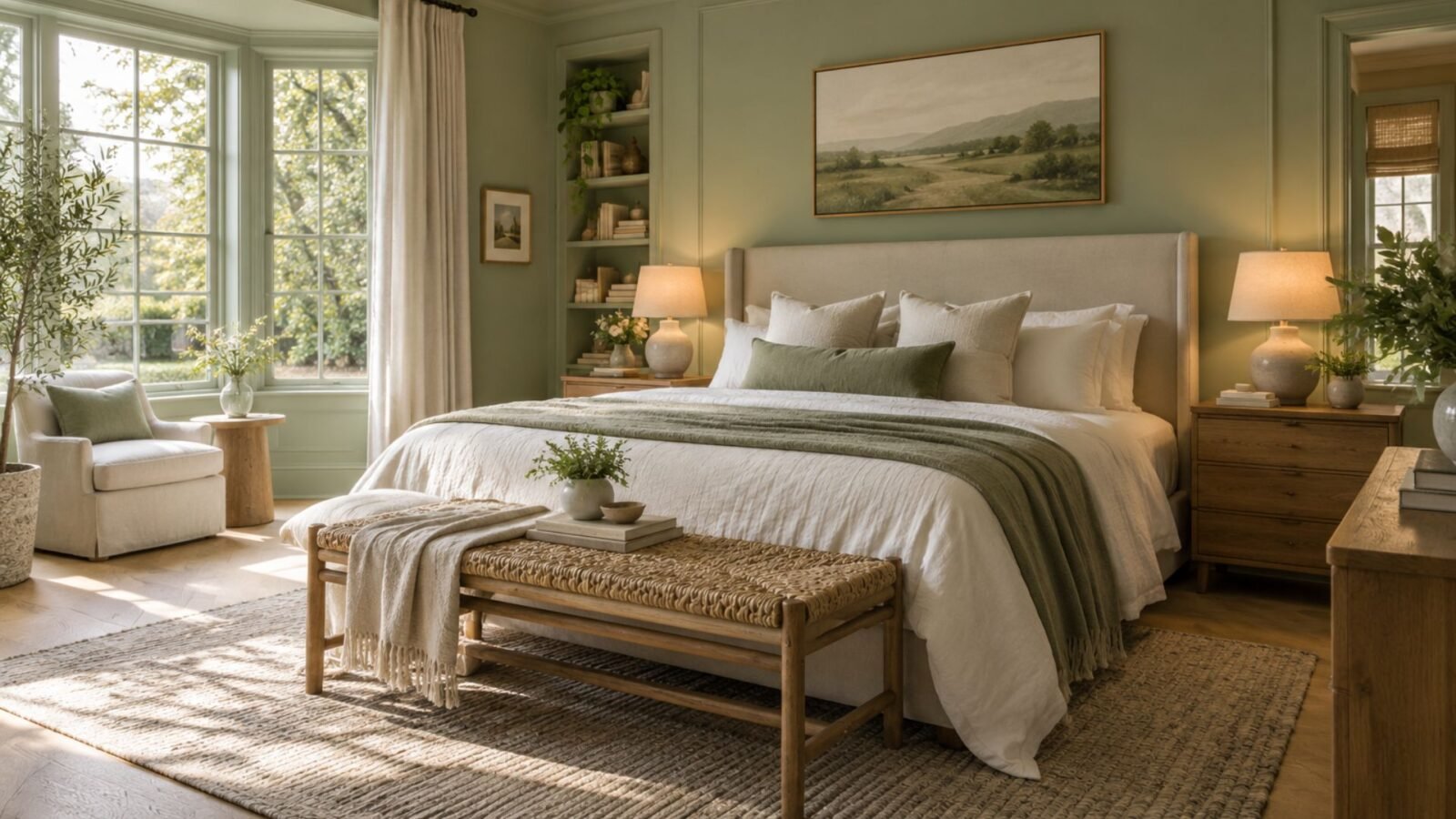

A practical guide to choosing sage green, pairing it with the right materials, and creating a bedroom that feels beautifully considered.
- Why sage green works in bedrooms
- 12 sage green bedroom ideas for different design styles
- 1. Create a Japandi sage green bedroom with natural oak
- 2. Use sage green paneling in an English country bedroom
- 3. Combine sage green and walnut for modern luxury
- 4. Warm up sage green with terracotta and Mediterranean textures
- 5. Make sage green feel airy in a coastal bedroom
- 6. Pair sage green with dusty blush for soft Art Deco character
- 7. Introduce sage green into an industrial bedroom
- 8. Make a small sage green bedroom work with built-in storage
- 9. Feature botanical wallpaper in a vintage sage bedroom
- 10. Add rustic warmth with sage green and exposed timber
- 11. Design a welcoming sage green guest bedroom
- 12. Try a monochromatic sage green bedroom
- How to choose the right sage green paint for your bedroom
- Start by identifying the undertone
- Consider how light or dark the room should feel
- Check the color in morning and evening light
- Beautiful color combinations for sage green bedrooms
- Where should you use sage green in a bedroom?
- The Wallsaide Sage Balance Check
- How to decorate a sage green bedroom on a budget
- Common sage green bedroom mistakes
- Choosing sage based only on online photographs
- Mixing too many unrelated greens
- Forgetting to add contrast
- Using botanical decoration everywhere
- Ignoring the architecture
- Frequently asked questions
- Is sage green a good color for a bedroom?
- What colors go best with sage green bedroom walls?
- Does sage green make a small bedroom look dark?
- Is sage green still stylish in 2026?
- What color bedding works with sage green walls?
- Can I use sage green without painting my walls?
- Final thoughts
- About the author
Sage green bedroom ideas work especially well when you want color without an overly bright or dramatic space. This muted green can look soft and understated beside cream and light oak, or sophisticated and atmospheric alongside walnut, black, and aged brass.
But sage green isn’t one fixed color. Some shades lean gray, others feel warmer and more yellow-green, and the same paint can look noticeably different throughout the day.
The secret is choosing the right version of sage for your room, then giving it a clear role in the design.
Why sage green works in bedrooms
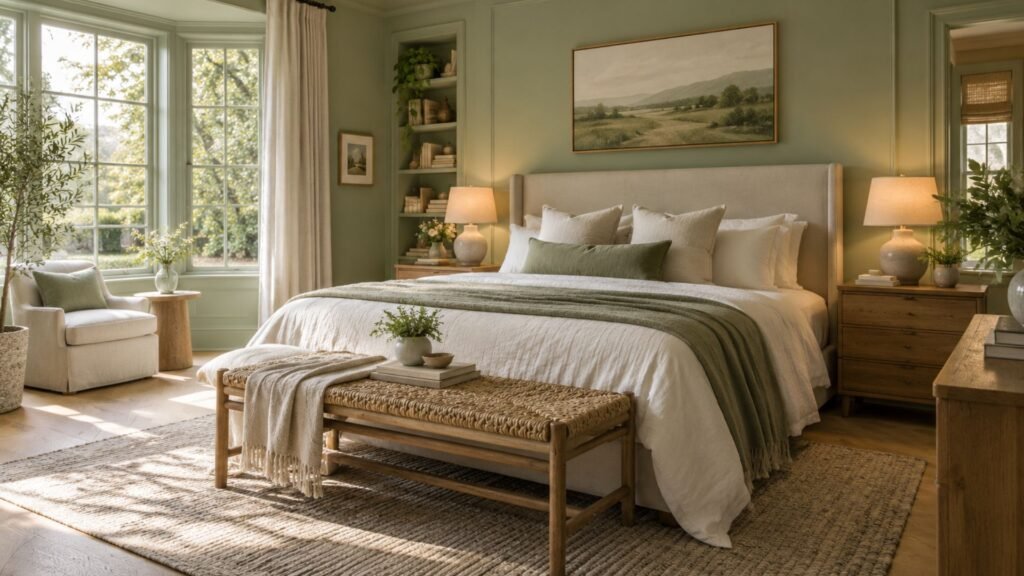
Sage green bedroom ideas are especially versatile because this muted color sits between a noticeable accent and a soft neutral. Its muted quality allows it to cover walls, upholstery, or cabinetry without necessarily becoming the strongest visual element in the room.
It also works with a wide range of materials. Light oak can make sage feel fresh and contemporary, while darker walnut gives it greater depth. Linen, wool, aged metal, painted timber, and natural stone all create different interpretations of the same color.
That flexibility makes sage useful for bedrooms with existing furniture you don’t want to replace.
If you’re considering darker or more saturated greens, our green bedroom ideas guide explores forest, emerald, moss, mint, and other green palettes.
Here, we’ll focus on what makes sage distinctive.
12 sage green bedroom ideas for different design styles
These twelve approaches show how sage green can change character depending on the room’s architecture, furniture, textiles, and lighting.
1. Create a Japandi sage green bedroom with natural oak
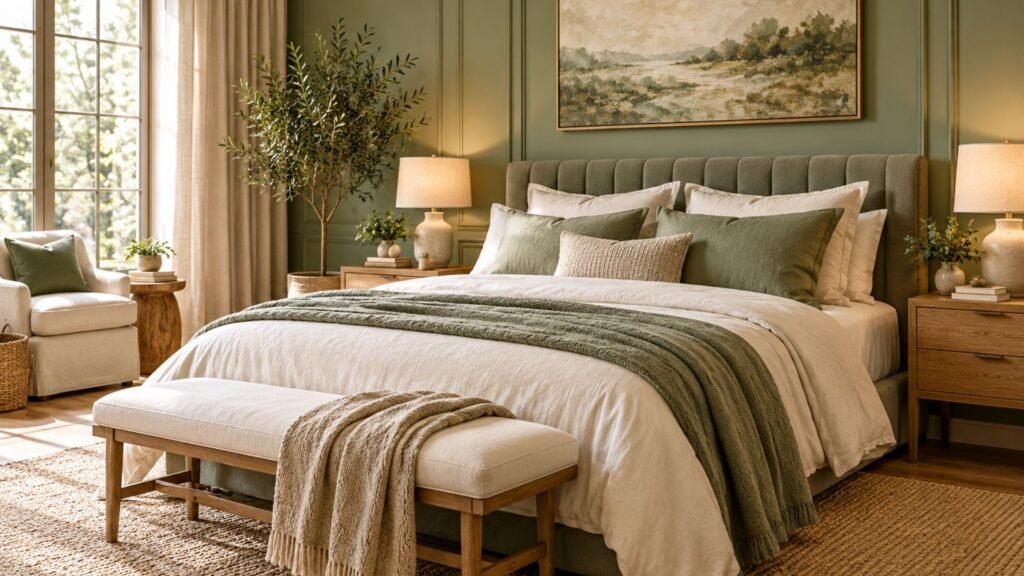
A low oak platform bed, soft sage walls, and simple linen bedding create a quiet bedroom without relying on decorative accessories.
The strength of this room comes from proportion. The low furniture leaves more visible wall space, while oak grain and linen texture provide interest without demanding attention.
A slatted timber screen can add a subtle architectural element while keeping the composition uncluttered.
Recreate the look: Choose a low-profile bed, warm oak nightstands, off-white linen bedding, and one handmade ceramic lamp. Keep the floor area open and avoid filling the walls with small decorations.
2. Use sage green paneling in an English country bedroom

Sage green looks particularly natural in a traditional room with decorative molding, older furniture, and patterned textiles.
Paint the lower portion of the walls sage and keep the upper walls warm white. This gives the room a clear architectural division without making every surface green.
An antique brass bed, floral curtains, and a wooden dresser add character that new matching furniture would struggle to reproduce.
Recreate the look: Install simple rectangular wall molding or a half-height paneled treatment. Pair the sage finish with traditional brass, aged oak, and a restrained floral fabric that contains small touches of green.
3. Combine sage green and walnut for modern luxury

Sage green doesn’t have to look rustic or cottage-inspired. Against walnut and dark bronze, it becomes considerably more tailored.
Picture a wide upholstered headboard wall in sage, walnut bedside furniture with clean edges, and small bronze pendant lights. Cream bedding keeps the central sleeping area lighter than the surrounding materials.
This works because each finish has a distinct job: sage provides color, walnut supplies visual weight, and bronze adds controlled highlights.
Recreate the look: Choose one substantial sage upholstered element rather than several small green accessories. Keep the furniture shapes simple and repeat the metal finish sparingly.
For a broader look at this design direction, explore our luxury bedroom ideas.
4. Warm up sage green with terracotta and Mediterranean textures

Sage and terracotta create a warm, earthy combination because the coolness of muted green contrasts with the orange-red character of clay.
In a Mediterranean-inspired bedroom, textured plaster walls, rounded niches, and rustic timber bring the palette into the architecture rather than leaving everything to decorative cushions.
Terracotta works best here as a supporting accent. A clay-colored throw, pottery, or patterned rug is often enough.
Recreate the look: Use a warm sage with a slightly earthy undertone. Add textured ivory bedding, natural wood, a simple woven pendant, and one or two terracotta pieces. Avoid mixing several unrelated accent colors.
5. Make sage green feel airy in a coastal bedroom

A coastal sage bedroom should feel light rather than heavily themed.
Choose a pale, gray-leaning sage for the walls, then introduce off-white linen, weathered timber, and woven textures. Large windows and minimal window coverings help the room retain its open character.
Rather than decorating with shells, anchors, and obvious nautical objects, let the materials suggest the setting.
Recreate the look: Keep the bed frame visually light, choose natural-fiber window treatments, and use only one deeper accent, such as faded blue in a cushion or artwork.
The result should feel collected and relaxed, not like a themed guest suite.
6. Pair sage green with dusty blush for soft Art Deco character

Among softer sage green bedroom ideas, pairing muted green with dusty blush and refined geometric details creates an elegant Art Deco look.
A scalloped blush headboard gives the room a distinctive silhouette, while brass sconces introduce an Art Deco influence without requiring ornate furniture throughout.
The colors should remain muted. Strong bubblegum pink against bright yellow-green can feel more playful than sophisticated.
Recreate the look: Let the blush headboard be the focal point. Use sage walls, warm ivory bedding, matching brass lights, and simple stone or lacquered bedside tables.
Keep the pattern limited so the curved headboard remains visually important.
7. Introduce sage green into an industrial bedroom

Industrial bedrooms are often associated with charcoal, exposed brick, and black metal. Sage green can soften that palette without removing its architectural character.
Instead of painting the concrete wall, use sage on the fitted wardrobes. This gives the cabinetry visual presence while allowing the concrete and steel to remain clearly defined.
Warm oak flooring prevents the room from becoming overly cold.
Recreate the look: Pair muted sage cabinetry with matte black handles, a black metal bed, restrained artwork, and textured neutral bedding.
Keep the lighting warm enough that the concrete doesn’t appear stark after sunset.
8. Make a small sage green bedroom work with built-in storage
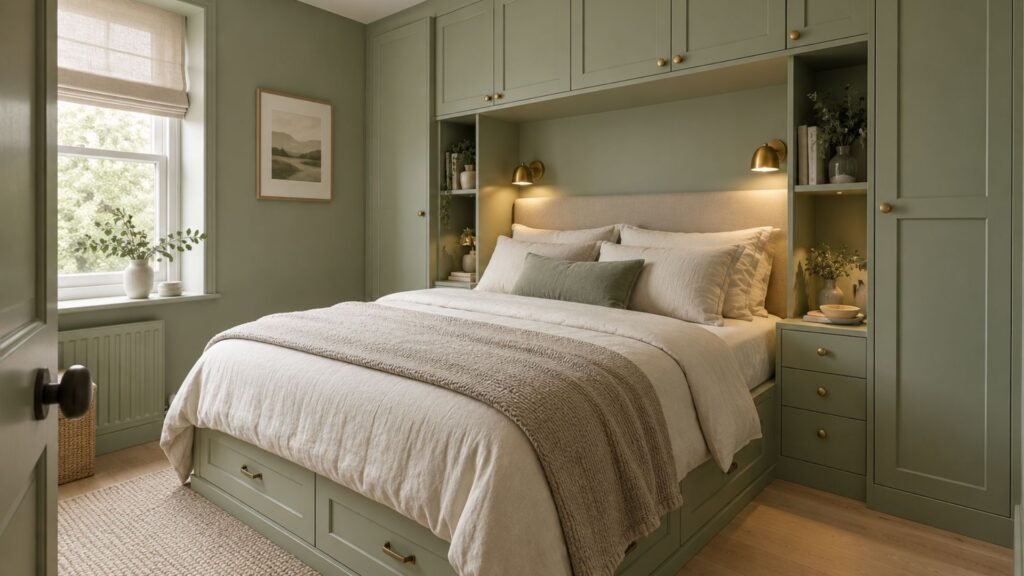
In compact rooms, sage green bedroom ideas can make practical storage part of the design rather than treating green as simply a wall color.
Built-in cabinets framing the headboard create a defined sleeping zone and reduce the need for separate storage furniture.
Painting the cabinets and adjoining wall the same muted sage can make the arrangement feel more cohesive, though the physical size of the cabinets still matters.
Recreate the look: Use shallow upper cabinets where appropriate, concealed drawers, integrated bedside lighting, and slim furniture that preserves circulation.
Our small bedroom ideas guide covers layout and furniture decisions in more detail.
9. Feature botanical wallpaper in a vintage sage bedroom

Botanical wallpaper can give a sage bedroom character without requiring every wall to be painted green.
Choose a print with a cream or muted neutral background, then repeat one of its green tones on the window trim, a small dresser, or a reading nook.
An antique wooden bed and a fabric-covered window seat can reinforce the vintage character.
The key is allowing the wallpaper to remain the main pattern.
Recreate the look: Use botanical wallpaper on one wall or within a defined alcove. Keep the bedding relatively plain and repeat the green in one painted architectural feature rather than multiple accessories.
10. Add rustic warmth with sage green and exposed timber
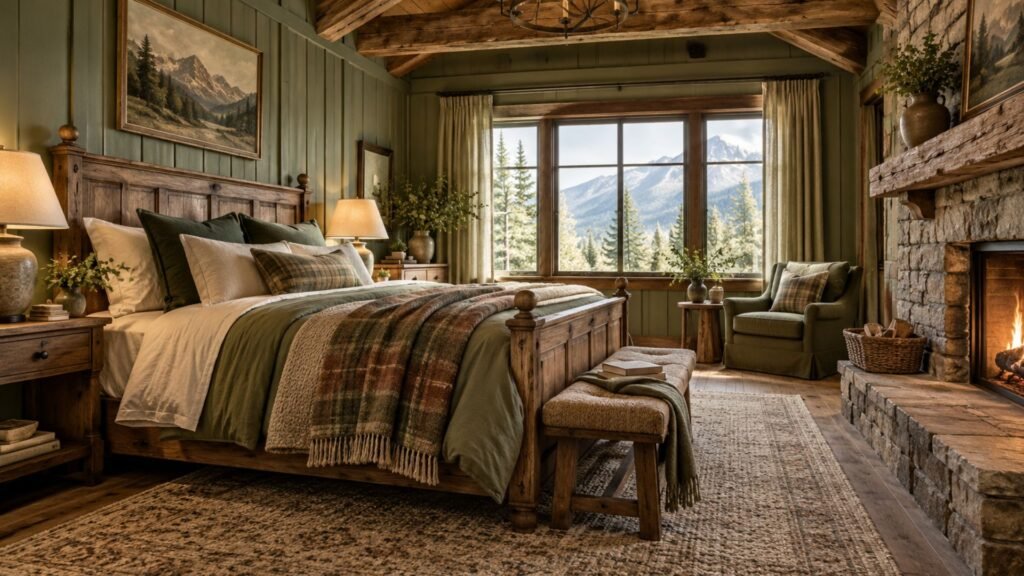
Sage green works beautifully with timber that has visible grain, age, and variation.
In a rustic mountain bedroom, sage-painted paneling can offset heavy ceiling beams and dark wooden furniture. Wool blankets, thick curtains, and a textured rug make the room feel layered without adding decorative clutter.
The color should complement the wood rather than compete with it.
Recreate the look: Choose an earthy sage, preserve the natural character of the timber, and combine wool, linen, and leather in a restrained palette.
If you already have dark wooden bedroom furniture, our brown bedroom ideas guide provides additional ways to balance wood tones and color.
11. Design a welcoming sage green guest bedroom

Sage green bedroom ideas for guest rooms should accommodate several activities without making the space feel crowded.
A sage upholstered daybed can provide a comfortable focal point while leaving space for a compact desk or reading chair. Cream-striped curtains and a vintage side table give the room personality.
Using sage on the daybed rather than every wall keeps the design adaptable.
Recreate the look: Choose a daybed with proper sleeping support, add layered pillows that can be removed easily, and provide practical bedside lighting and a clear place for guests to put their belongings.
12. Try a monochromatic sage green bedroom
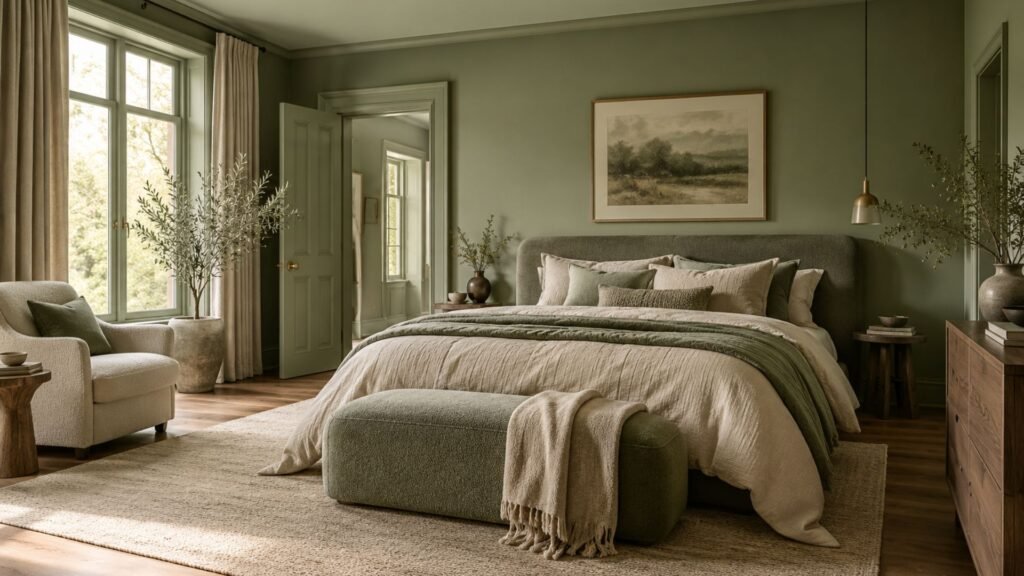
A monochromatic bedroom doesn’t require every surface to be exactly the same color.
Use a mid-tone sage on the walls, a slightly lighter sage on the ceiling, and a deeper green-gray on the bed upholstery or doors.
This variation creates depth while keeping the palette cohesive. Subtle contrasts in sheen and texture can make the room feel more layered.
Recreate the look: Select two or three related sage tones rather than several unrelated greens. Introduce oatmeal bedding, warm wood flooring, and one darker accent to prevent the design from appearing flat.
This approach suits a bedroom where you want the architecture and color to feel continuous.
How to choose the right sage green paint for your bedroom
The best sage green bedroom ideas start with choosing the right paint undertone, color depth, and lighting conditions for your room.
Start by identifying the undertone
For sage green bedroom ideas built around painted walls, undertones matter. Sage usually has a muted or gray quality, but individual shades vary.
A warmer sage may lean toward olive or yellow-green, while a cooler version may contain more gray or blue.
Compare paint samples beside your flooring, curtains, and existing furniture. A green that looks neutral on a paint card can appear much warmer when placed next to a cool-gray floor.
If you’re still deciding between several families of color, our bedroom color ideas guide can help you compare broader palette directions.
Consider how light or dark the room should feel
Paint brightness is commonly described using light reflectance value, or LRV.
A higher LRV means a color reflects more light under standardized measurement conditions. It doesn’t mean the paint will automatically make every room look larger.
For reference, Benjamin Moore’s October Mist 1495 is a muted sage with an LRV of 46.54. Sherwin-Williams’ Evergreen Fog SW 9130 is a green-gray option with a slightly blue character.
Neither should be selected solely from an online photograph. Physical samples are essential.
Check the color in morning and evening light
A north-facing room may make some sages look cooler or grayer. Strong warm afternoon light can emphasize yellow or earthy undertones.
Artificial lighting also changes how paint appears after sunset.
Test two or three large samples on different walls and observe them during the morning, afternoon, and evening. Look at the colors with your actual bedside lamps switched on.
Don’t judge the paint against a bright white sample board alone. Check it beside the bed, flooring, trim, and textiles you intend to keep.
Beautiful color combinations for sage green bedrooms
The strongest sage green bedroom ideas give the muted green a clear supporting palette instead of surrounding it with competing colors.
| Color combination | Overall effect | Best supporting material |
|---|---|---|
| Sage + warm white + oak | Light and understated | Linen and pale timber |
| Sage + cream + walnut | Rich and refined | Walnut and aged brass |
| Sage + terracotta + ivory | Warm and earthy | Clay and textured plaster |
| Sage + dusty blush + brass | Soft and elegant | Velvet and pale stone |
| Sage + charcoal + black | Contemporary and graphic | Steel and concrete |
| Sage + oatmeal + natural wood | Relaxed and cozy | Wool and woven textiles |
When choosing a combination, consider how much contrast you want.
Sage and cream create a softer transition, while sage and black establish stronger outlines and focal points.
Sage and terracotta add warmth, but the result depends on the precise paint undertone. A yellow-leaning sage can behave differently from a cooler green-gray.
For a softer neutral foundation, see our cream bedroom ideas and neutral bedroom ideas guides.
Where should you use sage green in a bedroom?
There isn’t one correct amount of sage green. Decide what you want the color to accomplish before choosing a surface.
Sage green walls
Painted walls give the color a consistent architectural presence.
This works particularly well when the bed, flooring, and main furniture are neutral or wooden. Use bedding to introduce a deliberate light-dark contrast.
Sage green headboards and beds
Upholstery is a practical alternative if you don’t want to repaint.
A sage headboard against cream walls can introduce substantial color while leaving the rest of the room flexible. Choose a fabric whose green undertone works with your existing finishes.
Sage green furniture
A painted dresser, wardrobe, or pair of nightstands can introduce sage at a smaller scale.
This approach works well in rentals or rooms with finishes that are difficult to change. Cabinetry also offers an opportunity to repeat the same green across several connected elements.
Sage green bedding
Bedding is the easiest place to experiment before making permanent changes.
Try a sage duvet, cream sheets, and oatmeal cushions. Assess the combination in your room before committing to wall paint or large furniture.
The Wallsaide Sage Balance Check
Before completing your bedroom, check four details.
1. Identify the dominant color. Is sage the main wall color or a supporting accent? It should have a deliberate role rather than appear in every accessory.
2. Establish the lightest and darkest materials. Cream bedding and walnut furniture, for example, can create enough contrast to keep muted green visually interesting.
3. Repeat materials selectively. A wooden bed and matching nightstands may be enough. You don’t need a different timber finish for every piece.
4. Check the room after dark. The design needs to work under your everyday lighting, not only in a bright photograph.
If all four elements feel resolved, the room is less likely to need additional decorations.
How to decorate a sage green bedroom on a budget
Budget-friendly sage green bedroom ideas don’t require replacing the bed or repainting every wall.
Start with a single change that affects a meaningful part of the room.
A sage duvet can establish the palette immediately. A secondhand dresser can be refinished in muted green. Simple wall molding painted sage can add architectural character for less than a full renovation.
Curtains, artwork, and lampshades are other opportunities, but adding several small green purchases at once can make the room feel overly coordinated.
If you’re working with an existing bedroom, focus first on the element that currently looks least connected to the rest of the design.
For more ideas on combining comfort and practical decorating, explore our cozy bedroom ideas.
Common sage green bedroom mistakes
Choosing sage based only on online photographs
Phone screens and edited photographs can distort paint color. Order physical samples and assess them with your existing finishes.
Mixing too many unrelated greens
Olive, mint, emerald, and sage have different visual qualities. Combining them can work, but they need a clear relationship. In a restrained sage bedroom, one main green and a nearby tonal variation are often enough.
Forgetting to add contrast
Sage walls, gray bedding, pale gray flooring, and cool silver accessories may leave a room looking flat. Introduce a warmer material or a stronger light-dark difference.
Using botanical decoration everywhere
Green paint doesn’t require leaf-patterned bedding, botanical wallpaper, plant prints, and numerous houseplants. One botanical element may be more effective than a repeated theme.
Ignoring the architecture
A design that works in a spacious bedroom with large windows may need substantial adaptation in a compact room. Furniture scale, ceiling height, available daylight, and storage needs should guide the design.
Frequently asked questions
Is sage green a good color for a bedroom?
Yes. Sage green offers a muted, flexible color that can suit contemporary, traditional, rustic, and minimalist bedroom styles. Its visual effect depends on the shade, lighting, and surrounding materials.
What colors go best with sage green bedroom walls?
Cream, warm white, oatmeal, walnut, light oak, terracotta, dusty blush, charcoal, and black can all work. Choose combinations based on the sage paint’s undertone and the contrast you want.
Does sage green make a small bedroom look dark?
Not necessarily. A pale sage with light bedding and appropriately sized furniture can feel open and balanced. Darker sages can also work, but they may create a more enclosed atmosphere.
Is sage green still stylish in 2026?
Sage green remains a versatile decorating choice rather than a color that depends entirely on one seasonal trend. Its compatibility with wood, neutrals, and varied interior styles gives it uses beyond a single year’s design preferences.
What color bedding works with sage green walls?
Warm white, ivory, oatmeal, natural linen, and soft beige are flexible choices. Dusty blush or terracotta can add subtle warmth, while charcoal creates stronger contrast.
Can I use sage green without painting my walls?
Yes. A sage upholstered bed, duvet, dresser, curtains, or area rug can introduce the color against neutral walls. Start with one prominent element and build the supporting palette around it.
Final thoughts
Sage green bedroom ideas are most successful when the color works with the room’s architecture, natural light, and existing furniture.
Japandi interiors benefit from sage’s understated quality. Traditional rooms can use it through painted paneling, while modern bedrooms gain depth from combinations with walnut, bronze, or black. Smaller rooms can incorporate sage through practical storage and upholstery.
Choose the sage undertone first, decide where the color belongs, and balance it with materials that bring warmth or contrast.
The result should feel intentional, comfortable, and personal rather than simply green.
About the author
Emma Carter writes interior design inspiration and practical decorating guides for Wallsaide. Her articles help readers understand how colors, materials, furniture, and lighting work together to create attractive, functional homes.