
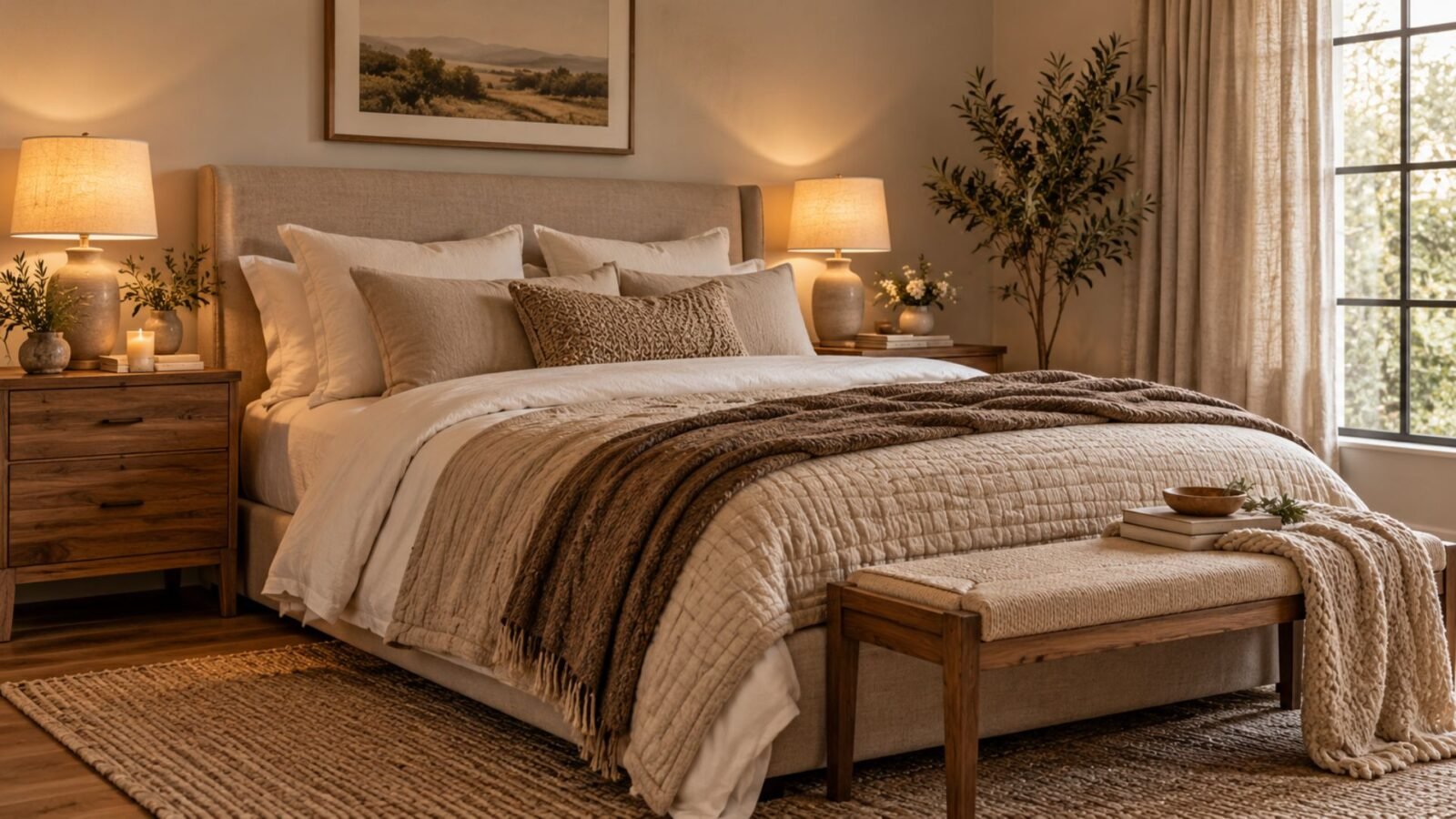

Discover cozy bedroom decorating ideas for every style and room size, from layered bedding and warm lighting to earthy colors, natural textures and thoughtful personal details.
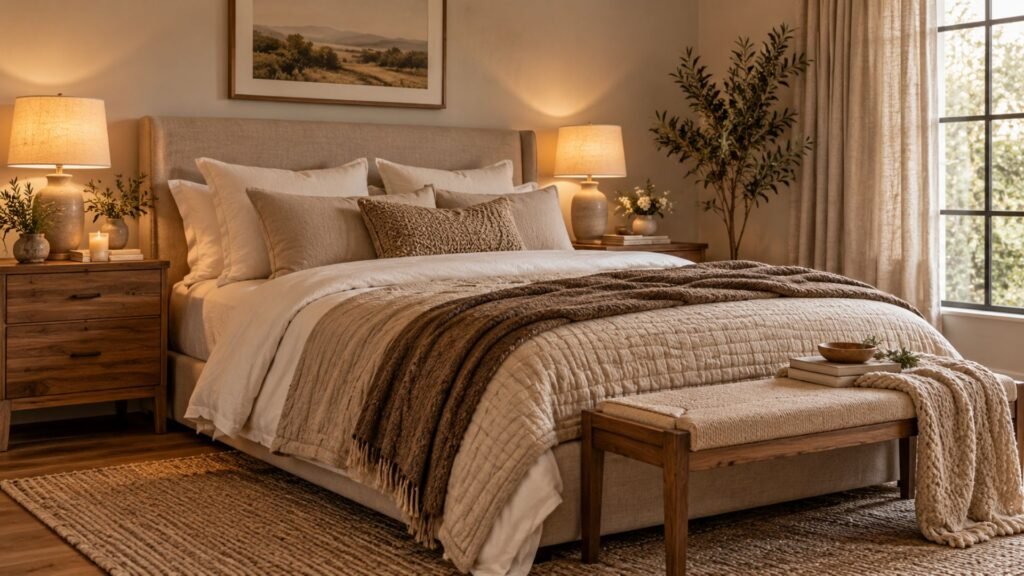
A cozy bedroom doesn’t need to be dark, heavily decorated or filled with blankets. The most inviting bedrooms balance softness, warmth, comfortable furniture and enough open space to feel restful.
You can create that feeling with layered bedding, warm bedside lighting, natural wood, textured curtains or a carefully chosen color palette. Even a small, modern bedroom can feel cozy without becoming cluttered.
These 21 cozy bedroom ideas explore different ways to create a welcoming space. Each includes a practical design approach you can adapt to your own bedroom, whether you’re planning a full makeover or changing a few details.
What makes a bedroom feel cozy?
A cozy bedroom combines visual warmth with everyday comfort.
Soft materials make the room feel inviting. Lighting creates a gentler atmosphere after dark. Furniture, colors and personal belongings give the space character.
Four elements make the biggest visual difference:
- Softness: Comfortable bedding, rugs, upholstered furniture and curtains.
- Warmth: Welcoming colors, natural materials and gentle lighting.
- Balance: Furniture and accessories that suit the room’s proportions.
- Personality: Meaningful artwork, books, photographs and objects you enjoy.
You don’t need all four in equal amounts. A minimalist bedroom might rely on beautiful linen and warm wood, while a cottage bedroom could use patterned fabrics and vintage furniture.
21 cozy bedroom ideas for every decorating style
1. Create a warm neutral bedroom with layered textures
Warm neutrals are a natural starting point for a cozy bedroom. Think oatmeal, ivory, mushroom, soft beige and warm white rather than one flat shade of cream.
Use slightly different tones across the walls, bedding and curtains. A woven rug, upholstered headboard and linen duvet will give the room depth without requiring strong colors.
Recreate the look: Start with warm-white walls, an oatmeal headboard, ivory bedding and a walnut bedside table. Add a textured throw for contrast.
The key is to vary the materials, not just the shades. A room with five cream-colored surfaces can still feel flat if every surface has the same smooth finish.
2. Layer your bedding without making the bed look crowded
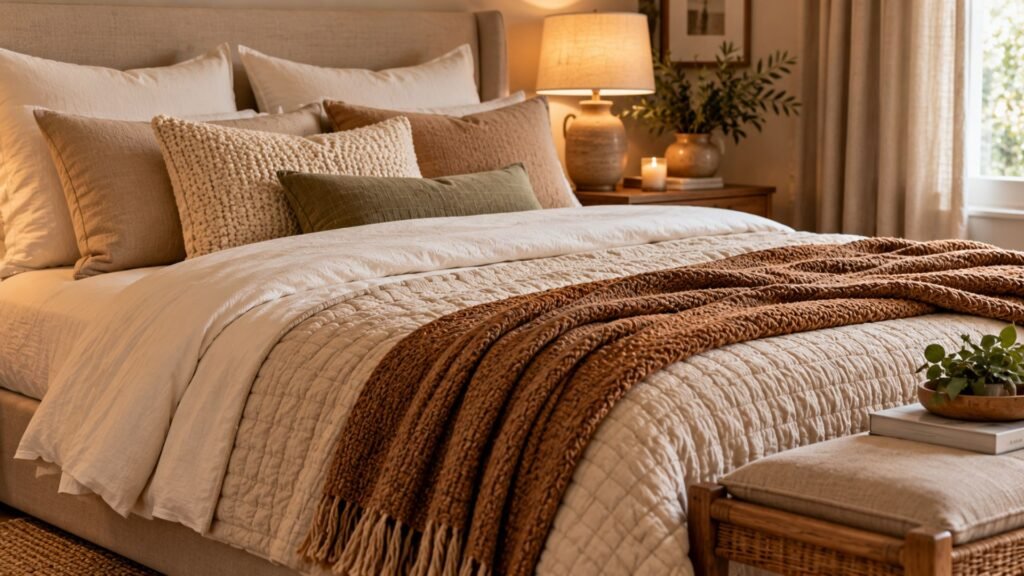
A beautifully layered bed often becomes the visual centerpiece of a cozy bedroom.
Start with comfortable sheets and a duvet or comforter. Add a folded quilt or lightweight coverlet, then finish with one textured throw near the foot of the bed.
Choose pillows that are useful as well as decorative. Too many cushions can make the bed inconvenient to use.
Recreate the look: Combine ivory cotton sheets, a taupe duvet, a quilted coverlet and a soft chocolate-brown throw.
For warmer climates, create the layered appearance with breathable fabrics and lightweight pieces rather than adding unnecessary insulation. material-for-bed-sheets
3. Use warm bedside lighting instead of relying on one ceiling fixture
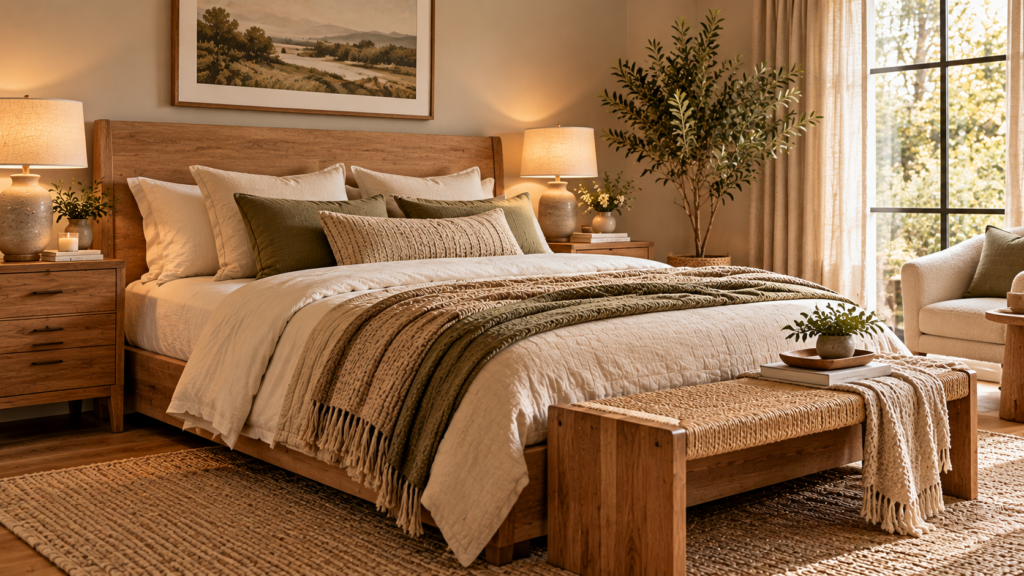
Lighting can completely change how a bedroom feels in the evening.
A bright ceiling fixture is useful for cleaning and getting dressed, but it rarely provides the most comfortable atmosphere on its own. Bedside lamps or wall sconces offer softer, more localized illumination.
Choose warm-toned bulbs that suit the fixtures and provide enough light for reading.
Recreate the look: Place a shaded lamp on each bedside table or use adjustable wall sconces where surface space is limited.
A dimmer can add flexibility, allowing the same bedroom to feel bright when needed and gentler before bedtime. bedroom-lighting-ideas
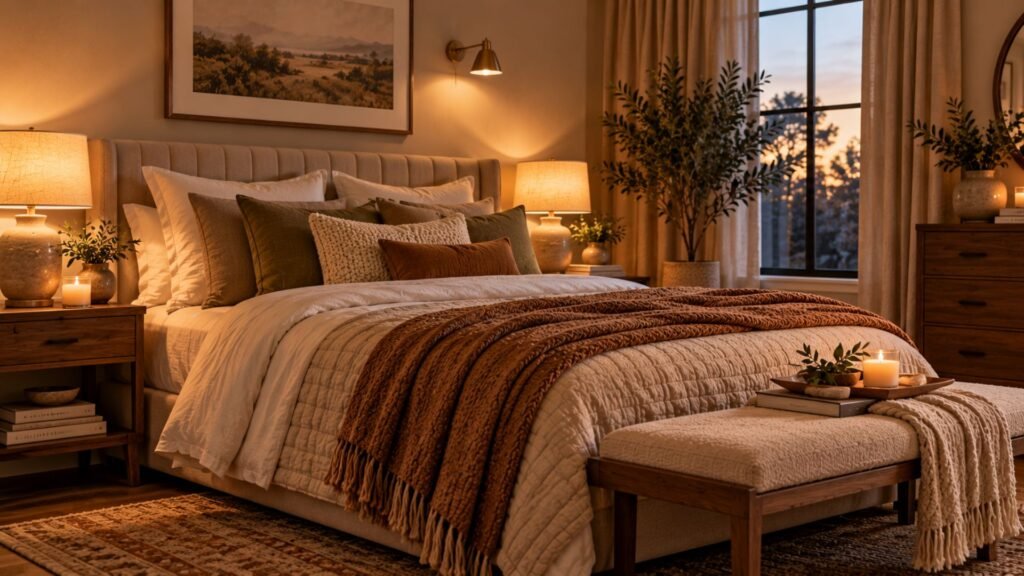
4. Bring in natural wood for an organic, welcoming feel
Wood adds visual warmth through its color, grain and natural variation.
Oak creates a lighter, relaxed appearance, while walnut introduces richer brown tones. Reclaimed or distressed wood can make a room feel more rustic.
You don’t need matching furniture throughout the bedroom. A timber headboard, vintage dresser or simple wooden bedside table can establish the look.
Recreate the look: Pair warm-white walls with an oak bed, linen bedding and a woven rug.
Repeat a similar wood undertone in two or three places to help the design feel connected.
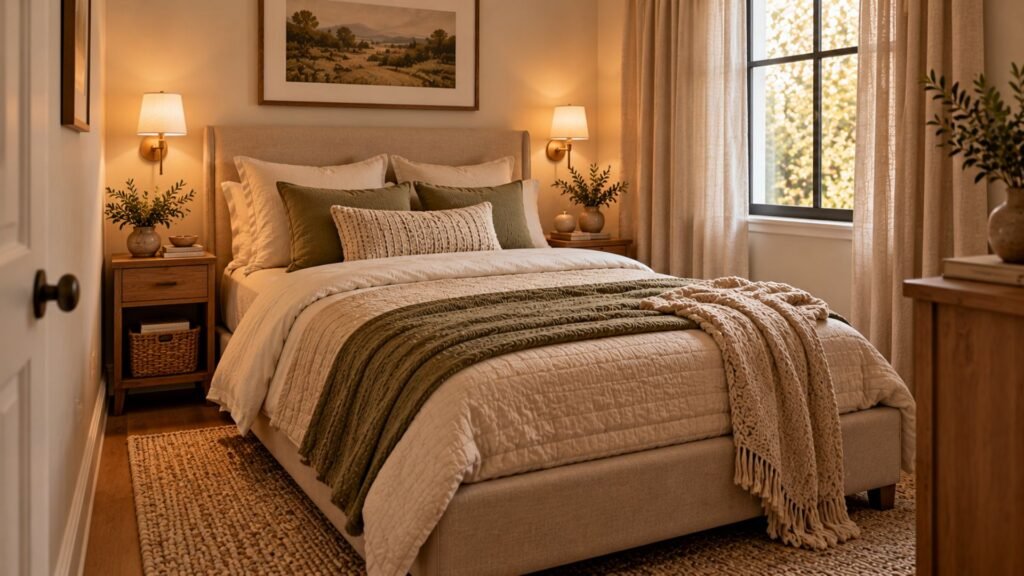
5. Design a small cozy bedroom around one comfortable focal point
Small bedrooms can feel especially inviting when the layout is carefully considered.
Let the bed be the main feature and avoid filling every remaining corner. Choose appropriately sized bedside furniture and use wall-mounted lighting when floor space is limited. Cozy bedroom ideas
A soft headboard, layered bedding and a compact rug can create warmth without adding bulky furniture.
Recreate the look: Use a low-profile upholstered bed, narrow nightstands, wall sconces and warm neutral walls.
If you need more layout inspiration, explore our small bedroom ideas guide.
6. Try a chocolate brown bedroom for rich, enveloping warmth
Brown can make a bedroom feel grounded and intimate.
Chocolate-colored walls look particularly attractive with ivory bedding, walnut furniture and warm brass or bronze lighting. A lighter upholstered headboard creates contrast against the darker background.
Choose a brown with an undertone that works with your flooring. Some shades lean red, while others appear cooler or more gray.
Recreate the look: Combine chocolate walls, an ivory bed, a caramel throw and warm metal accents.
Keep some lighter surfaces visible so the room doesn’t become visually heavy.
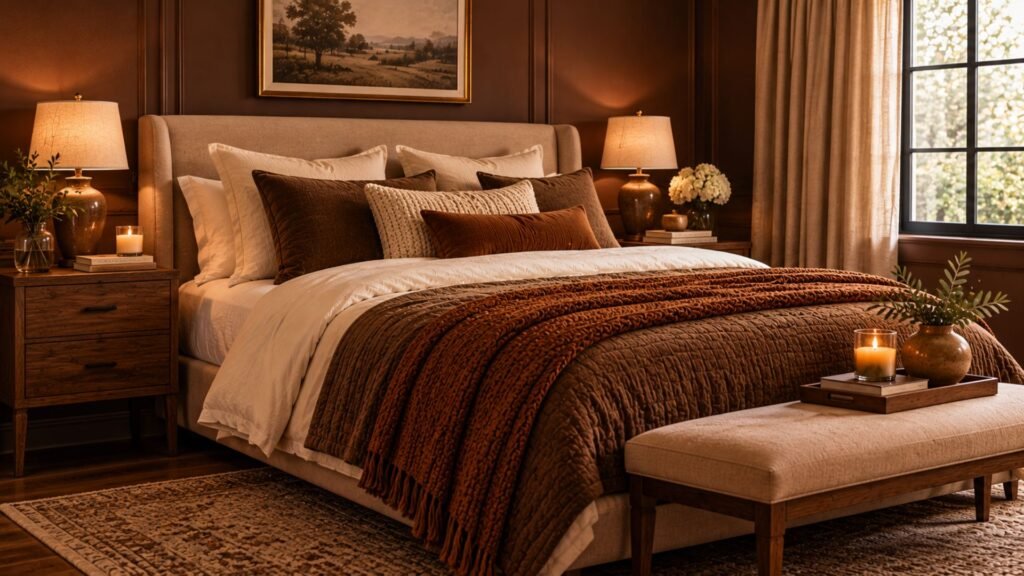
7. Make a modern bedroom cozy with softer materials
Modern design doesn’t have to feel cold.
Clean-lined furniture can sit comfortably alongside textured fabrics, warm wood and carefully placed lighting. The contrast between simple shapes and tactile materials makes the room feel refined yet inviting.
Avoid adding decorative objects simply to fill empty surfaces.
Recreate the look: Choose a streamlined oak bed, a large textured rug, oatmeal bedding and a sculptural bedside lamp.
For more ideas built around contemporary furniture and architecture, see our modern bedroom ideas guide.

8. Add floor-length curtains for a softer bedroom
Curtains introduce fabric across a large vertical surface, making a bedroom feel more layered.
Linen-look curtains create a relaxed appearance, while heavier woven fabrics offer a richer visual effect. Choose a color that complements your walls and bedding.
Where suitable, hang the curtain rod above the window frame to create a taller-looking arrangement.
Recreate the look: Pair warm beige walls with full-length oatmeal curtains and ivory bedding.
Consider privacy, light control and practical maintenance alongside appearance. Blackout lining can be useful when you need a darker sleeping environment.
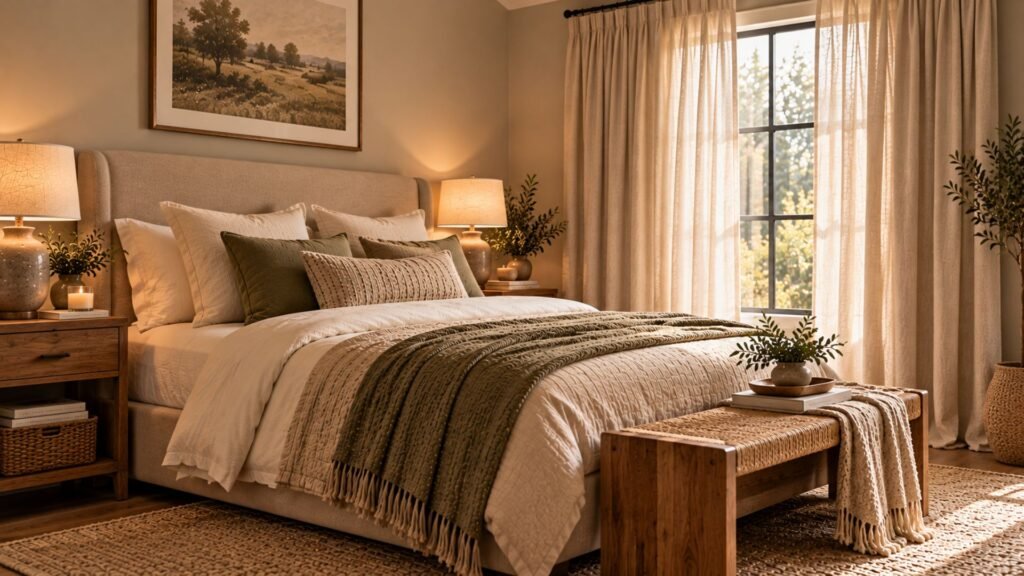
9. Create a cozy cottage bedroom with gentle patterns
Cottage-inspired bedrooms feel welcoming because they combine familiar materials, soft colors and decorative character.
Floral bedding, small-scale checks, painted furniture and vintage-style lighting can work together without overwhelming the room.
Keep one color consistent across the patterns to maintain visual harmony.
Recreate the look: Use a cream-painted bed, muted floral duvet, sage-green bedside table and a small patterned rug.
Choose a few meaningful details rather than covering every surface with decorative accessories.
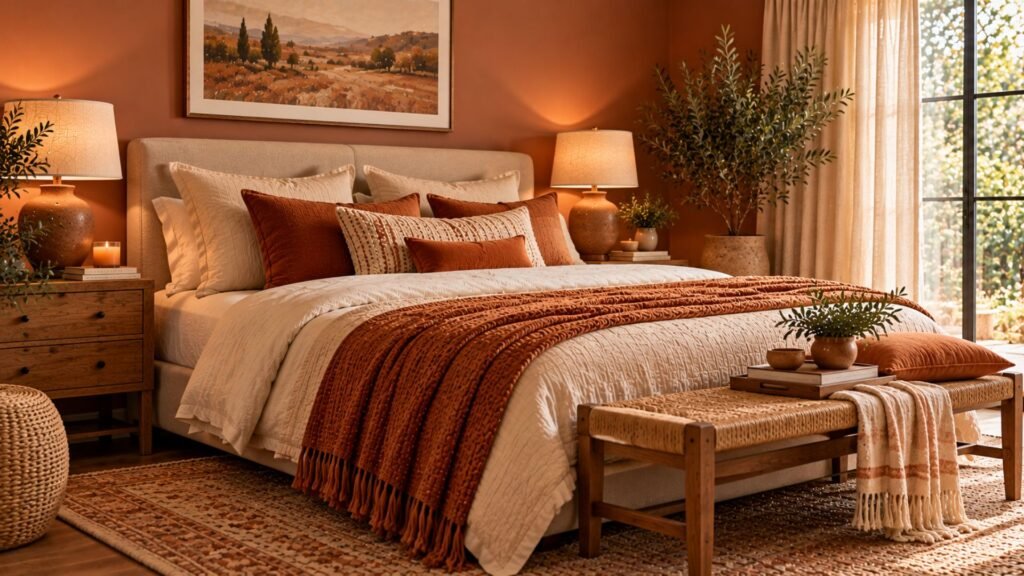
10. Use terracotta and earthy colors for a sun-warmed look
Earthy colors create warmth even when the room has relatively simple furnishings.
Terracotta, clay, sand and caramel work beautifully with natural linen and medium-toned wood. These shades can suit Mediterranean, rustic or modern bedrooms.
For a lighter scheme, introduce terracotta through bedding or artwork instead of painting every wall.
Recreate the look: Combine sand-colored walls, rust bedding, a walnut headboard and handmade-looking ceramic accessories.
Use ivory or cream to give the warmer tones room to breathe.
11. Make a minimalist bedroom feel inviting with tactile finishes
A minimalist bedroom can feel cozy without additional clutter.
The key is choosing materials with enough texture to make a restrained palette interesting. Linen, wool, timber and upholstered surfaces create subtle variation.
Keep the furniture simple and allow negative space around the bed.
Recreate the look: Choose a low oak platform bed, warm-white walls, a wool rug and soft linen bedding.
One carefully selected lamp or artwork can add more character than several small decorative objects.
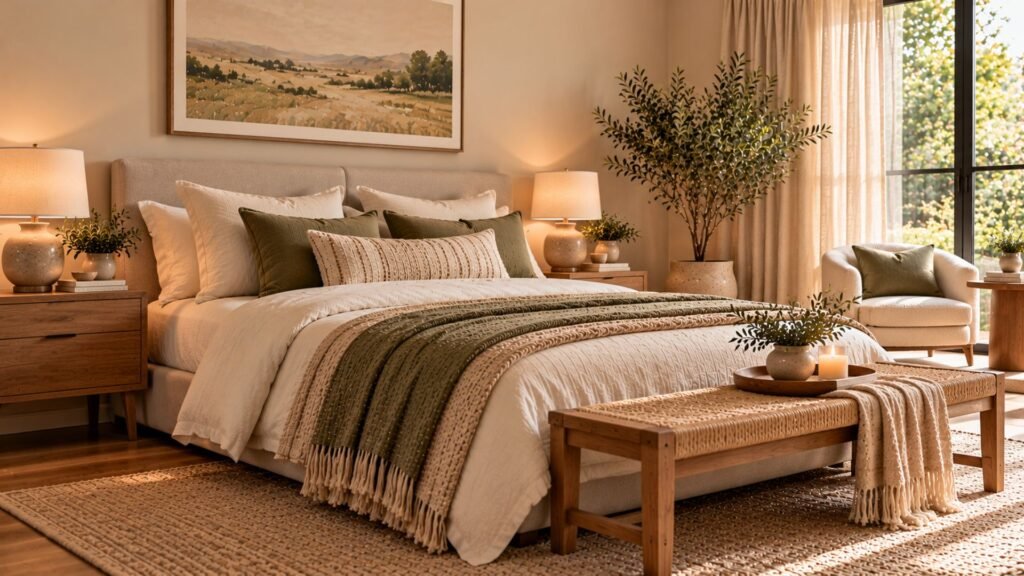
12. Introduce a soft upholstered headboard
An upholstered headboard makes the bed appear softer and more substantial.
Linen-look fabric creates a relaxed effect, while velvet can introduce richness. A gently curved or padded design works particularly well in a bedroom with otherwise angular furniture.
Choose a headboard width and height that suit the room.
Recreate the look: Pair a mushroom-colored upholstered headboard with ivory bedding, dark wood bedside tables and shaded lamps.
This is a particularly effective idea when you want a cozy bedroom without changing the wall color.

13. Add a soft rug beside or beneath the bed
A rug introduces texture at floor level and can visually anchor the furniture.
For a larger bedroom, a rug extending beyond the sides of the bed creates a unified arrangement. In a smaller room, a bedside runner may be more practical.
Consider the rug’s pile height, cleaning requirements and compatibility with doors and furniture.
Recreate the look: Choose a textured oatmeal rug beneath a walnut bed with cream bedding.
Use an appropriate rug pad where needed to reduce movement.

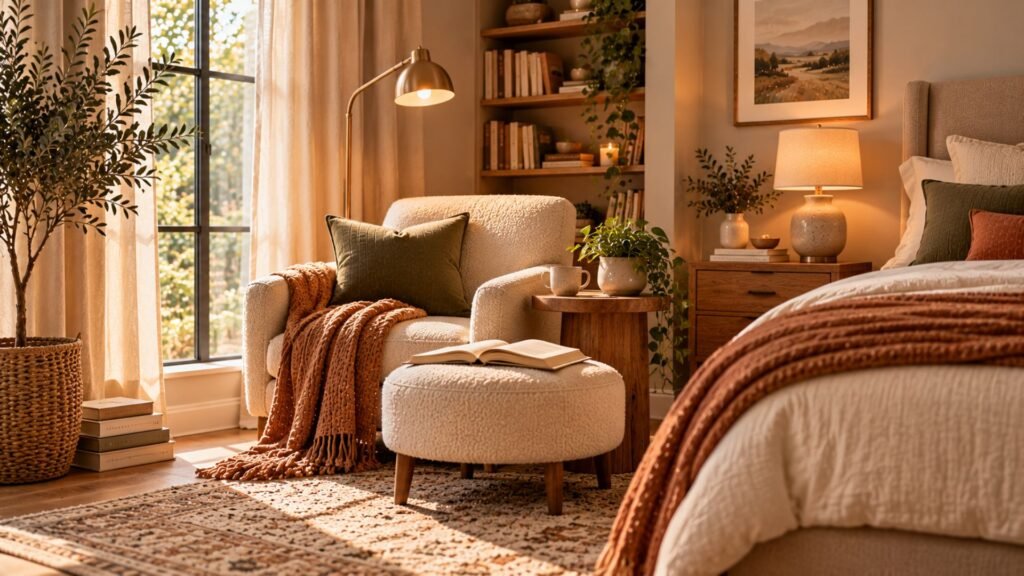
14. Create a reading corner with a comfortable chair
A bedroom reading corner gives the room another inviting function beyond sleeping.
Choose a chair that fits the available space and supports comfortable sitting. Add a reading light and a small surface for a book or drink.
You don’t need a large bedroom. A compact chair beside a window may be enough.
Recreate the look: Use a caramel armchair, a slim floor lamp, a small wooden side table and a soft throw.
Keep the chair away from doors and circulation paths.
15. Try a moody bedroom with deep green walls
Deep green creates a rich, intimate atmosphere when balanced with lighter textiles.
Forest green and olive-green shades pair naturally with walnut, antique brass and warm cream. Upholstered furniture helps soften the stronger wall color.
A single dark feature wall can work if you’re not ready to paint the whole room.
Recreate the look: Combine forest-green walls, an ivory bed, walnut furniture and warm brass sconces.
Check how the paint appears under both natural daylight and your bedroom lamps.

16. Mix vintage furniture with contemporary bedding
Vintage furniture can make a bedroom feel collected and personal rather than overly coordinated.
A wooden dresser, antique-style mirror or characterful bedside table can add visual history. Pair these pieces with simple contemporary bedding to keep the room fresh.
You don’t need a complete matching furniture set.
Recreate the look: Combine a vintage walnut dresser, cream upholstered bed, linen duvet and modern shaded lamp.
Repeat one color or material across old and new pieces to make the combination intentional.
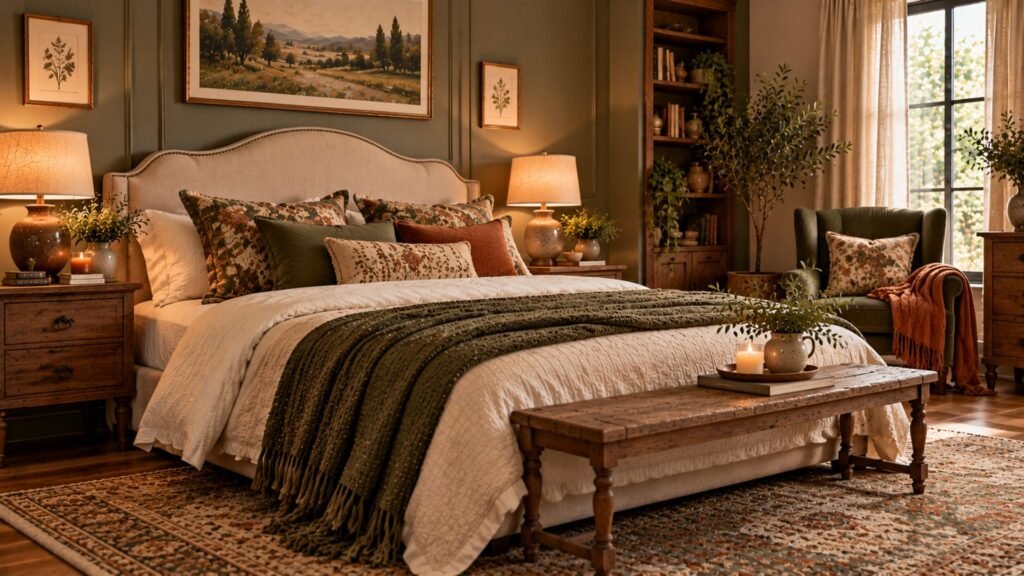
17. Use soft wallpaper to add depth and character
Wallpaper introduces pattern and texture without requiring many additional accessories.
Small botanical prints, subtle stripes and textured finishes can make a bedroom feel more detailed and intimate.
Consider using wallpaper behind the bed while keeping other walls relatively quiet.
Recreate the look: Choose muted botanical wallpaper, cream bedding, painted bedside furniture and warm lighting.
For a rental, check whether a removable product is appropriate for the wall finish and your lease conditions before installing it.

18. Build a Scandinavian-inspired cozy bedroom
A Scandinavian-inspired bedroom combines practical simplicity with comfortable materials.
Use pale wood, warm whites, woven textiles and restrained decoration. Introduce a darker accent through a lamp, chair or framed artwork to provide definition.
The result should feel comfortable and functional, not empty.
Recreate the look: Pair an ash or oak bed with ivory bedding, a wool throw, warm-white walls and a simple pendant.
Choose storage that keeps everyday belongings accessible without leaving the room visually crowded.
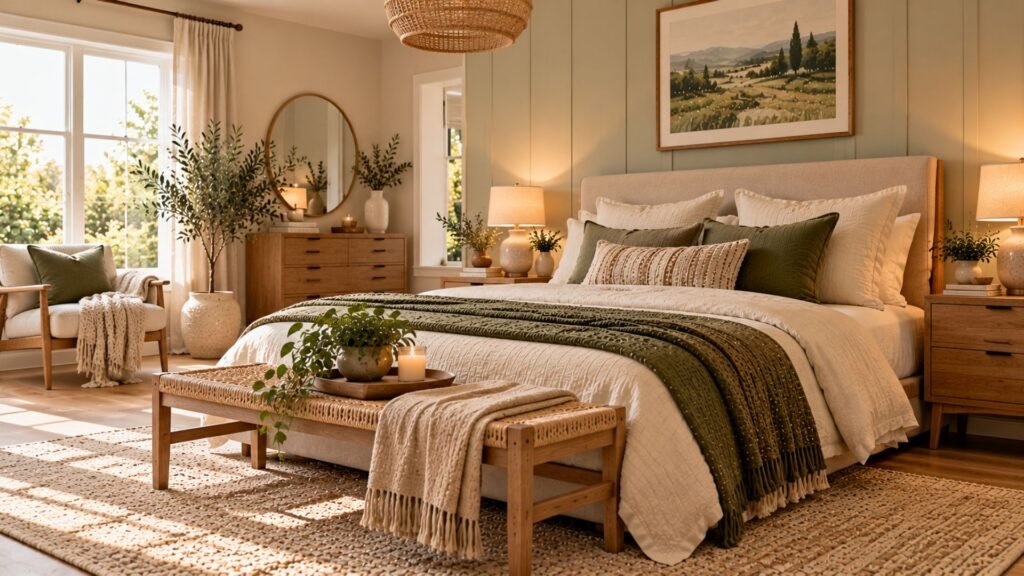
19. Make a guest bedroom feel welcoming with thoughtful details
A cozy guest bedroom should be comfortable and easy to use.
Provide accessible bedside lighting, a clear surface for personal belongings and somewhere to place a bag. Comfortable bedding and suitable window coverings matter more than elaborate decoration.
Keep the palette welcoming and adaptable.
Recreate the look: Choose a cream bed, sage or beige accents, two bedside lamps and a small bench where space allows.
Leave some drawers or shelves empty so guests don’t have to move decorative items.
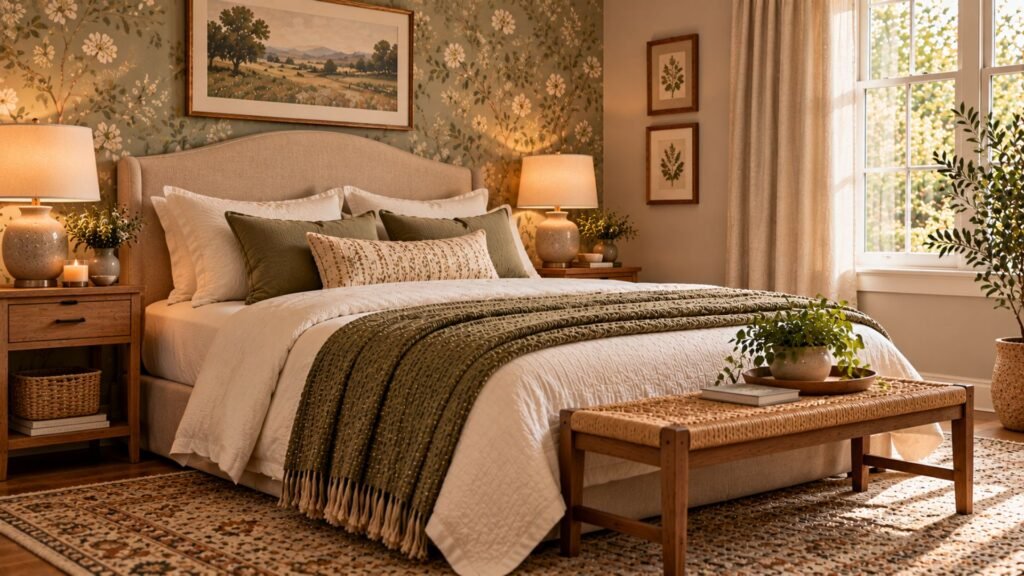
20. Create a relaxed boho bedroom with natural textures
A cozy boho bedroom can combine layered fabrics, handmade-looking accessories and natural materials.
Think woven lighting, patterned cushions, timber furniture and a textured rug. Choose a limited color palette to prevent the room from feeling visually busy.
Avoid relying on too many small accessories.
Recreate the look: Combine warm-white walls, a wooden bed, rust and cream textiles, a woven pendant and a vintage-style rug.
Allow the bedding and one statement texture to carry most of the visual interest.

21. Create a cozy bedroom that feels personal rather than staged
The most inviting bedrooms often include details that reflect the person living there.
A favorite painting, books, meaningful photographs or a treasured piece of furniture can make the room feel distinctive.
Personal styling works best when it supports daily life rather than creating obstacles.
Recreate the look: Start with comfortable neutral furniture, then add a few meaningful objects, framed art and a reading lamp.
Leave breathing room around your favorite pieces so they remain noticeable.

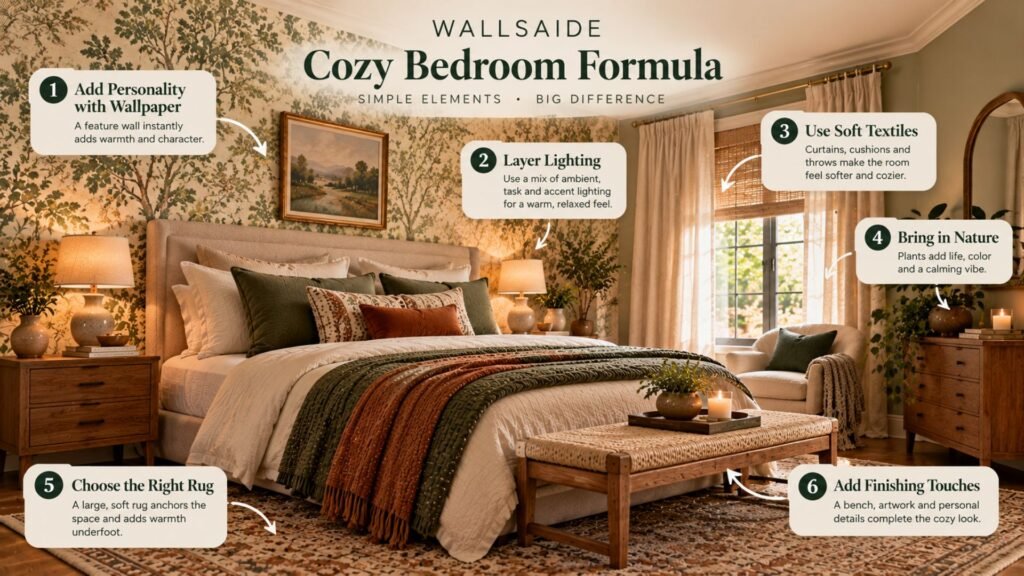
The Wallsaide Cozy Bedroom Formula
A cozy bedroom becomes easier to design when you work with a repeatable combination rather than buying decorative accessories at random.
Use this four-part formula:
Soft base + warm light + natural texture + personal detail
| Element | What to choose | Why it matters |
|---|---|---|
| Soft base | Upholstered bed, comfortable bedding or rug | Establishes visual and physical softness |
| Warm light | Shaded lamps, sconces or dimmable lighting | Creates a gentler evening atmosphere |
| Natural texture | Wood, linen, wool or woven materials | Adds warmth and visual depth |
| Personal detail | Artwork, books or meaningful objects | Makes the room feel individual |
You can apply this formula to almost any decorating style.
A modern bedroom might use an upholstered platform bed, a walnut nightstand, a textured rug and one large artwork. A cottage bedroom could use patterned bedding, painted furniture, a shaded lamp and a vintage mirror.
The elements stay consistent even when the style changes.
Cozy bedroom color combinations worth trying
Color can reinforce the atmosphere you want, but cozy bedrooms don’t have to be beige.
Consider these combinations:
- Cream + oatmeal + walnut: Soft, understated and versatile.
- Terracotta + sand + ivory: Earthy and welcoming.
- Chocolate brown + caramel + cream: Rich and enveloping.
- Sage green + natural oak + warm white: Organic and relaxed.
- Forest green + antique brass + ivory: Moody and classic.
- Dusty rose + mushroom + walnut: Gentle and sophisticated.
- Slate blue + rust + cream: Balanced cool and warm contrast.
Before choosing paint, compare the samples with your flooring, furniture and bedroom lighting.
For a broader selection, see our bedroom color ideas guide.
How to make a small bedroom cozy without clutter
Small cozy bedroom ideas work best when every major item has a purpose.
Begin with the bed, which is usually the room’s largest piece of furniture. Choose a frame that leaves enough space to move comfortably and access storage.
Use wall sconces or narrow lamps instead of oversized bedside lighting. A compact rug and textured bedding can add softness without taking up additional floor space.
Keep surfaces relatively clear and use closed storage for items that don’t need to remain visible.
A small room can feel intimate without feeling crowded. The difference often comes down to furniture scale and circulation.
Cozy bedroom ideas on a budget
You don’t need to replace every piece of furniture to create a warmer bedroom.
Start with the changes that affect the largest visible surfaces.
First, update the bedding. A different duvet cover, lightweight quilt or textured throw can change the room’s overall palette.
Next, improve the lighting. A suitable shaded lamp or warmer bulb can soften the evening appearance without replacing furniture.
Then, introduce texture. A washable rug, simple curtains or upholstered cushion can make hard surfaces feel less dominant.
Finally, rearrange or edit the accessories you already own. A meaningful artwork, book collection or favorite ceramic piece may be more effective than buying several new decorative objects.
Spend first on the changes that improve everyday comfort, then consider purely decorative additions.
Common mistakes that make a cozy bedroom feel cluttered
Adding too many decorative pillows
Pillows can make a bed look inviting, but an excessive number creates daily inconvenience. Choose a manageable arrangement that suits your bed size.
Using only dark colors
Dark colors can create intimacy, but they aren’t essential for coziness. Light bedrooms can feel equally inviting when they include warmth, texture and comfortable lighting.
Ignoring practical lighting
Decorative lighting should still support reading, dressing and moving around safely. Combine atmosphere with adequate illumination.
Choosing oversized furniture
A large bed or bulky nightstand can interrupt circulation and make a small bedroom uncomfortable. Check measurements before purchasing.
Treating every surface as display space
Personal objects create character, but they need room to be appreciated. Keep some surfaces clear.
Frequently asked questions
How can I make my bedroom look cozy?
Start with comfortable bedding, softer lighting and one or two textured materials. Add a warm color or natural wood finish, then personalize the room with artwork or meaningful objects.
What colors make a bedroom feel cozy?
Warm white, beige, chocolate brown, terracotta, muted green and dusty rose can all create inviting bedrooms. The overall combination of lighting, materials and furnishings matters more than any single color.
Can a modern bedroom be cozy?
Yes. Modern bedrooms can feel inviting with upholstered furniture, warm wood, textured rugs and soft lighting while retaining clean lines and restrained decoration.
How do I make a small bedroom feel warm and cozy?
Choose appropriately sized furniture, layered bedding, a soft rug and compact bedside lighting. Keep circulation clear and use practical storage to avoid overcrowding.
How can I make a bedroom cozy without spending much money?
Try rearranging furniture, changing bedding, using a suitable warm-toned lamp, displaying meaningful artwork or adding a textured throw. Prioritize changes that improve both comfort and appearance.
Do I need a lot of blankets to make a bedroom cozy?
No. Bedding should suit your climate and comfort preferences. Lightweight layers, soft upholstery, warm colors and natural textures can create a cozy appearance without making the bed excessively warm.
Final thoughts
A cozy bedroom isn’t defined by one color, decorating style or collection of accessories. It’s the result of thoughtful choices that make the space comfortable, balanced and welcoming.
Start with the elements you use every day: your bed, lighting and furniture layout. Then introduce materials, colors and personal details that make the room feel like yours.
Whether you prefer a warm neutral retreat, a moody green bedroom or a simple Scandinavian space, the best cozy bedroom is one that looks inviting and works comfortably for daily life.
About the author
Emma Carter writes about interior color, home décor, and practical styling for Wallsaide. She focuses on helping readers combine colors, materials, textiles, and decorative elements into rooms that feel balanced and cohesive.