
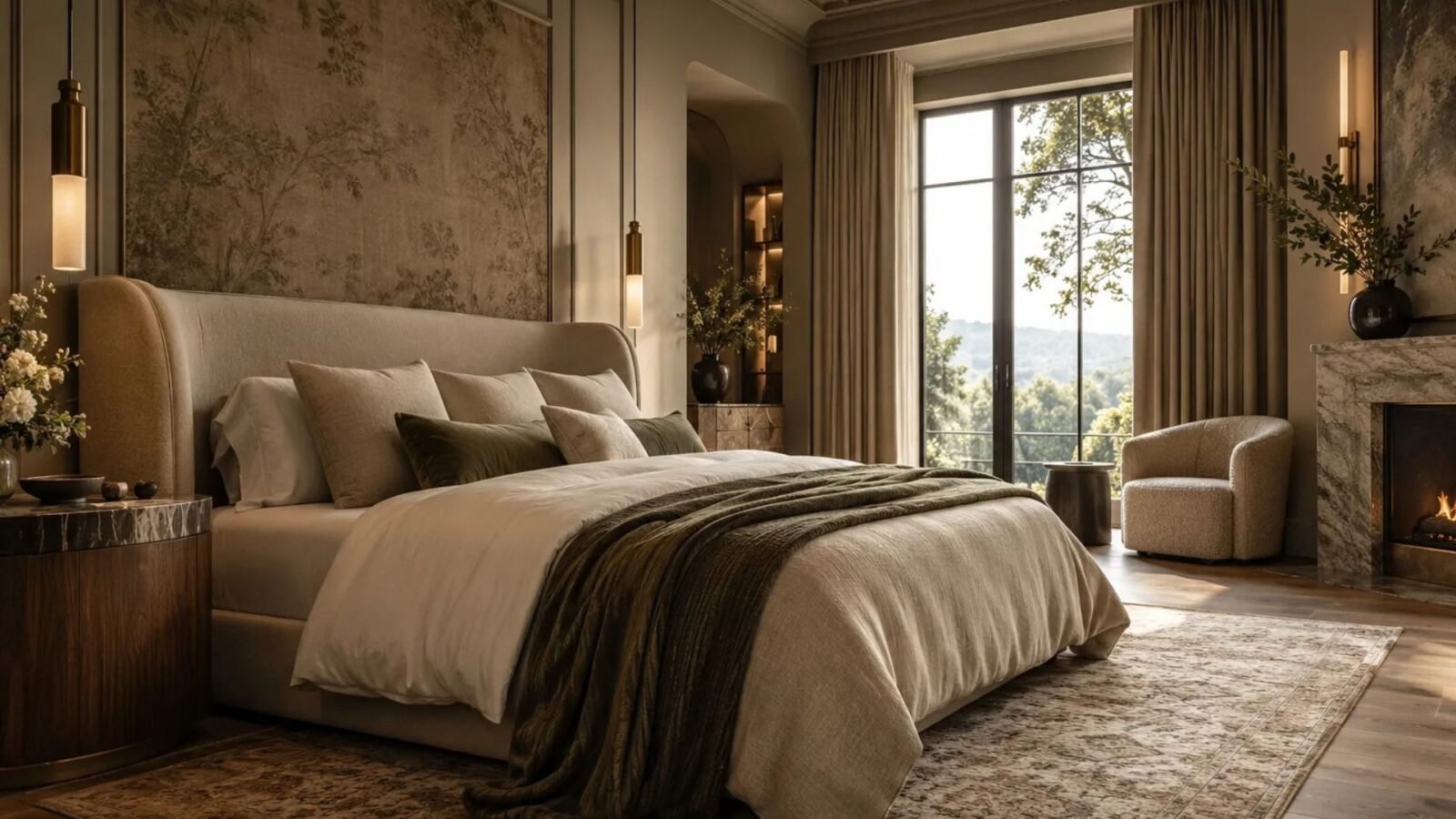

Explore distinctive luxury bedroom styles and learn which materials, furniture, lighting and details make each one work in a real home.
A luxury bedroom does not have to look like a showroom, and it certainly does not need gold finishes on every surface. The rooms that feel genuinely special usually have a clear design identity, well-chosen materials, thoughtful lighting and furniture that fits the architecture.
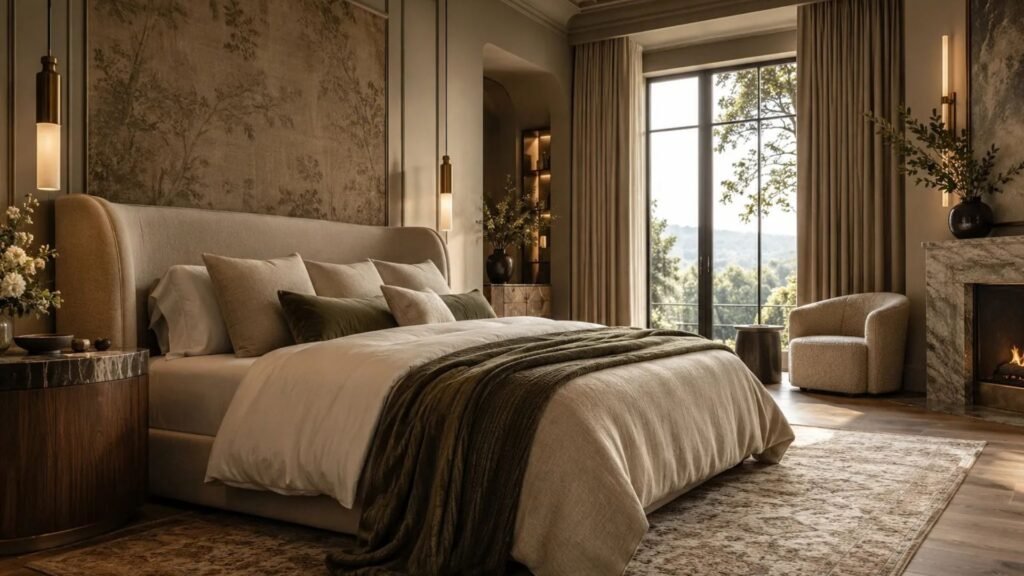
A Parisian bedroom with ornate moldings creates a different kind of luxury from a minimalist Japanese-inspired retreat or a dramatic city penthouse. Each can feel exceptional, but the decisions behind them are not interchangeable.
These luxury bedroom ideas explore 15 distinct looks, with specific ways to adapt their defining features to your own space and budget.
What actually makes a bedroom look luxurious?
Luxury is not one decorating style. It is the sense that the whole room has been considered, from the scale of the bed to the way the curtains fall and the light reaches the walls.
Four details are especially useful to evaluate:
- A clear focal point: The bed, an architectural wall or a remarkable view should lead the composition instead of competing with everything else.
- Convincing materials: Wood grain, linen, stone, substantial upholstery and well-finished metal bring depth that shiny accessories alone cannot provide.
- Purposeful lighting: Ambient light, practical bedside light and daylight control make the room comfortable in different conditions.
- Edited proportions: Furniture has breathing room, surfaces feel intentional and the room functions as well as it photographs.
The most expensive-looking bedroom is not necessarily the one with the most expensive pieces. It is often the one where the pieces belong together.
15 luxury bedroom ideas with their own design identity
1. Create a quiet luxury bedroom with understated materials
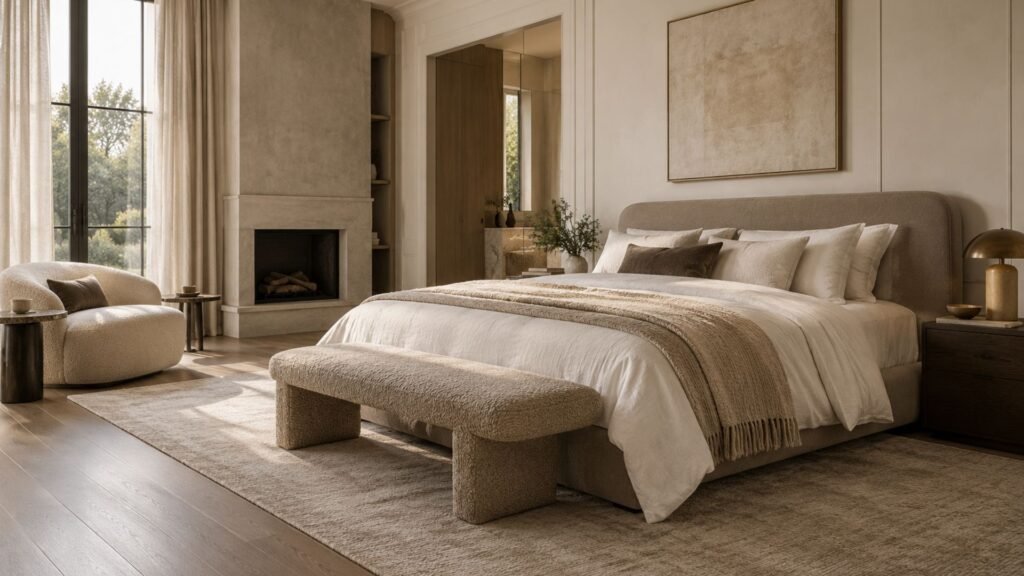
Quiet luxury relies on finish and proportion rather than visual spectacle. Picture a broad upholstered bed in warm mushroom linen, walls finished in soft limestone tones, a dark oak dresser and a single large artwork with plenty of space around it.
A restrained palette works best when surfaces feel different. Matte paint, woven wool, brushed wood and smooth ceramic create variation without introducing competing colors. Choose substantial but simple furniture, and let the quality of its shape do the work.
Recreate the look: Begin with tailored bedding, full-length curtains and one well-proportioned bedside piece. An oversized neutral headboard can establish the mood without costly wall reconstruction. Avoid adding decorative trays and metallic ornaments merely to signal expense.
2. Design a contemporary penthouse-inspired bedroom
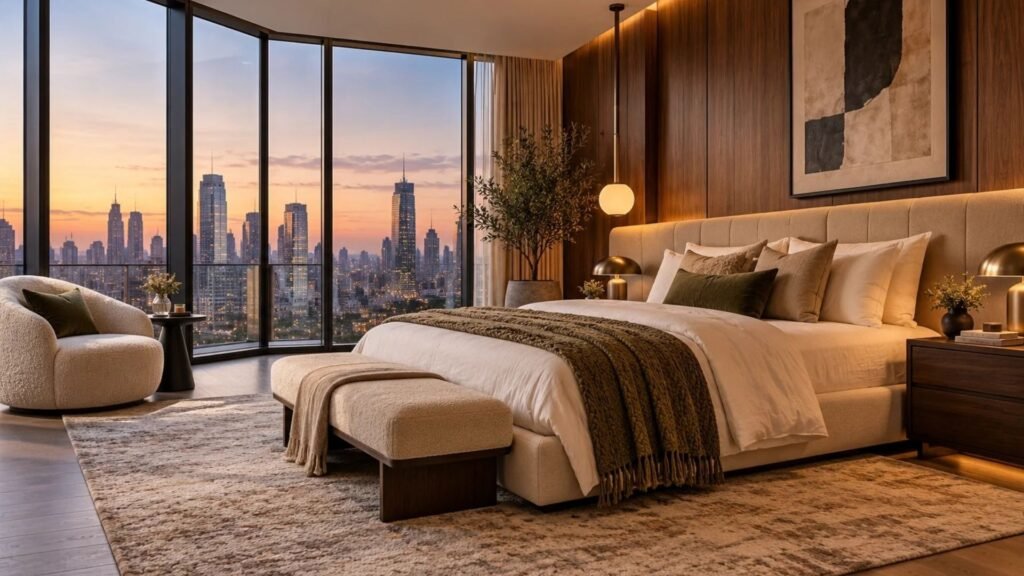
A penthouse-style bedroom is defined by its relationship to architecture and the view. Floor-to-ceiling glazing, crisp furniture silhouettes, generous open space and a contrast between dark timber and pale upholstery create the feeling of an urban private suite.
Instead of placing everything symmetrically around the bed, consider a low platform bed facing the strongest view, a sculptural chair near the glazing and concealed or integrated storage. A statement pendant can be effective when ceiling height and its placement allow.
Recreate the look: Even without skyline windows, a streamlined bed, broad unbroken curtains, a walnut accent wall and one contemporary light fixture can suggest the style. Keep the walking route open. Adding more furniture will not make an ordinary bedroom feel like a penthouse.
For a more detailed approach to contemporary furniture and cleaner room layouts, explore our modern bedroom ideas
3. Bring Art Deco glamour into the bedroom
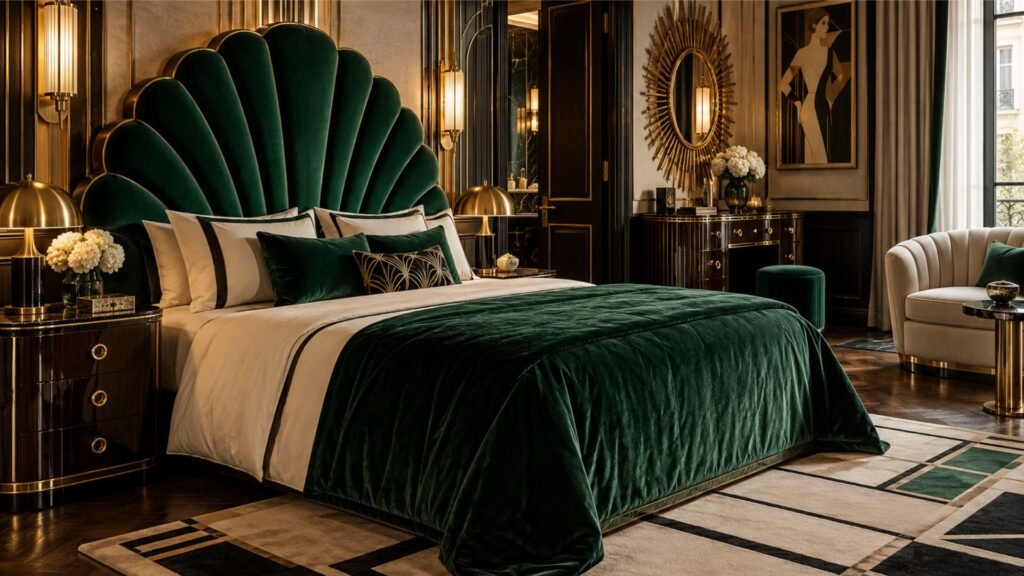
Art Deco luxury is expressive: curved silhouettes, geometric patterns, polished wood, rich upholstery and carefully controlled shine. An emerald velvet headboard, fluted dark-wood furniture, a bronze-framed mirror and a geometric rug can create a striking period-inspired setting.
The secret is to choose one unmistakable Deco feature instead of filling the room with matching motifs. A fan-shaped headboard or pair of architectural wall sconces can carry the style. Keep bedding relatively simple so the room does not become visually restless.
Recreate the look: Invest your attention in the headboard silhouette, then repeat one metal finish in two smaller places. Deep green, ink blue and warm ivory work well with bronze or aged brass. Architectural Digest’s bedroom decorating guide also discusses how to mix Art Deco influences with contemporary furniture.
4. Give your bedroom a Parisian apartment character
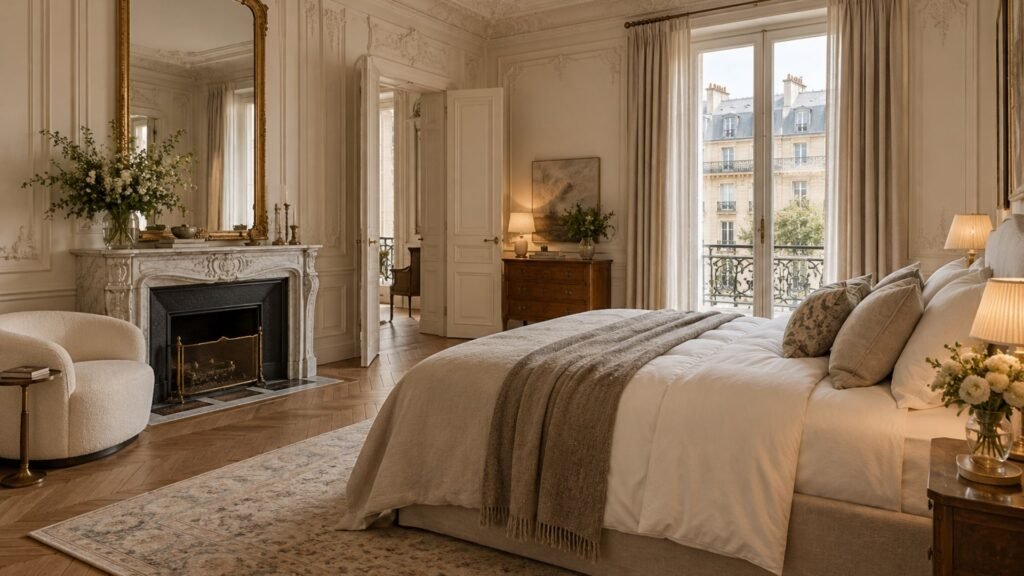
Parisian luxury balances formal architecture with relaxed furnishing. Decorative wall moldings, a tall antique mirror, herringbone wood flooring and a marble-topped side table can make a room feel storied rather than newly assembled.
The furnishing need not be ornate from corner to corner. In fact, a simple linen-covered bed can look more elegant against detailed paneling than an elaborate carved frame. A vintage-style chandelier or pleated shade adds character without requiring a matching furniture collection.
Recreate the look: Try applied wall molding on a suitable flat wall, a secondhand gilded mirror and a small antique-style side table. Paint the trim and walls in a closely related shade to keep the result sophisticated. This look is strongest when you respect the room’s actual scale and do not force oversized French furniture into a compact space.
5. Borrow the best details from a five-star hotel suite
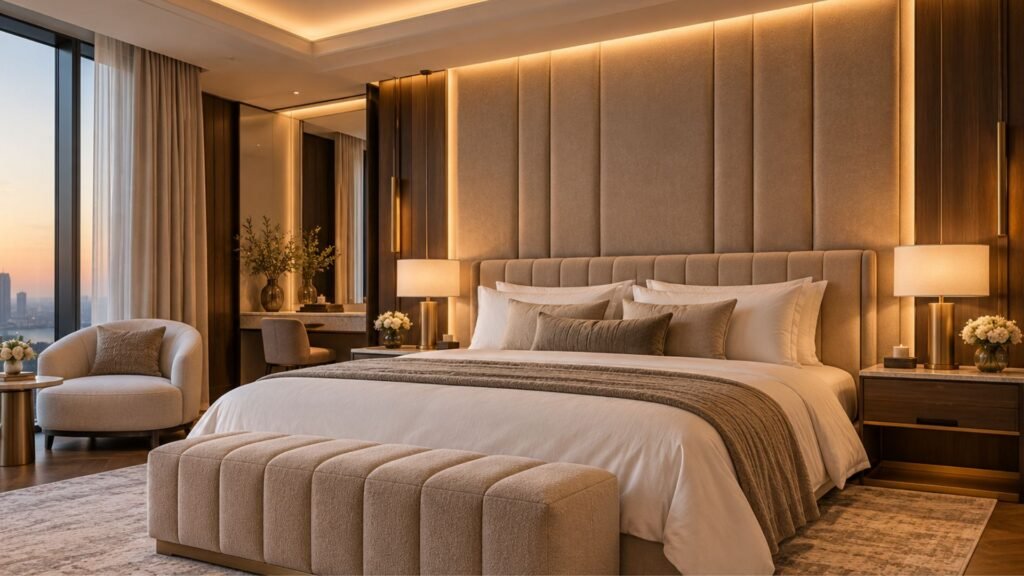
Hotel-inspired luxury is as much about function as appearance. The most successful rooms feel organized: an inviting bed, uncluttered bedside surfaces, intuitive lighting, effective window coverings and a practical spot for clothes or luggage.
A generous wall-to-wall upholstered headboard, integrated bedside lights and neatly layered white bedding can recreate that composed feeling. Use a continuous palette through curtains, carpet or rugs and furniture to make the suite feel unified.
Recreate the look: Prioritize a comfortable mattress, good pillows, accessible charging points and bedside lights with independent controls. Upgrade the headboard or bedding before buying decorative accessories. For lighting approaches that work beyond overhead fixtures, see Architectural Digest’s bedroom lighting ideas.
6. Try Italian modern luxury with stone and walnut
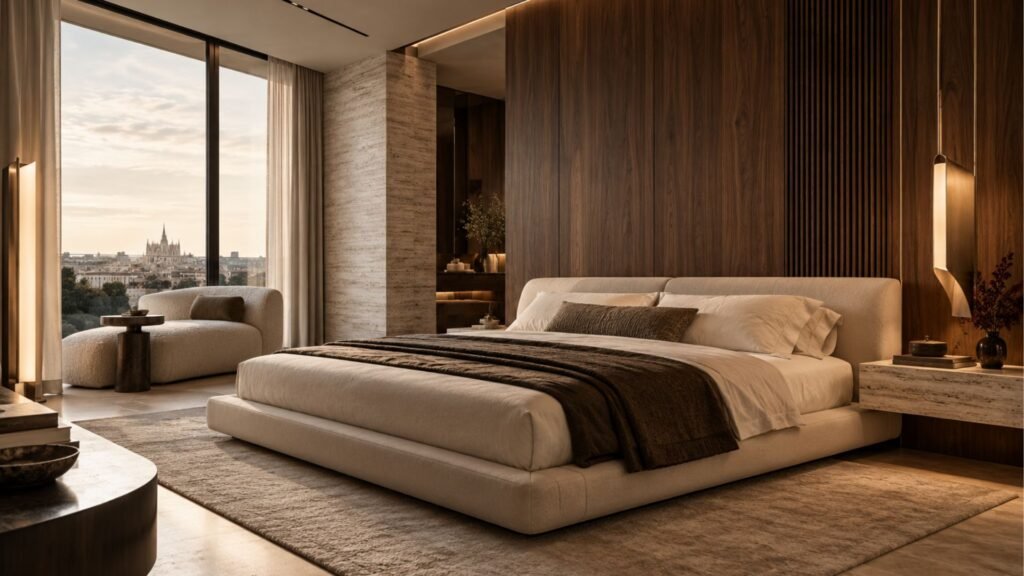
Italian-inspired contemporary interiors often make a strong statement through the composition of materials. Imagine a broad wall of walnut veneer, a travertine-topped nightstand, a low upholstered bed and a single sculptural pendant against a warm plaster finish.
The palette is controlled, but the contrast between veined stone, patterned timber and soft fabric provides visual richness. Furniture should look grounded and intentional rather than delicate or fussy. Built-in joinery can strengthen the effect when the room’s dimensions justify it.
Recreate the look: Use a carefully finished walnut dresser or headboard panel as your principal investment, then add a stone-look bedside surface and simple neutral bedding. Real stone is not required to achieve the composition. What matters is believable material texture and clean junctions between finishes.
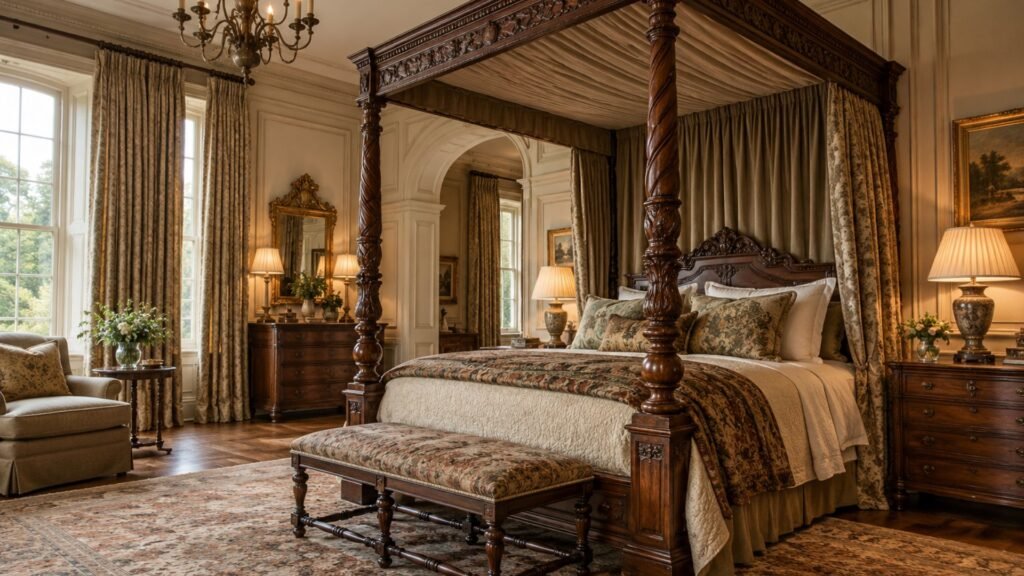
7. Embrace grand traditional luxury with a four-poster bed
Traditional luxury is comfortable with craftsmanship and decoration. A beautifully proportioned four-poster bed, patterned curtains, a Persian-style rug and polished antique wood establish a bedroom with heritage character.
This approach works particularly well in rooms with higher ceilings, generous windows or established architectural detailing. A canopy frame draws the eye upward, so the surrounding furniture should be scaled to balance its presence. Modern, unpatterned bedding can keep an ornate bed from feeling excessively formal.
Recreate the look: If a full four-poster would overwhelm your room, choose a distinctive wood bed frame and add one vintage dresser or upholstered bench. Introduce a muted patterned rug rather than matching every textile. Check bed height and ceiling clearance before committing to tall furniture.
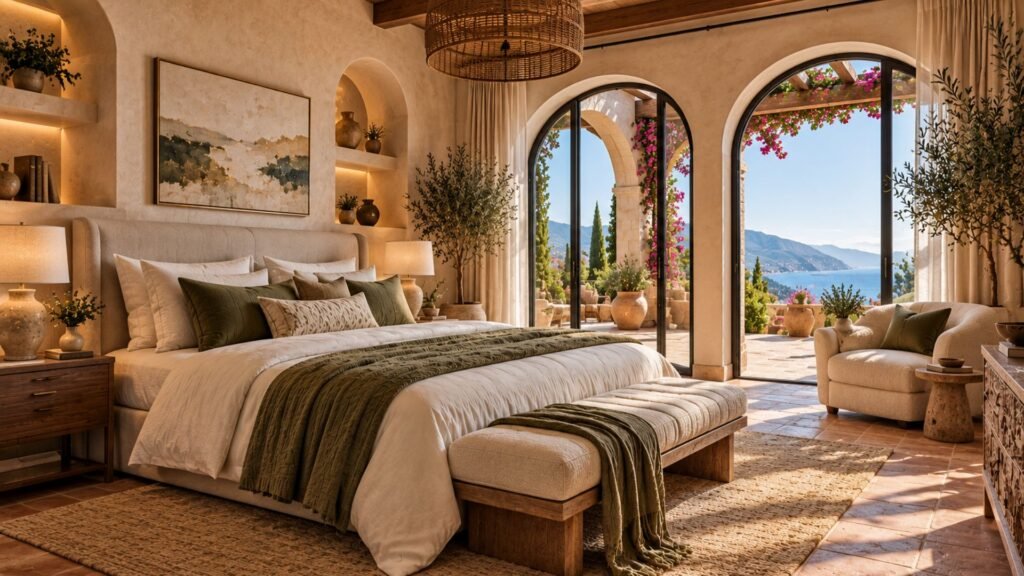
8. Create Mediterranean resort luxury with arches and plaster
Mediterranean-inspired bedrooms feel luxurious through light, texture and a connection to the outdoors. Warm plaster walls, pale limestone, rounded openings, hand-finished wood and breezy linen create an atmosphere that is relaxed but architecturally distinctive.
Rather than relying on nautical decorations, focus on natural surfaces and open sightlines. A low, built-in-looking bed platform, terracotta floor tiles or a shaded terrace visible through French doors can help define the style.
Recreate the look: Choose warm-white walls, a natural timber bed, loosely woven linen curtains and one handmade-looking ceramic lamp. If your home does not have arches, do not manufacture them just for a photograph. A curved niche or rounded mirror can introduce a softer line more convincingly.
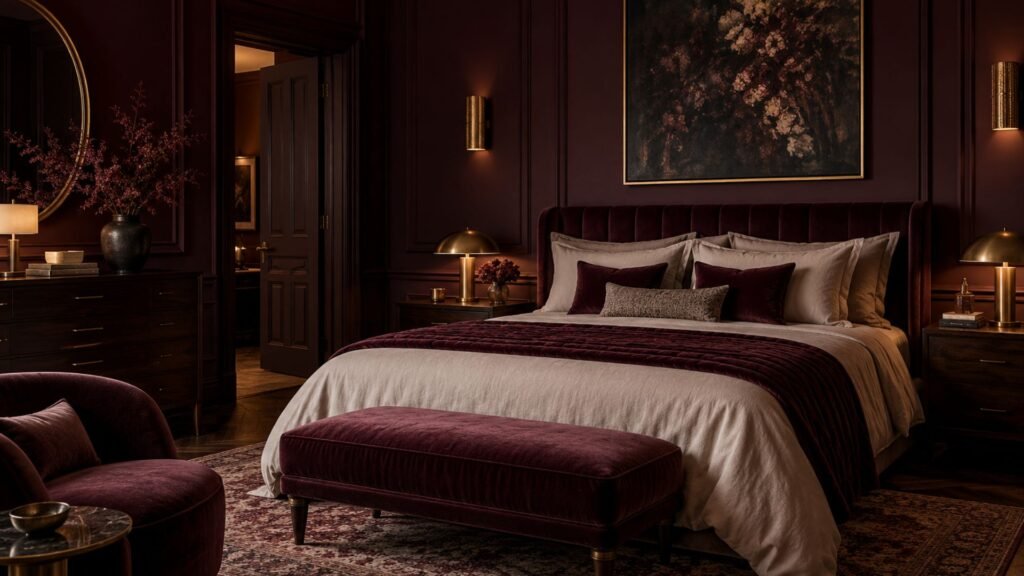
9. Make a moody luxury bedroom with aubergine or burgundy
Dark luxury is not limited to charcoal and black. Wine, aubergine and deep plum can create a dramatic bedroom that feels more personal and less predictable. Pair saturated walls with tobacco-brown wood, muted rose upholstery and discreet aged-metal details.
Dark rooms need variation in reflectivity and texture. A matte wall looks especially rich beside a velvet chair, a glossy lacquered cabinet or crisp pale bedding. Lighting should reveal those differences rather than flatten the whole room under a bright ceiling light.
Recreate the look: Paint the walls in a carefully sampled deep tone, retain lighter bedding and add one distinctive vintage or contemporary lamp. Start with paint if you want the effect without replacing the bed. Test the color in daylight and at night; deep reds and purples can shift considerably between lighting conditions.
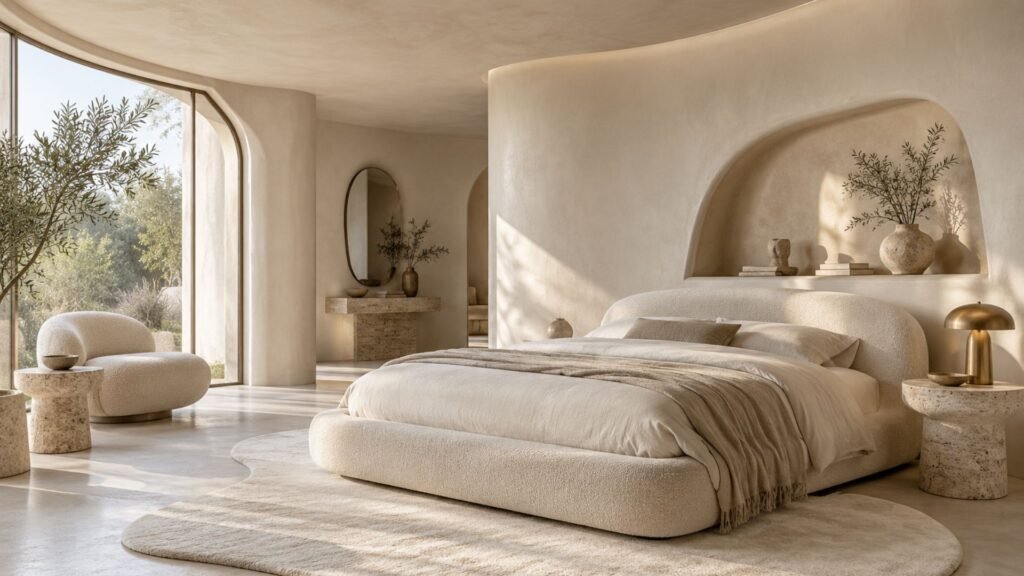
10. Choose sculptural organic luxury instead of conventional symmetry
Sculptural organic bedrooms take their identity from shape. Think softly curved plaster walls, a rounded upholstered bed, a free-form rug, limestone surfaces and furniture that resembles functional sculpture. The result is calm, but it has more movement than a conventional minimalist room.
The important design decision is where the curves appear. One striking architectural curve or an unusual bed silhouette is more effective than repeating arches on mirrors, headboards, lamps and every other accessory.
Recreate the look: In an existing room, introduce a curved headboard or a pair of rounded occasional tables, then keep the surrounding forms simple. Plaster-look paint and tactile curtains can add depth without an extensive remodel. Leave enough clear floor area for the shapes to be appreciated.
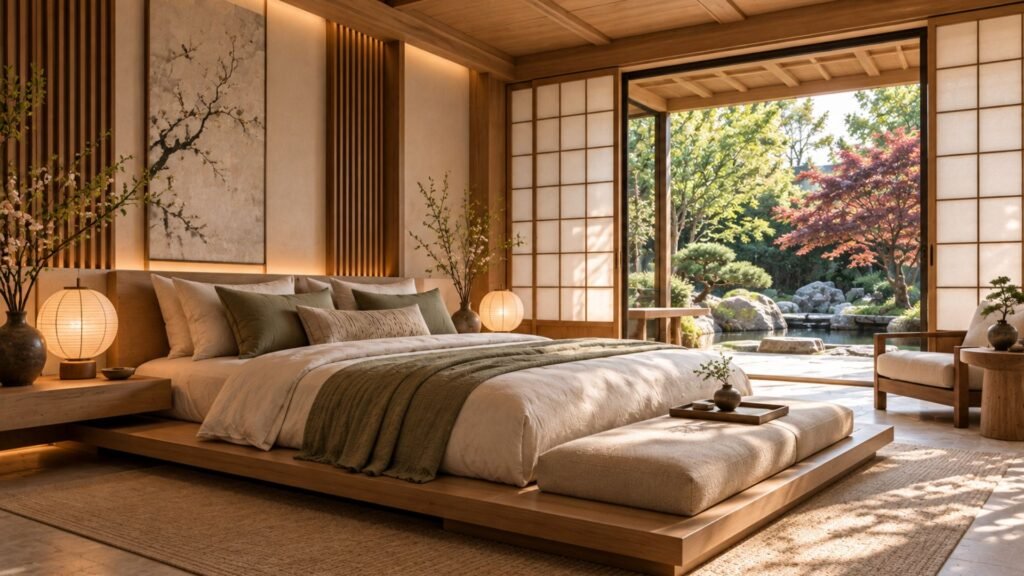
11. Build a refined Japanese-inspired luxury bedroom
Japanese-inspired luxury puts attention on material honesty, precise joinery and the relationship between the bedroom and its surroundings. A low timber platform bed, finely grained wood screens, textured wall finishes and a carefully framed garden view can create a quiet, considered retreat.
This is not the same as decorating a neutral bedroom with a few bamboo accessories. Proportion, storage and restraint matter more than decorative symbols. Carefully controlled daylight and uncluttered edges are central to the atmosphere.
Recreate the look: Use a low bed suited to your comfort and mobility needs, pale-to-medium natural wood, linen bedding and concealed storage. A simple slatted screen can suggest the architectural rhythm without imitating a traditional Japanese room. Choose fewer, better-positioned objects rather than trying to furnish every corner.
12. Introduce understated coastal luxury
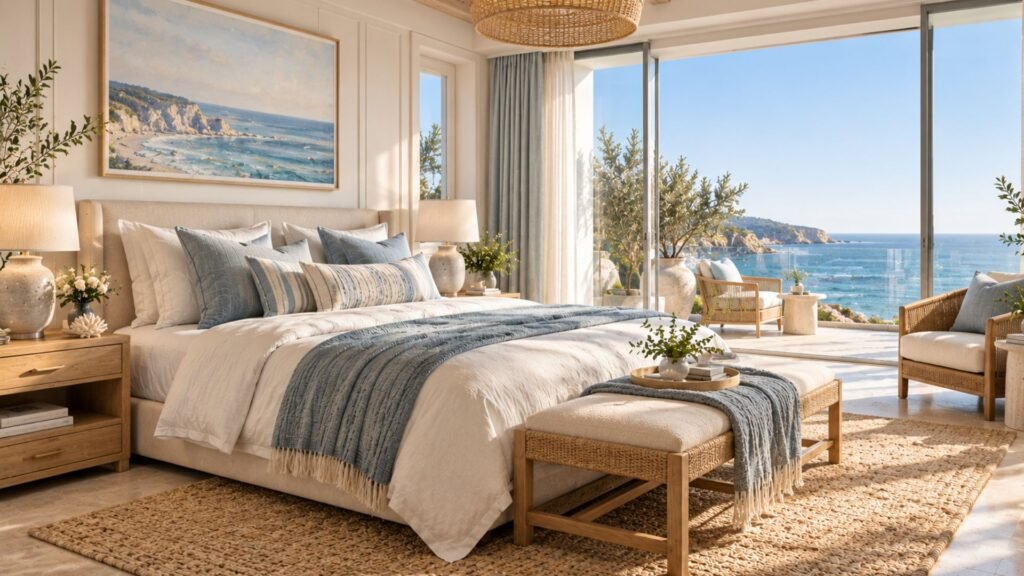
Luxury coastal bedrooms are airy, tailored and connected to a sea-inspired palette without relying on obvious beach motifs. Picture chalky white walls, pale oak, a woven or linen-covered headboard, blue-gray textiles and broad windows that make the room feel open.
The design should emphasize light and quality of finish. Natural textures can be balanced with sharper contemporary details, such as a streamlined dresser or polished stone lamp. A subtle stripe can introduce pattern without turning the room into a themed guesthouse.
Recreate the look: Combine ivory linen, bleached-looking wood and one softened blue accent. Prioritize curtains that hang cleanly and a rug that suits the bed’s scale. Skip rope decorations, shell collections and matching nautical prints; the luxury comes from the calm composition.
13. Create collected maximalist luxury with art and pattern
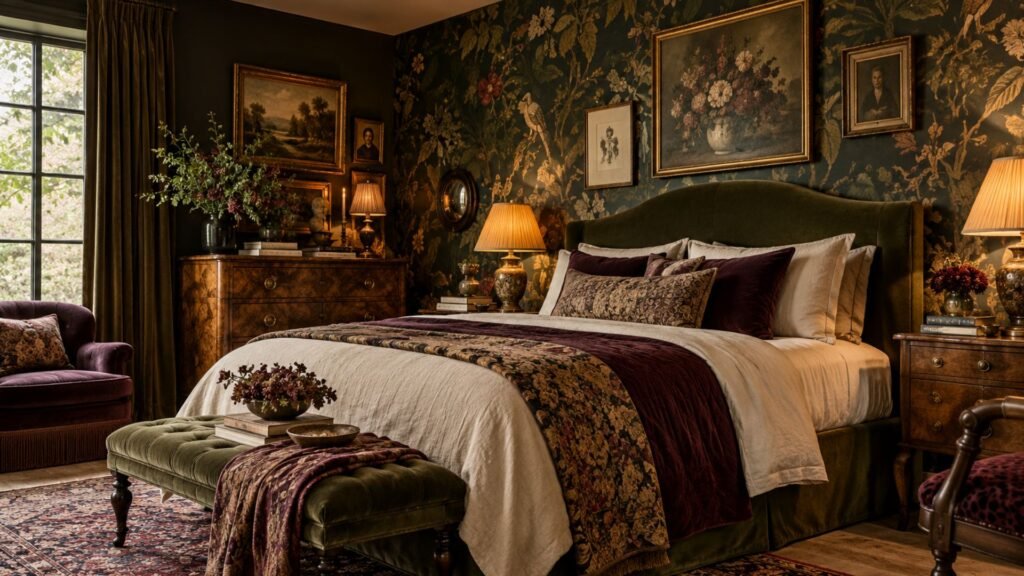
Maximalist luxury is deliberate abundance, not uncontrolled clutter. A richly patterned wallpaper, an upholstered bed, a vintage chest and collected artwork can coexist when the room has a clear visual hierarchy.
Pick a lead pattern, then build supporting colors from it. For example, an olive-and-ochre botanical wallcovering could be paired with a burgundy velvet headboard and quiet ivory bedding. Mix eras intentionally and let larger furniture establish structure.
Recreate the look: Start with one expressive wallpaper or large artwork. Add a vintage bedside piece and repeat two or three colors across smaller textiles. Keep practical surfaces usable and reserve a little negative space around the strongest focal point. This is luxury with personality, not a requirement to display everything you own.
14. Make a black-and-white bedroom feel architectural
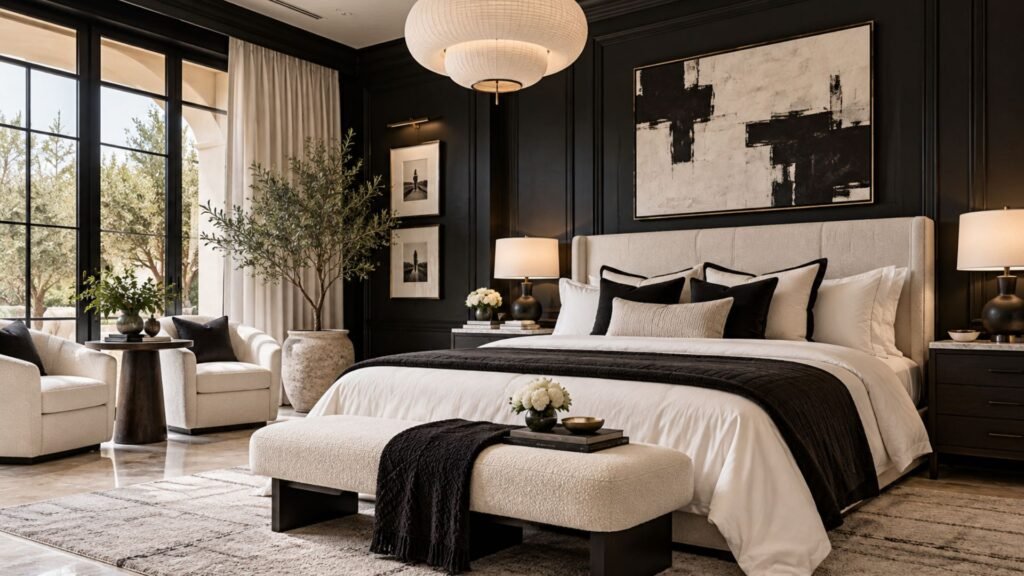
A monochrome luxury bedroom succeeds when contrast is handled through form and finish. Black oak wall paneling, a sharply tailored white bed, pale stone flooring and a sculptural black pendant can look striking without any metallic accents.
The risk is a room that feels flat or harsh. Introduce tonal variation: charcoal wood rather than featureless black, warm white instead of blue-white and a rug with visible texture. Use matte, satin and soft woven surfaces together so the palette has depth.
Recreate the look: Keep existing white walls if they work, then introduce a dark wood headboard wall or a substantial black bed frame. Choose one remarkable light fixture rather than several small decorative objects. This style benefits from clean storage and careful cable management because clutter becomes especially visible against strong contrast.
15. Give a small bedroom a bespoke luxury finish
A compact bedroom can look luxurious when every element feels intentional. The goal is not to imitate a vast primary suite, but to make the room work beautifully within its actual dimensions.
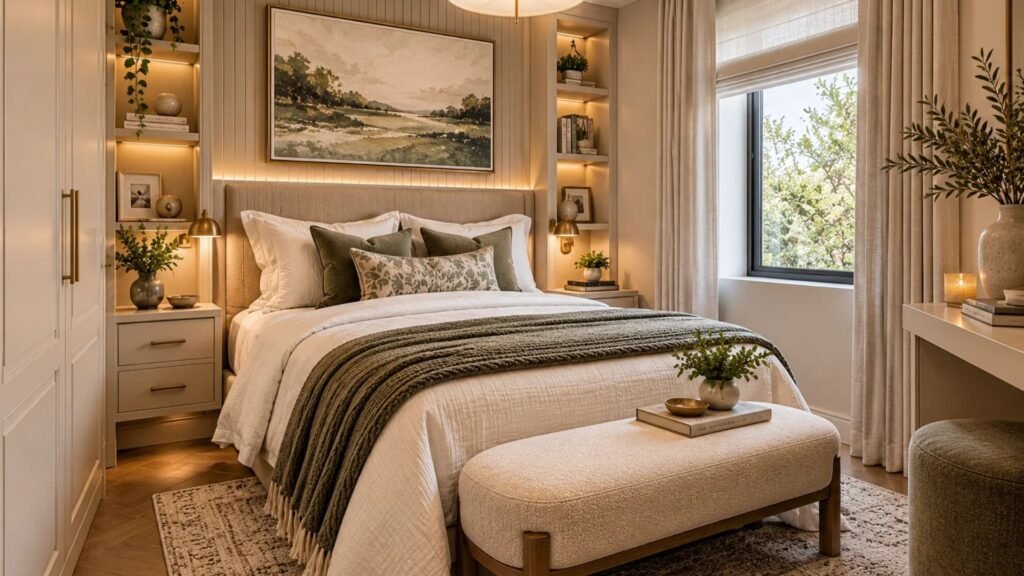
Built-in wardrobes, a headboard with integrated shelves, slim wall-mounted reading lights and full-height curtains can create a fitted, cohesive appearance. A single color across cabinets and walls may visually quiet busy surfaces, while mirrors can help distribute available light when positioned thoughtfully.
Recreate the look: Spend first on the bed layout and well-designed storage rather than decorative furniture. Use narrow bedside ledges if conventional nightstands block circulation. Choose one standout fabric, light fixture or art piece to provide a sense of finish. Our small bedroom ideas guide explains the layout decisions worth solving before decorating.
The Wallsaide Luxury Bedroom Decision Stack
When several beautiful bedrooms appeal to you, buying individual pieces is tempting. A more reliable approach is to make five decisions in order. This is Wallsaide’s practical decorating framework, not an industry rule.
- Choose the design identity. Decide whether you want architectural modernity, heritage detail, resort softness or another clear direction. Save references that actually share those traits.
- Protect the room’s function. Confirm bed placement, access to storage, comfortable circulation and the window coverings you need before focusing on finishes.
- Select one high-impact feature. This might be a shaped headboard, paneled wall, extraordinary rug, architectural light or significant antique piece. It should establish the room’s character.
- Build material relationships. Limit competing finishes and repeat useful undertones across wood, textiles, stone and metal. Similar colors can still feel rich when the materials differ.
- Refine the light and edit the room. Combine general and bedside lighting, control daylight where needed, then remove accessories that obscure the primary design feature.
The key test: If you remove the decorative accessories, does the room still have a recognizable style? If the answer is no, strengthen the furniture, material and lighting decisions before shopping for more decor.
Which luxury bedroom style should you choose?
The right style depends as much on the room as on your taste. A penthouse aesthetic depends on open space and crisp architectural lines. Parisian and grand traditional styles benefit from characterful proportions or existing detailing. Mediterranean design works with natural light and textured surfaces, while quiet luxury can be adapted to many conventional bedrooms.
If you love more than one direction, choose a primary style and borrow only a limited supporting detail from another. An Italian modern room might accommodate a vintage mirror, for instance, but mixing a canopy bed, Deco wallpaper and sculptural plaster furniture without a plan risks losing the identity of all three.
Your home’s architecture is a useful constraint, not an obstacle to overcome. Work with what the space already does well.
How to make a bedroom look expensive without overspending
You can create a more polished bedroom without a complete renovation. The best improvements fix the largest visual weaknesses first.
- Improve the bed presentation. Use bedding that fits properly, a smooth duvet cover or coverlet and a controlled number of pillows. Good fit matters more than excessive layering.
- Correct the lighting. Replace a harsh bare bulb or poorly scaled lamp with a shaded fixture that gives useful light. Dimmers and separate bedside controls add flexibility where compatible.
- Make curtains look intentional. Choose suitable lengths and fullness, and check that the hardware, lining and mounting position work with the window.
- Upgrade one focal surface. Paint, well-executed trim, an upholstered headboard or distinctive wallpaper may do more for the room than several smaller purchases.
- Use secondhand furniture selectively. A solid wood dresser or characterful mirror can add depth, provided its dimensions and condition suit your space.
- Remove visual friction. Sort visible cables, crowded nightstands, unstable rugs and awkward storage. A usable room often looks more finished than an overdecorated one.
Avoid spending heavily on items that only look attractive in a still photograph. A luxury bedroom should remain comfortable when you need to find a light switch, open a drawer or walk around the bed at night.
Luxury bedroom colors worth considering
Luxury bedroom colors range far beyond beige. The right combination supports the style rather than trying to make every finish look expensive.
- Mushroom, ivory and dark oak: Quiet luxury with depth and restraint.
- Emerald, walnut and bronze: A sophisticated Art Deco direction.
- Warm white, terracotta and limestone: Sunlit Mediterranean softness.
- Aubergine, tobacco and dusty rose: Moody, richly layered character.
- Charcoal, chalk white and pale stone: Architectural monochrome.
- Soft blue-gray, ivory and pale oak: Tailored coastal elegance.
Observe paint samples against the bedroom floor, fabric and evening lighting before deciding. For help comparing color families and undertones, see our bedroom color ideas guide.
Lighting and comfort should never be afterthoughts
Luxury bedroom design needs to work both in daylight and after dark. A beautiful pendant cannot replace an accessible bedside reading light, and dramatic floor-to-ceiling windows still need suitable privacy and light control.
Use separate lighting layers for moving around the room, reading and creating softer evening illumination. Blackout shades or lined curtains may be useful if outside light enters the sleeping area. According to the Sleep Foundation’s guidance on designing a sleep-friendly bedroom, darkness, quiet and a comfortable temperature are important practical considerations.
If your priority is an inviting, softer atmosphere rather than architectural drama, our cozy bedroom ideas offer a different decorating direction.
Common mistakes that make a luxury bedroom feel less refined
Trying to create luxury with metallic finishes alone. Gold-colored lamps and mirror frames do not compensate for poorly scaled furniture or low-quality-looking surfaces. Start with the overall design.
Copying an oversized room into a small one. A grand chandelier, giant headboard or extra seating arrangement can make circulation difficult. Adapt the visual principle rather than reproducing every object.
Choosing too many statement pieces. When the bed, ceiling, wallpaper, rug and lighting all demand equal attention, there is no clear focal point. Give one element priority and allow the others to support it.
Ignoring real-life maintenance. High-gloss surfaces show fingerprints, delicate fabrics can require specialist cleaning and thick-pile rugs may be hard to maintain. Select materials for how you actually use the room.
Overstyling the bed. Layering has a purpose, but an excessive collection of decorative pillows can create daily inconvenience. A few well-made textiles often look more considered than a crowded display.
Frequently asked questions
What makes a bedroom look luxurious?
A luxury bedroom usually has a coherent style, furniture scaled to the room, convincing materials and carefully planned lighting. A strong focal point and usable layout matter more than an abundance of expensive accessories.
What is the best color for a luxury bedroom?
There is no single best color. Warm neutrals suit understated luxury, darker jewel tones work for dramatic interiors, and light stone or muted coastal shades support airy spaces. Choose colors that relate to the room’s architecture, daylight and materials.
How can I make a small bedroom feel luxurious?
Make storage and circulation work first. Then choose a well-proportioned bed, one standout finish, full-height window treatments where appropriate and compact bedside lighting. Purposeful design usually works better than squeezing in more furniture.
What is the difference between a modern bedroom and a luxury bedroom?
Modern describes a design language associated with simpler forms and a reduced visual vocabulary. Luxury describes a level of consideration, finish and comfort. A room can be both modern and luxurious, but a traditional or maximalist bedroom can feel luxurious too.
How do I create a hotel-style luxury bedroom at home?
Focus on the practical elements that make hotel rooms easy to use: a comfortable bed, neatly fitted bedding, accessible bedside switches, adequate charging options, organized storage and effective light control. Add a generous headboard and consistent finishes for the visual effect.
Do luxury bedrooms need expensive furniture?
No. Well-made furniture can improve longevity and feel, but luxury is not determined by price alone. Thoughtful proportions, selective secondhand pieces, good-quality-looking textiles and an edited palette can create a refined result on a more limited budget.
Final thoughts
The best luxury bedroom is not the one with the most accessories or the highest price tag. It is the one with a clear point of view and enough attention to detail that the whole room feels purposeful.
Choose the design identity that genuinely suits your home, then translate its most important features into materials, furniture, light and everyday comfort. That is how inspiration becomes a bedroom you can actually live in.
About the author
Emma Carter writes interior design inspiration and practical decorating guides for Wallsaide, helping readers understand design choices and adapt beautiful spaces to their own homes.