
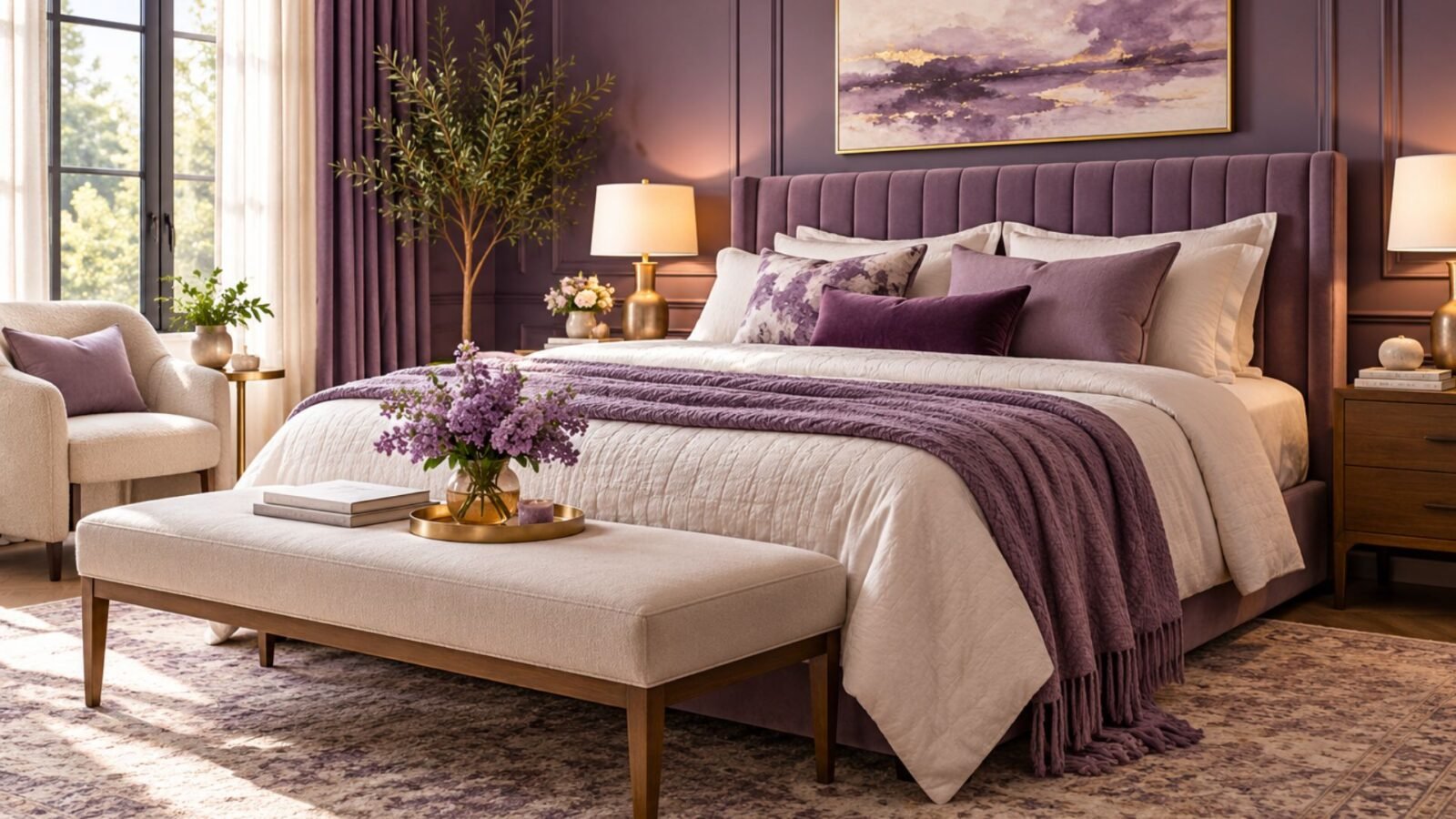

From airy lavender and soft lilac to dramatic plum and aubergine, discover how to decorate a purple bedroom with confidence.
Purple bedroom ideas work best when the shade, lighting, furniture, and materials feel connected. Pale lavender can create a fresh, restful bedroom, while smoky mauve adds understated warmth. Deep plum and aubergine bring richness, especially when balanced with natural wood, warm neutrals, or carefully chosen metallic accents.

The key is deciding what role purple should play. It can cover the walls, introduce color through bedding, or appear in a single statement piece. These 12 bedroom designs show how to use purple in different styles, room sizes, and budgets without making the space feel overly sweet, dark, or visually busy.
12 Purple Bedroom Ideas Worth Recreating
Purple is surprisingly versatile. Its cooler shades pair beautifully with gray, silver, and pale oak, while warmer variations work with walnut, cream, terracotta, and brass.
Each of the following designs offers a distinct approach, with practical suggestions you can adapt to your own bedroom.
1. Soft Lavender Bedroom With Parisian Details
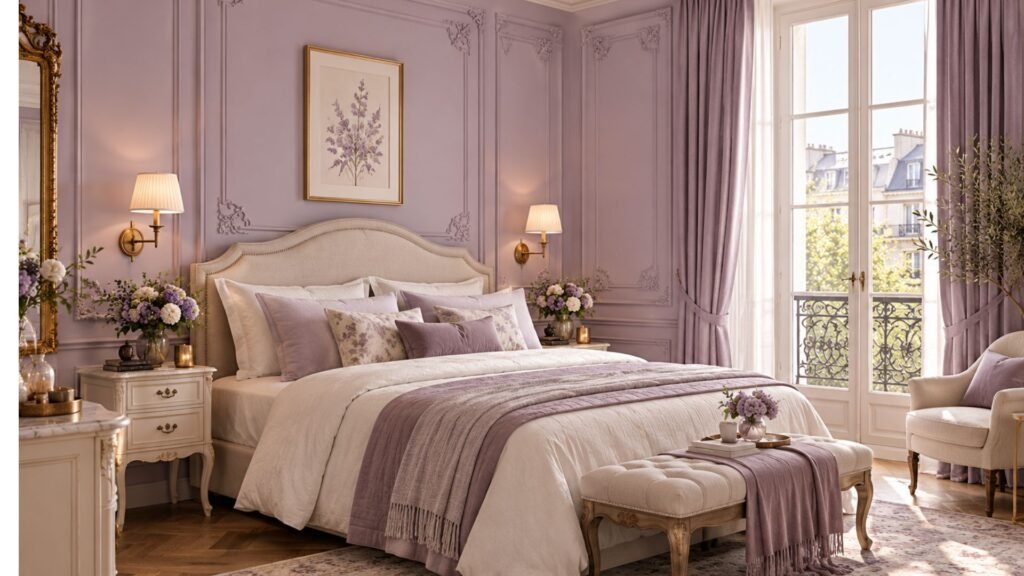
A soft lavender bedroom feels especially refined when paired with traditional architectural details. Decorative wall molding, a gently curved headboard, and antique-inspired lighting introduce structure without making the room feel formal.
Choose a lavender with a muted gray undertone rather than a bright pastel. This prevents the walls from becoming overly sugary, particularly in a bedroom with generous natural light.
Cream bedding, pale oak flooring, and a small amount of aged brass complete the look. Keep the curtains close to the wall color for a seamless finish.
Recreate the look: Paint the walls in a muted lavender, add simple picture-frame molding, and choose ivory bedding with subtle texture. Use brass sconces instead of matching bedside lamps to make the room feel more architectural.
2. Lilac and Natural Oak Scandinavian Bedroom
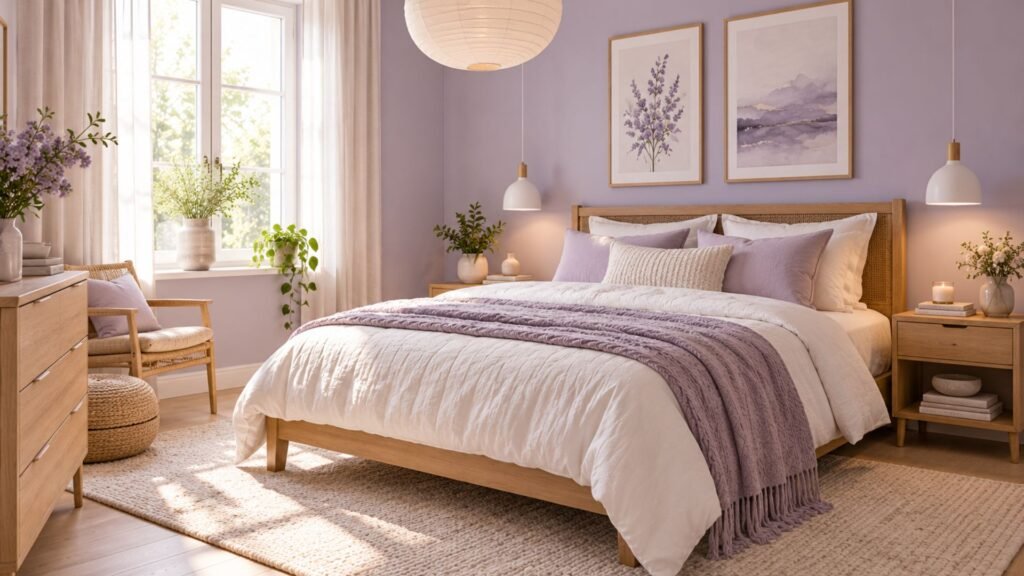
Lilac can feel modern and understated when combined with Scandinavian simplicity.
The secret is using fewer decorative elements and allowing the materials to provide warmth. A natural oak bed, light wood nightstands, crisp white bedding, and a softly textured rug are often enough.
Unlike a heavily decorated purple bedroom, this approach relies on proportion and negative space. Leave some wall surfaces uninterrupted and avoid filling every corner with furniture.
A pale lilac with a slight gray cast works particularly well with blonde wood.
Recreate the look: Pair a simple oak bed frame with off-white bedding, one lilac wall or softly colored walls throughout, and minimal black or white lighting fixtures. Add a wool rug for softness.
3. Deep Plum and Walnut Luxury Bedroom
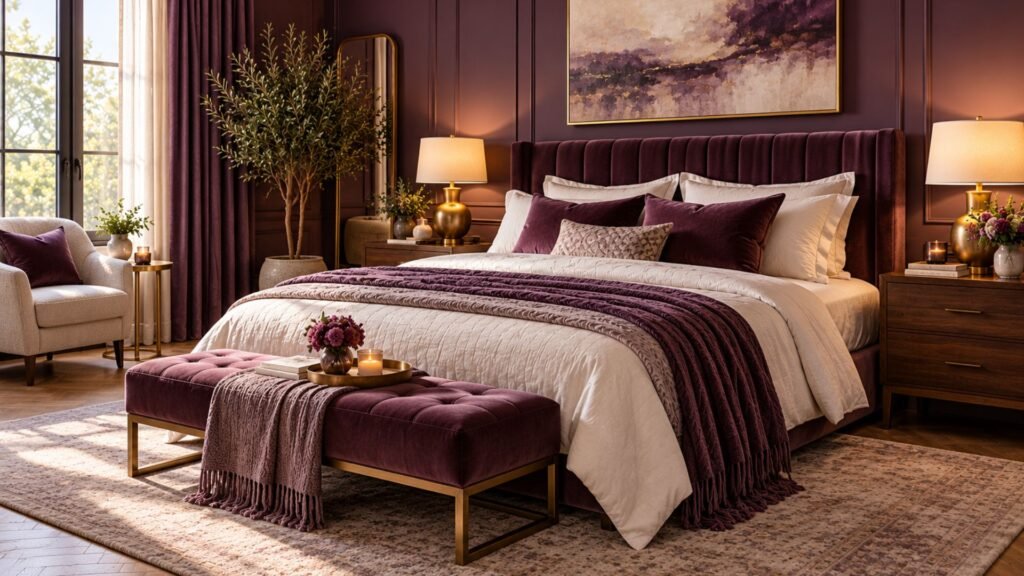
Deep plum creates a completely different atmosphere from lavender. It feels intimate, dramatic, and sophisticated, making it particularly effective in a bedroom designed for evening relaxation.
Walnut furniture brings out the warmth in plum, while ivory bedding prevents the space from becoming visually heavy.
For a polished finish, combine matte purple walls with a mix of textures: smooth walnut, soft velvet, brushed brass, and woven linen.
The lighting matters as much as the color. Warm bedside lamps can make plum look rich and enveloping, while harsh cool-white bulbs may emphasize unwanted blue undertones.
Recreate the look: Use deep plum on the wall behind the bed, introduce walnut bedside tables, and layer cream bedding with one plum velvet cushion or throw. Choose warm, dimmable lighting.
For more richly layered bedroom inspiration, explore our brown bedroom ideas.
4. Dusty Mauve English Country Bedroom
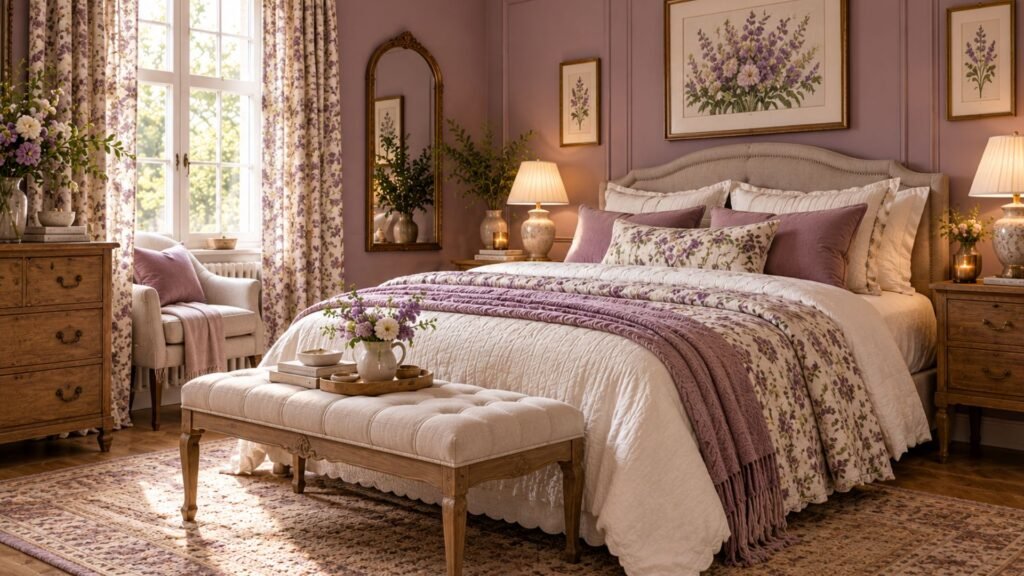
Dusty mauve has a muted, slightly earthy quality that suits traditional bedrooms beautifully.
Instead of relying on bold purple accents, build the room around gentle variations of mauve, faded rose, cream, and aged wood. Floral fabrics and antique furniture create an informal, collected-over-time appearance.
This style works best when the patterns share a similar color palette. For example, mauve floral curtains can sit comfortably beside a small-scale striped cushion if both contain cream or warm beige.
Avoid making every fabric identical. A little variation helps the room feel authentic.
Recreate the look: Choose a dusty mauve wall color, add vintage wooden furniture, and introduce a floral duvet or curtains. Finish with a small pleated lampshade and a woven bedside rug.
5. Lavender and Sage Green Botanical Bedroom

Lavender and sage green make an appealing combination because both can be soft, muted, and inspired by nature.
The pairing feels more sophisticated when one color leads and the other supports it. Lavender walls with a sage headboard, for example, create a clear visual hierarchy.
Natural wood and ivory provide a neutral foundation. Botanical prints can connect the colors without introducing another dominant shade.
This combination also adapts well to contemporary cottage and transitional interiors.
Recreate the look: Use lavender for the walls, sage for the headboard or quilt, and warm white for larger textiles. Add botanical artwork with restrained green and violet tones.
See our sage green bedroom ideas for additional ways to decorate with muted green.
6. Small Purple Bedroom With Built-In Storage
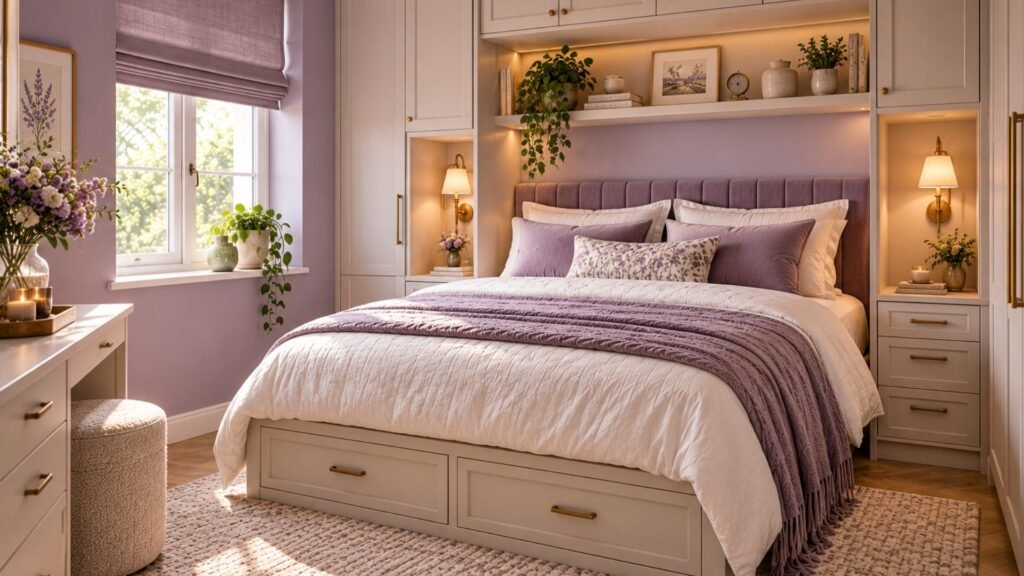
A small bedroom can accommodate purple beautifully, provided the furniture arrangement remains practical.
Muted lilac or gray-purple walls add personality without overwhelming the room. Built-in storage around the bed makes better use of vertical space and reduces the need for bulky freestanding furniture.
Keep wardrobe fronts simple, particularly when the room is narrow. Cream or light oak cabinetry can prevent the storage wall from feeling too imposing.
If the room receives limited daylight, test purple paint samples at different times before committing. Some cool shades can appear noticeably gray or blue in shadow.
Recreate the look: Choose a muted purple wall color, maximize closed storage, and use wall-mounted bedside lighting to free up surfaces. Keep bedding light and limit decorative accessories.
7. Aubergine and Camel Modern Bedroom
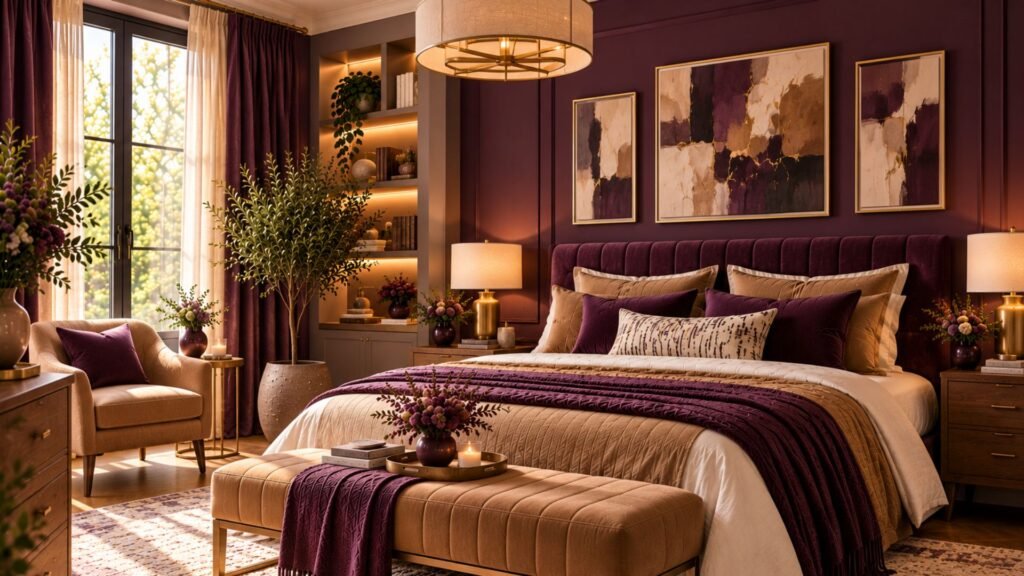
Aubergine and camel create a warm, contemporary palette with more depth than a conventional purple-and-gray combination.
The brown undertones in camel leather help soften aubergine, which can otherwise feel intense. Cream bedding, dark wood, and minimal artwork create a sophisticated balance.
This look suits modern bedrooms with clean furniture silhouettes. A low-profile bed, sculptural pendant, and substantial bedside tables work better than delicate or ornate accessories.
For a lighter version, restrict aubergine to the headboard wall and use warm beige elsewhere.
Recreate the look: Paint one wall aubergine, introduce a tan leather or camel fabric headboard, and choose walnut furniture. Use cream linens and a simple neutral rug.
8. Violet and Terracotta Mediterranean Bedroom

Purple does not have to feel delicate or formal. A muted violet can become earthy and architectural when paired with terracotta, plaster, and rustic timber.
The contrast between cool violet and warm clay tones creates visual interest without requiring a complicated color scheme.
Limewash-style finishes add tonal variation, while woven lighting and linen bedding keep the room relaxed.
This combination works especially well in sun-filled spaces, but the effect can also be recreated with standard matte paint and a few carefully chosen materials.
Recreate the look: Choose a softened violet wall color, introduce terracotta through cushions, ceramics, or flooring, and use natural wood furniture. Avoid glossy finishes that conflict with the rustic atmosphere.
9. Purple Floral Wallpaper Vintage Bedroom

Purple floral wallpaper can create a bedroom that feels nostalgic without looking dated.
The key is choosing a pattern with enough breathing room. Small botanical motifs on a cream background often feel lighter than large, densely packed flowers.
Balance patterned walls with plain bedding and furniture in simple finishes. An antique cream bed or natural wood dresser can introduce character without competing with the wallpaper.
For a restrained approach, wallpaper only the wall behind the bed and paint the remaining walls in a coordinating neutral.
Recreate the look: Choose a cream-based wallpaper with lilac or mauve flowers, add a vintage-style bed, and keep the duvet mostly plain. Repeat one wallpaper color in a cushion or throw.
10. Color-Drenched Purple Heritage Bedroom

Color drenching involves using the same or closely related shades across the walls, trim, and sometimes the ceiling.
In a purple bedroom, this can create a cohesive, enveloping atmosphere. It is particularly effective in rooms with decorative molding, picture rails, or other architectural details.
A muted, complex purple is usually easier to live with than a highly saturated violet. Consider how the color changes under both daylight and evening lamps.
Break up the continuous color with bedding, artwork, and furniture in contrasting materials.
Recreate the look: Paint the walls and trim in the same muted purple, then consider carrying the color onto the ceiling. Introduce antique wood furniture and cream bedding for balance.
11. Lavender and Butter Yellow Retro Bedroom
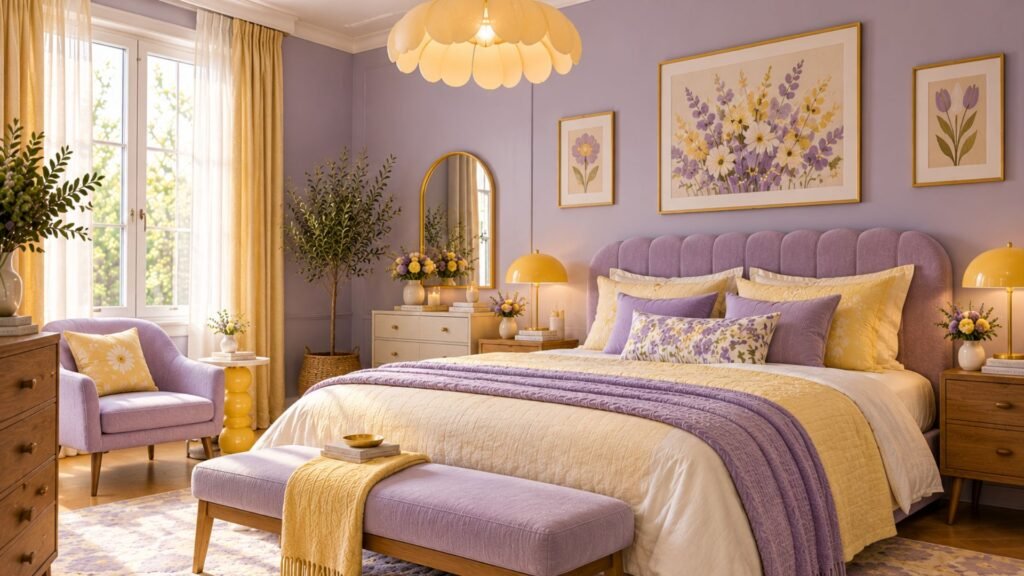
Lavender and butter yellow make a cheerful pairing that can still feel grown-up when the shades are soft and the furniture is well chosen.
The combination works particularly well with mid-century silhouettes, rounded headboards, and warm teak or oak.
Use yellow sparingly so it becomes a focal point rather than competing with the lavender. A yellow headboard or accent chair is often enough.
Neutral bedding and natural wood help anchor the playful palette.
Recreate the look: Pair lavender walls with a butter-yellow upholstered headboard, add vintage-inspired wooden furniture, and choose a cream rug. Keep smaller accessories simple.
12. Plum Twin Guest Bedroom With Tailored Details
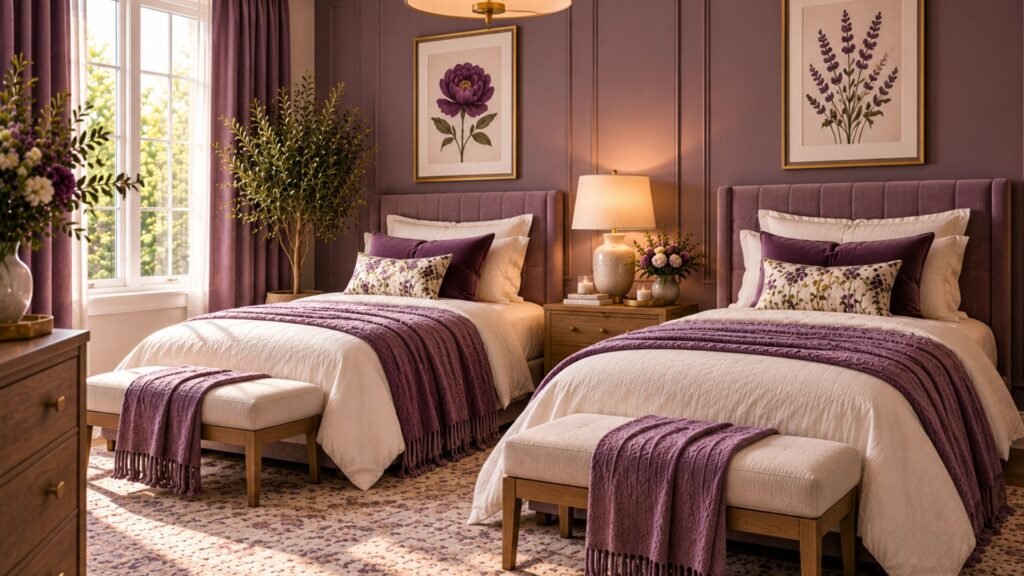
Purple can give a guest bedroom personality without making it overly themed.
Muted plum walls, two upholstered beds, and tailored striped bedding create a welcoming, slightly boutique-hotel atmosphere. Symmetry gives the room a calm, orderly appearance.
In a smaller guest bedroom, a shared nightstand between the beds can preserve floor space. Wall sconces provide individual reading lights without crowding the surface.
Use cream, taupe, or pale gray textiles to keep the overall effect balanced.
Recreate the look: Choose a muted plum wall color, position two matching beds symmetrically, and use coordinated bedding. Add one shared bedside table and matching reading lights.
How to Choose the Right Shade of Purple
The most successful purple bedroom ideas begin with the right undertone.
Purple can lean blue, pink, red, brown, or gray. These differences affect how the room feels and which furniture finishes work best.
| Purple shade | Overall effect | Best combinations |
|---|---|---|
| Lavender | Airy and gentle | Cream, pale oak, sage |
| Lilac | Fresh and contemporary | White, blonde wood, soft gray |
| Dusty mauve | Warm and understated | Walnut, beige, antique brass |
| Violet | Expressive and colorful | Terracotta, ivory, natural wood |
| Plum | Rich and intimate | Walnut, cream, brass |
| Aubergine | Dramatic and sophisticated | Camel, taupe, dark wood |
Before buying paint, place large samples on at least two walls. Examine them in morning light, afternoon light, and under your actual bedroom lamps.
For inspiration, explore the Benjamin Moore purple paint colors collection to compare lavender, lilac, violet, and deeper purple shades.
You can also browse Sherwin-Williams purple paint colors to find options that complement your bedroom furniture and lighting.
Before choosing a final shade, follow the Benjamin Moore paint sampling guide to evaluate colors under different lighting conditions.
Purple is particularly sensitive to lighting. A shade that looks soft in a bright showroom can appear significantly darker or cooler at home.
What Colors Go With Purple in a Bedroom?
A balanced palette usually has one dominant color, one supporting neutral, and a smaller accent.
Purple and cream is among the most adaptable combinations. Cream softens both pale and dark purple, making it a reliable choice for bedding, curtains, and rugs.
Purple and green creates a nature-inspired effect. Sage works with lavender, while olive green can complement deeper mauve and plum.
Purple and brown feels grounded and sophisticated. Walnut, chocolate brown, and camel are particularly effective with warmer purples.
Purple and yellow creates a livelier contrast. Choose butter yellow or muted ochre instead of combining two highly saturated shades.
Purple and gray can feel elegant, but it needs warmth from timber, fabric, or lighting to avoid becoming cold.
For a broader look at balancing colors across an interior, visit our bedroom color ideas guide.
How to Decorate With Purple Without Painting Every Wall
Painting is not the only way to introduce purple.
A purple upholstered headboard can create a strong focal point against cream walls. Lavender curtains can soften a neutral bedroom, while plum bedding can add depth without requiring a permanent change.
For renters or anyone experimenting with color, start with reversible elements:
- A duvet cover or quilt in a muted purple
- One upholstered accent chair or headboard
- Curtains with a lavender or mauve pattern
- Artwork containing violet or plum tones
- Cushions and throws that repeat an existing purple accent
Choose two or three related shades rather than introducing several unrelated purples. Repetition makes the color feel intentional.
Furniture, Rugs, and Lighting for Purple Bedrooms
Purple is only one part of the design. The supporting materials determine whether the room feels restful, contemporary, or dramatic.
Furniture finishes
Pale oak complements lilac and lavender. Walnut works beautifully with mauve, plum, and aubergine. Cream-painted furniture can soften traditional purple bedrooms, while black accents create a sharper contemporary look.
Try to keep major wood finishes reasonably consistent. Mixing too many unrelated wood tones can make an already colorful room feel fragmented.
Rugs and textiles
A cream wool rug is a reliable foundation for most purple bedrooms. It provides contrast without introducing another competing color.
In traditional rooms, faded patterned rugs can connect mauve, burgundy, and beige. In modern spaces, simple textured rugs usually work better.
Use different fabric textures to add interest: linen bedding, a velvet cushion, a wool throw, or a woven headboard.
Lighting
Warm, layered lighting helps deeper purple shades feel inviting.
Combine general ceiling lighting with bedside lamps or wall sconces. Dimmers are useful when you want brighter light for dressing and softer light in the evening.
Consider both the appearance and function of each fixture. A beautiful pendant cannot replace practical reading lights beside the bed.
Common Purple Bedroom Decorating Mistakes
A few avoidable decisions can make a purple bedroom feel less balanced than intended.
Choosing paint without testing it. Purple undertones change noticeably under different lighting conditions. Always test samples in the actual room.
Combining too many saturated colors. Bright violet, strong pink, and vivid blue can compete for attention. Give one color the leading role.
Using only smooth materials. Purple walls often benefit from natural wood, woven textiles, and tactile fabrics that add warmth.
Making a dark bedroom darker unintentionally. Deep purple can work in compact spaces, but lighting, furniture placement, and contrast must be considered together.
Matching every accessory. Purple curtains, purple bedding, purple rugs, and purple furniture in identical shades can look overly coordinated. Use tonal variation and neutral surfaces instead.
The aim is not to make every item purple. It is to create a room in which purple contributes to a cohesive design.
Frequently Asked Questions
Is purple a good color for a bedroom?
Yes. Purple can work beautifully in a bedroom, depending on the shade and the atmosphere you want to create. Lavender and lilac often feel light and gentle, while plum and aubergine create a richer, more intimate setting. Lighting and supporting colors matter more than the color name alone.
What is the most relaxing shade of purple for a bedroom?
Muted lavender, dusty lilac, and gray-based mauve are good starting points for a soft, understated appearance. Choose a shade you find personally comfortable and test it under your bedroom’s lighting before painting.
Does purple make a bedroom look smaller?
Not necessarily. Deep purple can make walls feel more visually prominent, but a dark, cohesive palette can also create a deliberate enveloping effect. Furniture scale, clutter, natural light, and contrast influence how spacious a bedroom feels.
What color furniture goes with purple walls?
Cream, pale oak, walnut, camel, and certain black finishes can all work with purple walls. Pale purples often pair well with lighter woods, while warmer, deeper purples complement walnut and other rich finishes.
Can purple bedrooms look modern?
Absolutely. Use clean furniture silhouettes, restrained accessories, simple lighting, and sophisticated purple shades such as smoky lilac, aubergine, or dusty mauve. Avoid relying on excessive matching accessories or ornate decorative details unless they suit the intended style.
How can I add purple to a neutral bedroom?
Start with bedding, artwork, curtains, or an upholstered headboard. Repeat the chosen purple shade in two or three places, and leave the main furniture and walls neutral. This creates a coordinated look without a full renovation.
Final Thoughts
The best purple bedroom ideas use color with purpose. Lavender can bring softness to a minimalist room, mauve can complement traditional furniture, and plum can make a modern bedroom feel intimate and luxurious.
Start with the atmosphere you want, choose a purple shade that works with your lighting, and build the rest of the room around complementary materials and practical furniture.
A well-designed purple bedroom should feel like a complete space, not simply a collection of purple accessories.
For more inspiration, explore our bedroom ideas, neutral bedroom ideas, and pink bedroom ideas.
About the Author
Emma Carter writes interior design and decorating guides for Wallsaide, focusing on beautiful color combinations, practical styling, and functional living spaces. Her articles help readers understand how furniture, materials, lighting, and color work together to create interiors they can adapt to their own homes.