
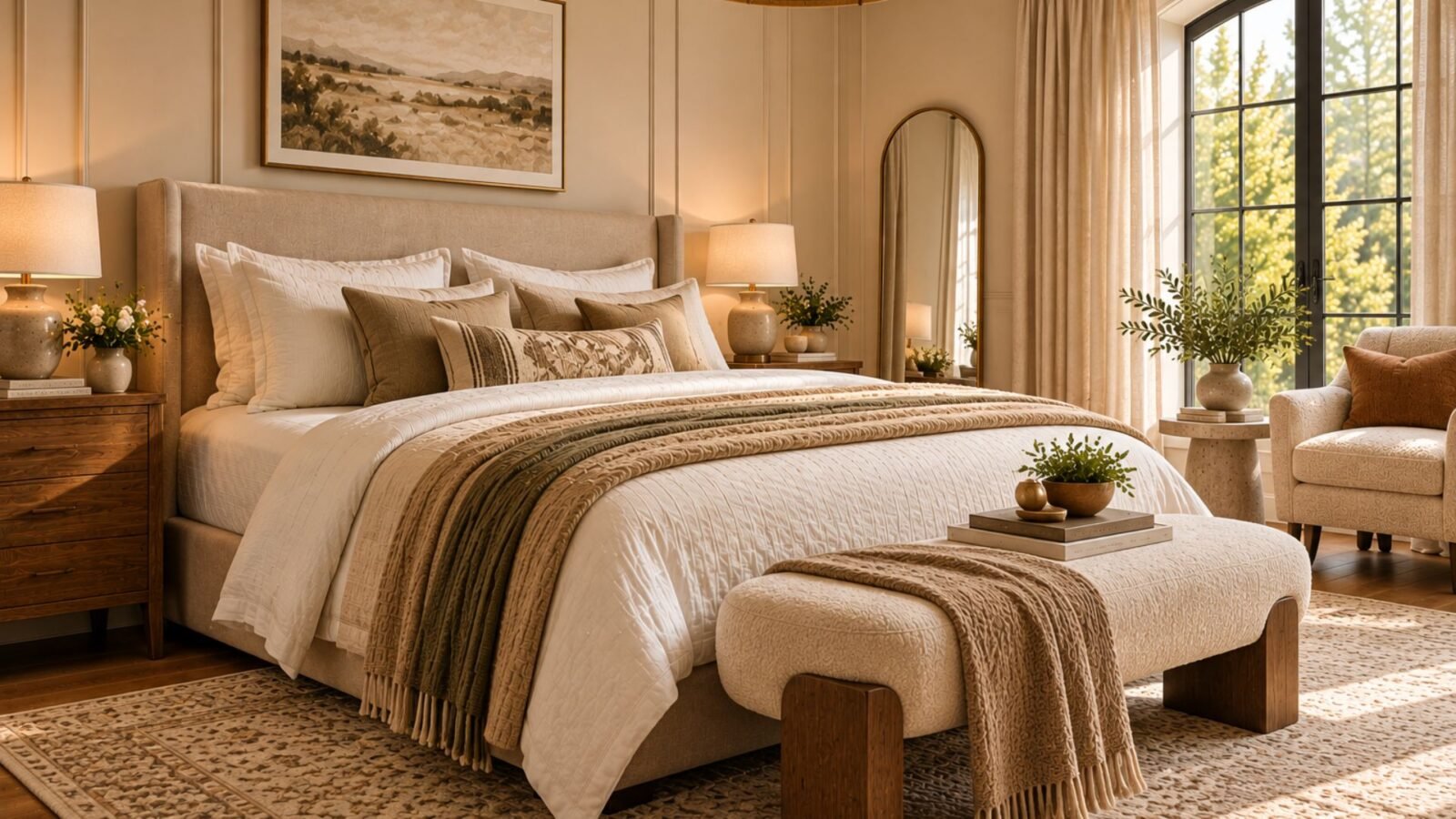

Explore beautiful ways to decorate with beige, from sophisticated modern interiors to rich earthy bedrooms, with practical tips for choosing colors, furniture, and finishes.
Beige bedroom ideas work best when the color has a clear purpose. Instead of covering everything in the same pale shade, combine beige with contrasting furniture, interesting materials, and carefully chosen accent colors.
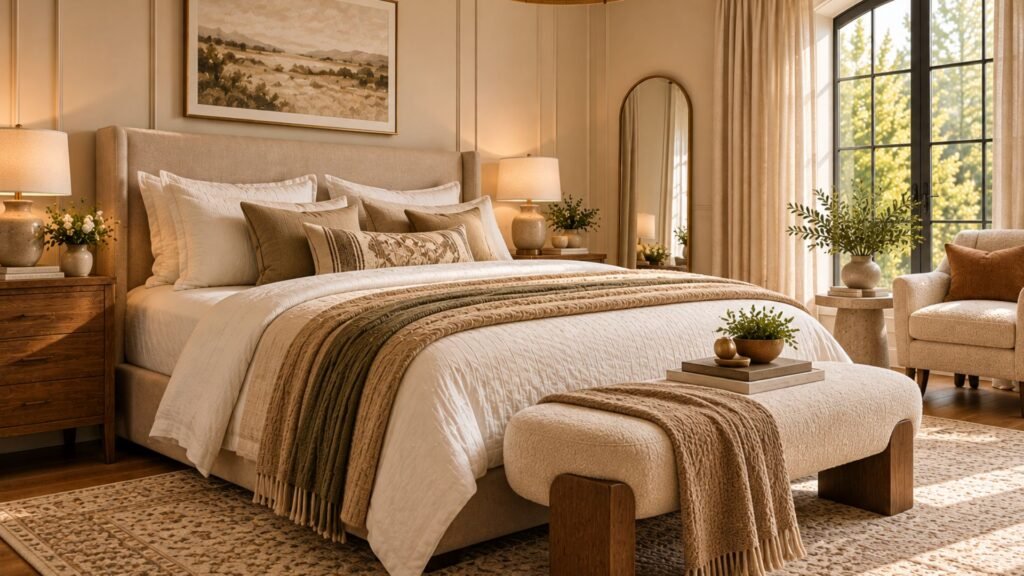
A sandy beige bedroom with dark wood feels completely different from one with black architectural details or soft terracotta textiles. Even subtle changes in undertone can transform the atmosphere.
Whether you love contemporary simplicity, traditional elegance, or earthy interiors, these beige bedroom designs show how to create a beautiful space without making it feel bland or overly coordinated.
Why beige works so well in bedrooms
Beige is a versatile neutral because it sits comfortably between many different decorating styles.
Light beige can provide a gentle alternative to bright white, while deeper shades such as camel, biscuit, and warm tan introduce more visual richness.
The important thing is understanding that beige is not one color.
Some beige shades contain golden or yellow undertones. Others lean slightly pink, gray, or brown. These differences influence how the color looks beside flooring, furniture, and natural light.
Beige also provides a flexible background for contrasting materials. Black metal looks sharper against sandy walls, while walnut furniture introduces warmth and depth.
The following designs explore different ways of using beige as the room’s foundation rather than treating it as an afterthought.
11 beige bedroom ideas worth recreating
1. Pair sandy beige walls with crisp white architectural details

Sandy beige and white create a classic bedroom combination that feels fresh without becoming stark.
This approach works especially well in traditional homes with wall paneling, decorative trim, or substantial baseboards.
Picture warm beige walls above crisp white wainscoting, a slender black spindle bed, and an antique wooden nightstand. The contrast between beige and white highlights the architectural details, while the dark bed frame gives the room a recognizable focal point.
Keep the bedding mostly white or ivory, with a subtly patterned quilt for interest.
A vintage-style bedside lamp and a small piece of artwork can complete the composition without making the room feel overly formal.
Recreate the look: Choose a sandy beige wall color and pair it with warm-white trim. Introduce a dark metal or painted wooden bed and one antique-style furniture piece. Avoid matching every accessory to the wall color.
2. Build a sophisticated bedroom with several shades of beige

A tonal beige bedroom uses several related shades to create depth without introducing a noticeably different accent color.
Instead of matching everything perfectly, combine pale biscuit walls, a slightly deeper camel headboard, oatmeal bedding, and sand-colored upholstery.
This layering gives each surface enough definition to stand apart.
Contemporary furniture with simple geometric shapes works particularly well. A curved upholstered bed, low stone side table, or sculptural pendant can provide visual interest without interrupting the palette.
Texture also matters. Smooth cotton, woven linen, suede-like upholstery, and matte painted walls reflect light differently, making the room feel more considered.
Recreate the look: Choose three levels of beige: light for larger walls, medium for the bed or curtains, and deeper camel for one prominent furnishing. Keep the materials varied rather than purchasing everything in the same fabric.
3. Give a modern beige bedroom bold black accents
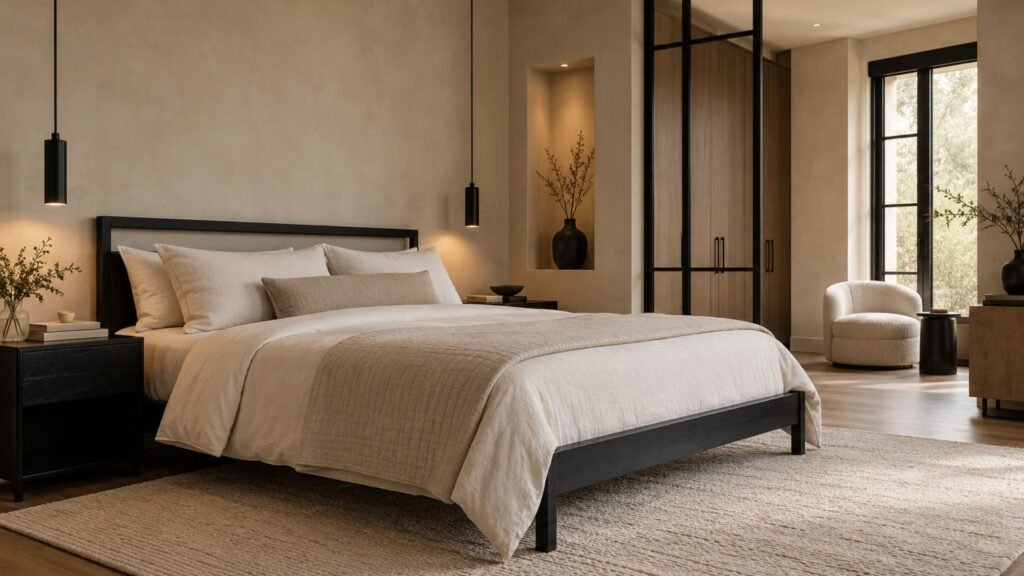
Beige and black create one of the most effective combinations for a modern bedroom.
Warm beige softens the sharp appearance of black furniture, while black gives the room structure and definition.
Imagine a contemporary bedroom with smooth beige plaster walls, a black metal bed frame, low charcoal side tables, and one striking architectural pendant.
The furniture should have clean silhouettes, with enough open floor space to make the composition feel intentional.
Rather than introducing black through numerous small accessories, concentrate it in two or three important elements.
A dark bed, slim wall lights, and a framed artwork may provide all the contrast needed.
Recreate the look: Keep the walls warm beige, choose a simple black bed frame, and introduce black through lighting or one substantial furniture piece. Use ivory bedding to soften the transition.
For additional contemporary furniture arrangements, see our modern bedroom ideas.
4. Combine beige with chocolate brown for a richer bedroom
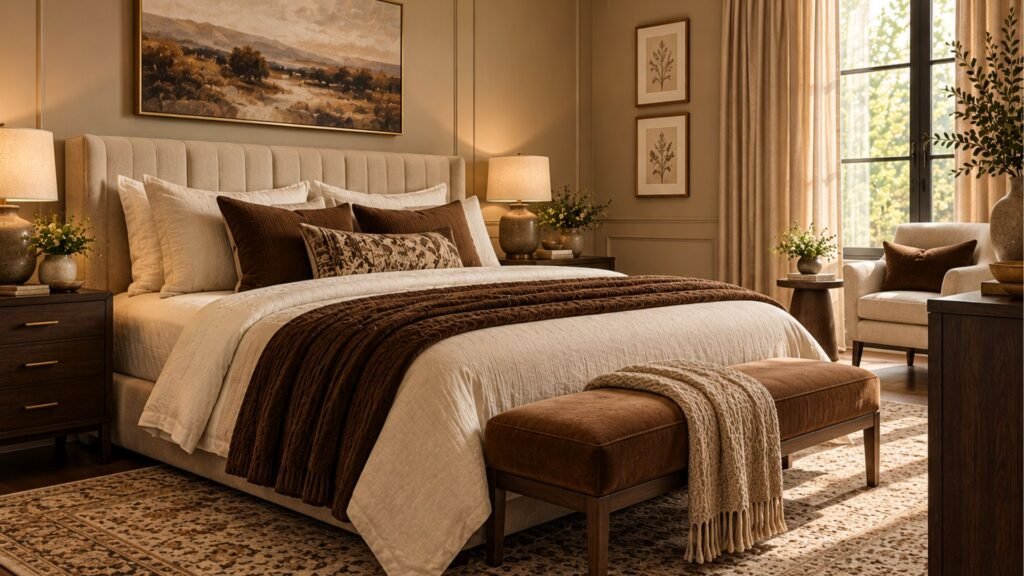
Beige can feel especially sophisticated beside deep chocolate brown.
This pairing creates stronger contrast than an entirely pale neutral palette while retaining an earthy character.
Try medium beige walls with dark walnut furniture, chocolate-brown upholstery, and ivory bedding.
A curved wooden dresser, leather reading chair, or dark timber headboard can bring a subtle 1970s-inspired character to the room.
Avoid introducing several competing wood stains. Choose one dominant dark finish and repeat its undertone through a smaller piece or accessory.
Warm lighting will bring out the grain of the furniture and the richness of the darker fabrics.
Recreate the look: Start with beige walls and add a dark walnut bed or dresser. Introduce chocolate through one textile or upholstered chair, then balance the darker surfaces with ivory bedding.
This is a useful approach if your bedroom already contains dark wooden furniture you want to keep.
5. Try pink-leaning beige for a soft, elegant bedroom

Not every beige has a yellow or golden undertone.
Some beige shades contain a subtle pink influence, producing a softer appearance that can work beautifully in traditional or romantic interiors.
A dusty pink-beige wall color looks particularly attractive against decorative moldings, antique brass, and darker vintage furniture.
For a Parisian-inspired room, consider a slender antique-style brass bed, a small marble-topped table, and relaxed ivory linens.
Keep the detailing balanced. If the architecture is ornate, simpler bedding and curtains will prevent the room from becoming overly decorative.
Recreate the look: Test muted pink-beige paint beside your existing flooring before committing. Add one vintage-style brass or dark wood furnishing, and keep the remaining textiles light.
Be careful with strongly pink undertones if your flooring or furniture already contains noticeable orange or yellow tones.
6. Create an earthy beige bedroom with terracotta accents

Beige and terracotta create a warm, earthy bedroom with a more expressive personality.
This combination is particularly effective in Southwestern and desert-inspired interiors, where natural materials and architectural texture play an important role.
Imagine sand-beige walls, a low timber bed, terracotta-colored bedding, and a handwoven rug with a restrained geometric pattern.
Plaster surfaces, handmade ceramics, and leather details can enhance the style without requiring every decorative object to follow a theme.
The secret is keeping beige dominant. Terracotta should provide concentrated warmth rather than taking over the entire room.
Recreate the look: Use a sandy beige foundation, introduce one substantial terracotta textile, and add rustic timber furniture. Keep artwork and accessories selective.
If you already have a warm wooden floor, choose a terracotta shade that feels related to its undertone rather than competing with it.
7. Pair beige with navy for a tailored, traditional bedroom
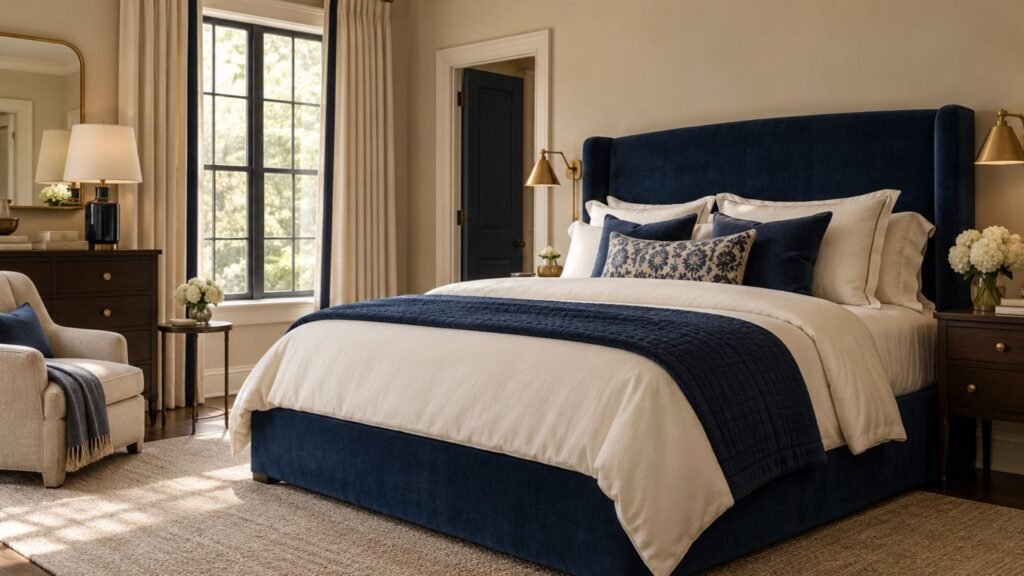
Beige does not always need to be combined with other earthy neutrals.
Navy blue introduces a cooler contrast that can make a beige bedroom feel crisp and tailored.
This pairing works especially well in traditional American interiors, transitional bedrooms, and refined coastal homes.
Use medium-light beige walls as the background, then introduce navy through a structured upholstered headboard, bedcover, or curtain detail.
Dark wooden furniture and brass lighting provide a complementary sense of depth.
Keep the bedding primarily ivory to separate the navy upholstery from the beige surroundings.
Recreate the look: Choose a beige wall color without an overly yellow undertone, then add a navy headboard or substantial navy textile. Use antique brass or medium-to-dark wood as a supporting finish.
Avoid distributing navy across every accessory. One large navy focal point is usually more effective.
8. Add depth with beige grasscloth or textured wallpaper

Sometimes the most interesting way to decorate with beige is to change the wall texture rather than the color.
Grasscloth and woven-look wallcoverings can make an otherwise simple beige bedroom feel distinctive.
Their subtle variations in fiber, color, and surface relief introduce depth that flat paint may not provide.
For a contemporary interpretation, pair beige grasscloth with an ebonized wood bed, simple stone bedside furniture, and pale bedding.
Keep the accessories restrained so the wall finish remains the focal point.
Natural grasscloth can have visible seams and color variations, so review large samples before purchasing. Fabric-backed or printed alternatives may be easier to maintain, depending on the product.
Recreate the look: Introduce textured beige wallpaper on the bed wall and combine it with dark furniture. If wallpaper is outside your budget, consider a suitable textured paint finish or a large woven wall panel.
9. Make a beige bedroom interesting with a patterned statement headboard
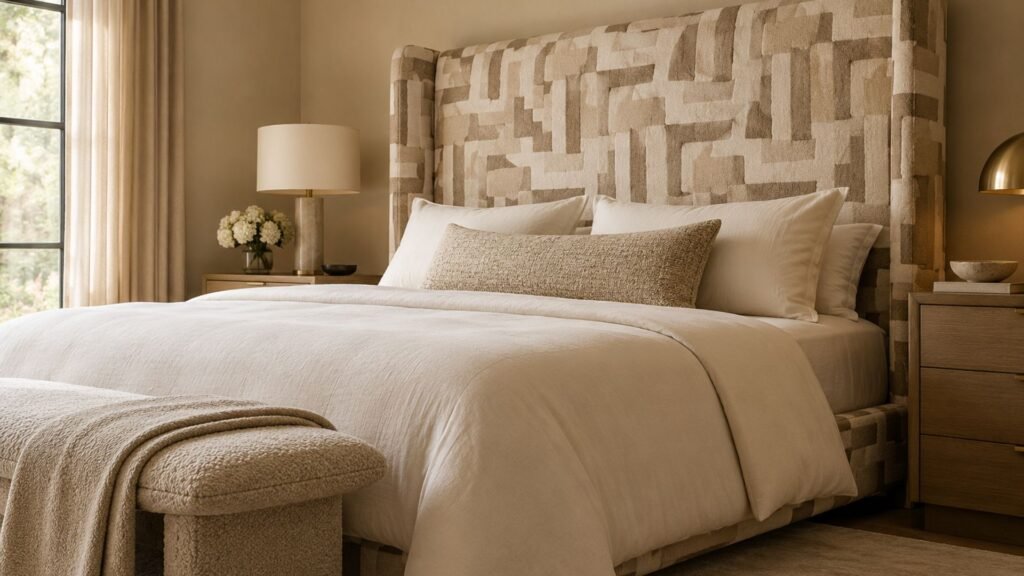
A beige room can carry bold pattern without becoming colorful or busy.
One effective approach is to use a statement headboard as the main decorative feature.
Choose upholstery with a recognizable geometric motif in biscuit, brown, ivory, or black.
The pattern establishes a focal point while keeping the room within a coordinated beige palette.
This is particularly useful when the walls are plain or the bedroom lacks distinctive architectural detailing.
Keep nearby furniture simple. A streamlined nightstand and understated reading light will allow the headboard to stand out.
Recreate the look: Choose one patterned upholstered headboard or use removable fabric panels behind the bed. Repeat only one of its colors elsewhere and avoid adding competing patterns across every textile.
A strong headboard can make a much greater visual difference than purchasing several small decorative accessories.
10. Mix beige with muted olive for a grounded, natural bedroom
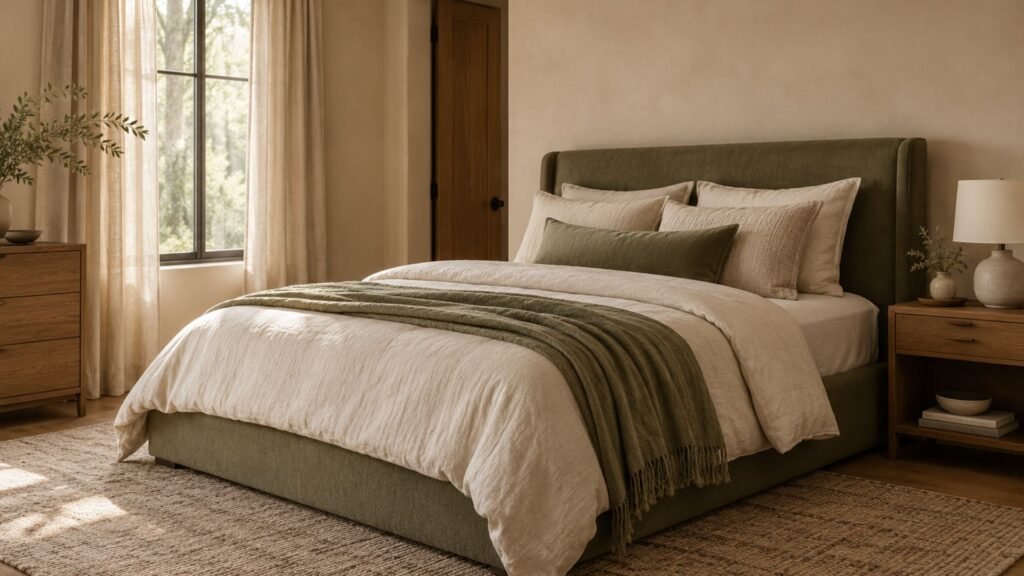
Muted olive provides a sophisticated contrast to beige without making the room feel overly colorful.
Because olive contains earthy yellow and brown influences, it can sit comfortably beside many warm beige shades.
For a contemporary interpretation, choose soft beige walls, an olive upholstered bed, medium-toned timber furniture, and understated linen curtains.
The green should appear muted rather than bright. This creates a stronger relationship with the beige foundation.
A dark ceramic lamp or simple abstract artwork can finish the composition without introducing another competing color.
Recreate the look: Keep beige on the walls and introduce olive through one substantial piece, such as the headboard, duvet cover, or curtains. Use wood and ivory textiles to connect the two colors.
Test the pairing under your actual lighting, especially if the beige has a pronounced pink undertone.
11. Design a small beige bedroom without repainting everything
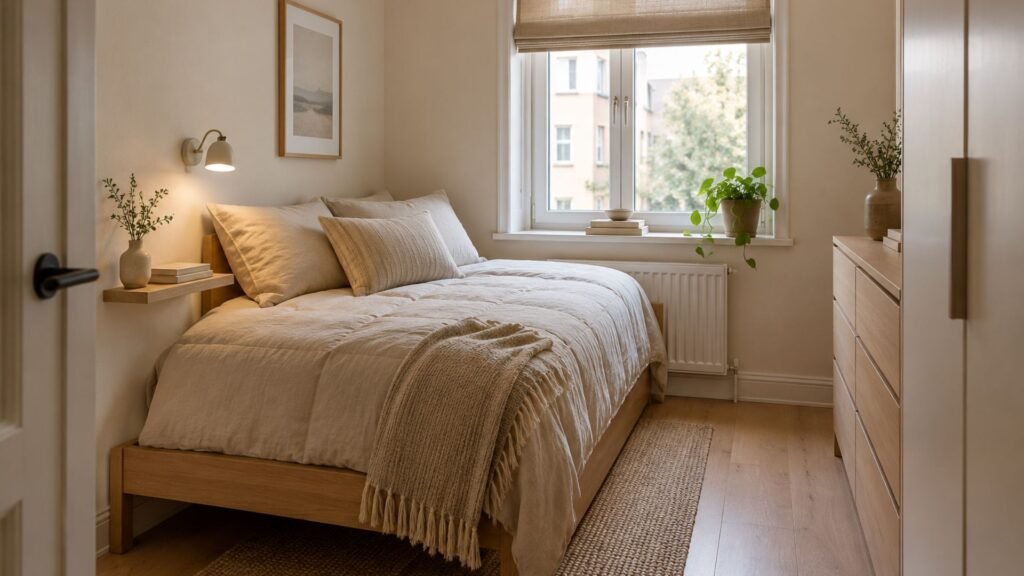
Beige is useful in a small bedroom because it can connect several existing finishes without requiring a complete redesign.
This is particularly valuable for renters who cannot change flooring, cabinetry, or wall colors.
Imagine a compact apartment bedroom with a narrow wooden bed, beige linen duvet, slim wall-mounted shelf, and simple curtains.
A muted beige rug can bring the room together even when the walls are white or off-white.
Instead of adding a large bench or extra chair, preserve the available walking space and keep storage practical.
Recreate the look: Begin with beige bedding and a suitable rug rather than repainting. Use one compact nightstand or shelf, keep large storage pieces visually simple, and choose lighting that does not occupy unnecessary floor space.
For additional layout and storage solutions, see our small bedroom ideas.
How to choose the right beige paint for your bedroom
Choosing beige paint is often harder than expected.
Two colors that appear similar on a small sample card can look noticeably different once placed beside wooden floors, white bedding, or existing furniture.
A beige that looks beautifully soft in a showroom may appear yellow, pink, or unexpectedly gray at home.
The solution is to compare undertones before choosing the final shade.
The Wallsaide Three-Swatch Beige Test
Instead of collecting dozens of paint samples, begin with three beige shades of similar lightness but different undertones.
This simple Wallsaide selection method helps you identify which beige works with your room’s permanent materials.
Step 1: Select three beige directions
Choose one golden or sandy beige, one pink-leaning beige, and one muted stone-beige.
They should be reasonably close in lightness so you can focus on how the undertones differ.
Step 2: Compare them against the floor
Place the samples beside your flooring, preferably using painted sample boards.
Look for unexpected clashes. A golden beige may emphasize orange in some wooden floors, while a pink beige may look noticeably rosy beside a yellow-toned finish.
Step 3: Compare them with the bedding and furniture
Hold the samples near your existing headboard, nightstand, curtains, and a clean white or ivory textile.
This is often where an undertone becomes obvious.
Step 4: Check the samples in different lighting
Evaluate the colors during morning daylight, afternoon light, and under the lamps you use after sunset.
Avoid choosing a beige based on only one moment of the day.
Step 5: Choose the shade that works across the whole room
The best beige is not necessarily the warmest or palest option.
It is the color that creates the most convincing relationship with the surfaces you already own.
Benjamin Moore’s beige paint color collection provides examples across different beige depths and undertones, while Sherwin-Williams’ room-orientation guide explains how daylight exposure can influence paint appearance.
Beige vs. cream, taupe, and greige: What is the difference?
These colors overlap, but they are not interchangeable.
Beige generally describes a light-to-medium brown-influenced neutral. It can lean golden, sandy, rosy, or gray.
Cream is usually closer to warm off-white, with a lighter appearance and often a yellow or buttery influence.
Taupe commonly combines brown and gray, often appearing deeper or more muted than a typical sandy beige.
Greige combines gray and beige, frequently giving a cooler or more subdued appearance than traditional warm beige.
These categories do not have perfectly fixed boundaries. Paint manufacturers sometimes use different names for visually similar shades.
That is why comparing physical samples is more useful than choosing a color solely by its name.
For a broader explanation of neutral palettes, see our neutral bedroom ideas guide.
The best colors to pair with beige bedroom walls
Beige works with more than white and brown.
The right accent color depends on the beige undertone and the contrast you want.
Beige and white
This combination feels light and classic. Use warm-white bedding, trim, or curtains to create separation from beige walls without introducing a strong secondary color.
Beige and chocolate brown
Deep brown creates richness and definition. It works particularly well through walnut furniture, dark upholstery, or carefully selected textiles.
Beige and black
Black adds structure to lighter beige surroundings. Choose a few prominent black elements rather than distributing dark accents everywhere.
Beige and olive green
Muted olive can reinforce beige’s earthy qualities. This pairing suits natural wood, linen, and understated contemporary interiors.
Beige and navy blue
Navy creates a cooler, tailored contrast. It can work beautifully in traditional bedrooms when balanced with ivory bedding and warm metal accents.
Beige and terracotta
Terracotta introduces earthy warmth and a more expressive personality. Keep it concentrated in selected textiles or artwork so beige remains the dominant color.
If you are still considering other color families, our bedroom color ideas guide explores a wider range of combinations.
How to make a beige bedroom look stylish instead of boring
A beige bedroom usually looks flat when too many important surfaces share the same color, lightness, and material.
A pale beige wall, beige upholstered bed, beige rug, and beige curtains can blend together when nothing provides definition.
There are three useful ways to correct this.
Introduce a darker anchor. A walnut dresser, black bed frame, deep brown headboard, or dark artwork can establish a clear focal point.
Change the materials. Use smooth paint beside linen, natural wood, textured wallcovering, or stone. Material differences create depth without requiring additional colors.
Give one feature priority. A shaped headboard, distinctive wall treatment, dramatic light fixture, or characterful antique piece should lead the design.
Avoid asking every accessory to provide visual interest. The room should have a recognizable character even after you remove the decorative pillows and trays.
For more guidance on selecting furniture and establishing a cohesive bedroom layout, see our complete bedroom decorating guide.
Beige bedroom decorating ideas on a budget
You can improve a beige bedroom without replacing everything.
Focus on the elements that affect the largest visual areas first.
- Refresh your bedding. A well-fitted ivory duvet or coordinated beige coverlet can improve the appearance of the entire bed.
- Paint before purchasing furniture. If your existing furniture works, a more suitable beige wall color may create the change you need.
- Use secondhand wooden furniture. A dark wood dresser or vintage nightstand can introduce attractive contrast at a lower cost than buying a new matching set.
- Update the curtains. Choose a fabric and length that work with the window rather than automatically matching the wall color.
- Replace one weak focal point. A more distinctive headboard, substantial artwork, or textured rug may be more effective than numerous small purchases.
- Improve the lighting. Well-placed bedside lighting helps beige surfaces look more dimensional while making the room easier to use.
Before spending on accessories, remove unnecessary clutter and evaluate what the room actually lacks.
A beige bedroom should feel intentional, not simply filled with beige-colored products.
Common beige bedroom mistakes to avoid
Choosing beige without checking the undertone
Beige can appear yellow, pink, greenish, or gray depending on the specific shade and surrounding finishes.
Always compare samples with your existing floor and furniture.
Using identical beige everywhere
A single shade repeated across walls, bedding, curtains, and upholstery can make the room lose definition.
Introduce a difference in depth, texture, or contrasting material.
Overusing beige and gold
Gold-colored accessories do not automatically make a bedroom look luxurious.
Too many metallic details can compete with the calmer character of beige. Choose a finish that suits the furniture and architecture.
Forgetting about lighting
A beige wall can appear different under cool daylight and warm evening lighting.
Plan general and bedside lighting, then check the paint samples under both.
Adding too many decorative pillows
A crowded bed can look more complicated rather than more finished.
Choose bedding that fits properly, then add a limited number of useful or meaningful decorative layers.
Copying a beige bedroom without adapting the layout
The same furniture arrangement will not work in every home.
Pay attention to door clearances, available walking space, windows, outlets, and the size of the bed before recreating a photographed design.
Frequently asked questions
Is beige a good color for a bedroom?
Yes. Beige is a versatile bedroom color that can work with contemporary, traditional, rustic, and transitional furniture. Its success depends on selecting an appropriate undertone and balancing the palette with contrasting materials and furniture.
What color bedding looks best with beige walls?
Ivory, white, oatmeal, chocolate brown, muted olive, and soft gray can all work with beige walls. Choose bedding that has enough tonal contrast with the wall and headboard to keep the bed visually defined.
How do I make a beige bedroom look modern?
Pair beige walls with clean-lined furniture, a simple bed silhouette, restrained accessories, and one strong contrasting finish such as black metal or dark wood. Architectural lighting can reinforce the contemporary character.
What is the difference between beige and cream bedroom colors?
Beige generally has a stronger brown or tan influence, while cream usually appears lighter and closer to warm white. Both can have yellow or other undertones, so physical paint samples provide a more reliable comparison than color names.
Does beige work with gray bedroom furniture?
Yes, particularly when the two colors have compatible undertones. A muted stone-beige may sit comfortably beside cool gray furniture, while a strongly golden beige can create more obvious contrast. Test the combination in your room before committing.
What color curtains go with beige bedroom walls?
Warm-white, ivory, taupe, chocolate brown, muted blue, and olive curtains can complement beige walls. The most appropriate choice depends on whether you want subtle coordination or stronger contrast. Fabric texture and window coverage are equally important.
How can I decorate a small beige bedroom?
Use beige through the largest practical surfaces, keep storage organized, and avoid oversized secondary furniture. Coordinated bedding, compact bedside lighting, and a well-sized rug can create a cohesive appearance without reducing usable space.
Final thoughts
Beige bedroom ideas are most effective when the color supports a clear decorating direction.
A sandy beige bedroom with black furniture feels modern and defined. Beige with chocolate brown creates richness, while soft pink-beige works beautifully with heritage architecture and antique details.
The important decision is not simply choosing beige. It is choosing the right version of beige for your room.
Start with the undertone, consider the existing flooring and furniture, and introduce enough contrast to keep the design interesting.
With thoughtful materials, appropriate lighting, and a few distinctive details, a beige bedroom can feel beautiful, comfortable, and unmistakably personal.
About the author
Emma Carter writes interior design inspiration and practical decorating guides for Wallsaide. Her articles help readers understand how colors, materials, furniture, and lighting work together to create attractive, functional living spaces.