


Explore 12 beautiful ways to decorate with pink, from understated blush interiors to dramatic rose-colored rooms with unexpected materials and color combinations.
Pink bedroom ideas extend far beyond pastel walls and traditional feminine decorating. Soft blush can function almost like a warm neutral, dusty rose adds depth to natural materials, and saturated raspberry creates a confident focal point in a contemporary room.
The most successful pink bedrooms balance the shade with furniture, lighting, and textures that give the space character. Walnut, chocolate brown, olive green, navy, black metal, and warm ivory can all make pink feel sophisticated.
Whether you want a subtle hint of color or an expressive interior, these 12 designs show how to make pink work beautifully in a real bedroom.
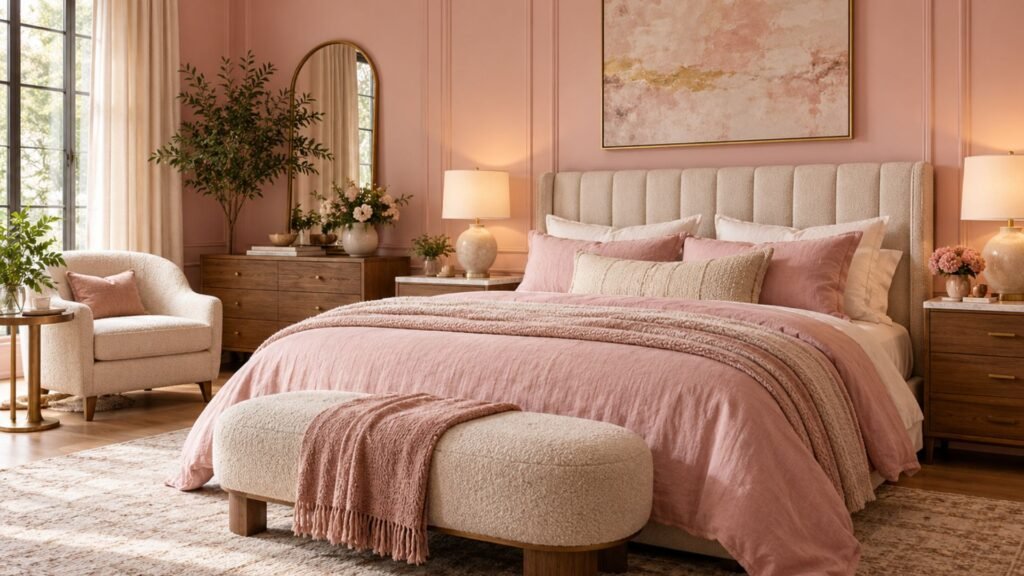
Why pink works so well in bedrooms
Pink is remarkably versatile because its appearance changes significantly depending on undertone, saturation, and the materials surrounding it.
A muted beige-pink can feel quiet and understated. Peachy pink beside terracotta and natural plaster appears warm and earthy. Dusty rose paired with chocolate brown creates a richer, more nostalgic atmosphere.
Deeper pinks can become dramatic rather than delicate, especially when used alongside burgundy, dark timber, or architectural metalwork.
The challenge is choosing the right type of pink.
A cool, blue-based pink can look very different from a warm, coral-leaning shade. Existing flooring, daylight, artificial lighting, and bedding will influence how the color appears.
If you’re comparing different palettes before committing, our bedroom color ideas guide explores additional combinations and how to balance them.
For this guide, we’re concentrating on pink as the starting point and showing how to make it work across different interior styles.
12 pink bedroom ideas for every decorating style
These designs explore twelve distinct approaches to pink, from minimalist interiors to vintage-inspired rooms with rich patterns and traditional architectural details.
Each idea includes the visual elements that create the look and practical guidance for adapting it to your own space.
1. Create an organic modern bedroom with dusty blush plaster walls
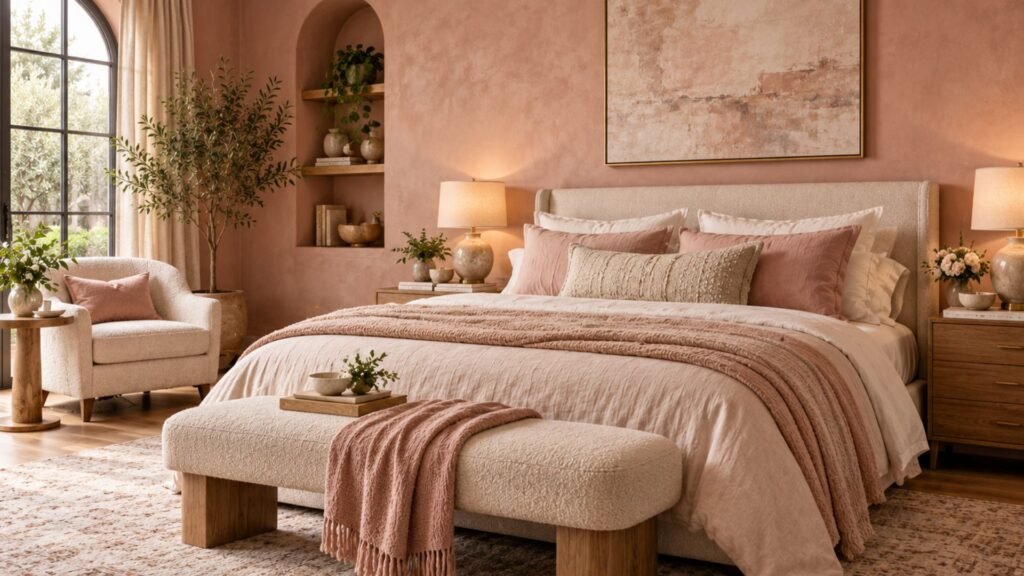
Dusty blush is an excellent choice if you want pink to feel understated rather than decorative.
In an organic modern bedroom, softly textured pink walls provide warmth without becoming the dominant feature.
A low ivory upholstered bed, pale oak flooring, and a travertine bedside table introduce simple natural materials. A sculptural ceramic pendant adds visual interest without requiring additional colors.
The room should feel spacious and deliberately restrained.
Avoid overly ornate furniture or several competing patterns. The character comes from the relationship between subtle color, natural texture, and architectural simplicity.
Why it works: Dusty blush has enough muted warmth to complement stone, wood, and linen while remaining recognizable as pink.
Recreate the look: Choose a subdued blush paint or an appropriate textured wall finish, a simple low bed, natural linen bedding, and one sculptural light fixture. Keep the palette primarily blush, ivory, and pale oak.
If you prefer an even more restrained palette, explore our neutral bedroom ideas for ways to layer similar materials.
2. Pair pale pink with walnut for a mid-century modern bedroom
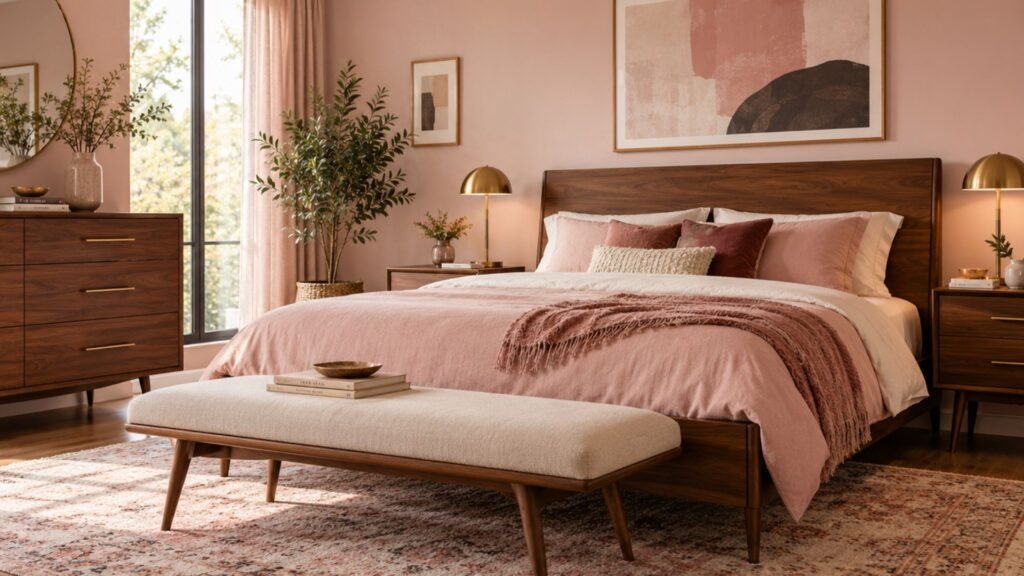
Pink looks particularly sophisticated when combined with the rich brown tones of walnut.
For a mid-century-inspired bedroom, choose a soft muted pink wall color and furniture with clean silhouettes, tapered legs, and visible wood grain.
A low walnut platform bed can become the room’s focal point. Add a vintage-style dresser, globe lighting, and geometric artwork in restrained colors.
The furniture should have character without feeling overly decorative.
If the flooring is already warm timber, pink walls can reinforce that warmth while providing a gentle contrast.
Why it works: Walnut adds structure and visual weight, making pale pink feel more architectural and less traditionally sweet.
Recreate the look: Combine muted pink walls with walnut furniture, an ivory duvet, a low-profile rug, and one piece of geometric artwork. Choose warm brass or dark bronze lighting rather than matching pink accessories.
3. Combine rose pink and sage green in an English country bedroom
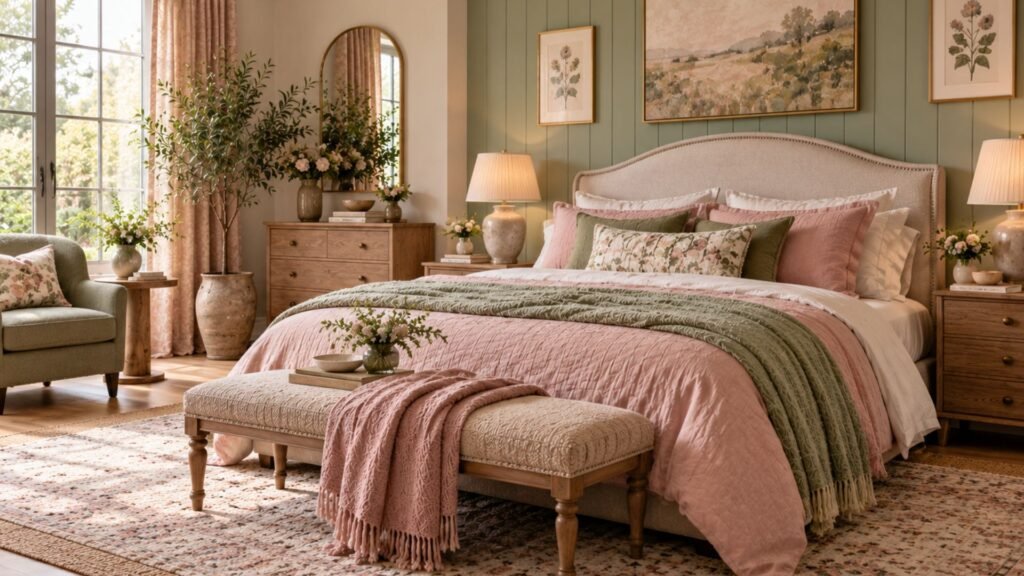
Rose pink and sage green create a softer, garden-inspired bedroom palette.
The combination works especially well when the furniture and textiles have a collected, slightly imperfect character.
Imagine dusty rose walls, a sage-painted vintage wardrobe, an antique iron bed, and patterned curtains featuring muted floral colors.
Natural wood flooring and a faded rug help the room feel established rather than newly decorated.
The most important detail is keeping both colors slightly muted. Bright green and candy pink can create a completely different, more playful result.
Why it works: Sage provides an earthy counterpoint to rose, allowing the two colors to coexist without competing for attention.
Recreate the look: Choose dusty rose walls, one sage green furniture piece, cream bedding, and understated botanical textiles. Mix painted timber with an antique metal bed for character.
Our sage green bedroom ideas guide offers more ways to work with this versatile green.
4. Paint the ceiling pale pink in a bright Scandinavian bedroom
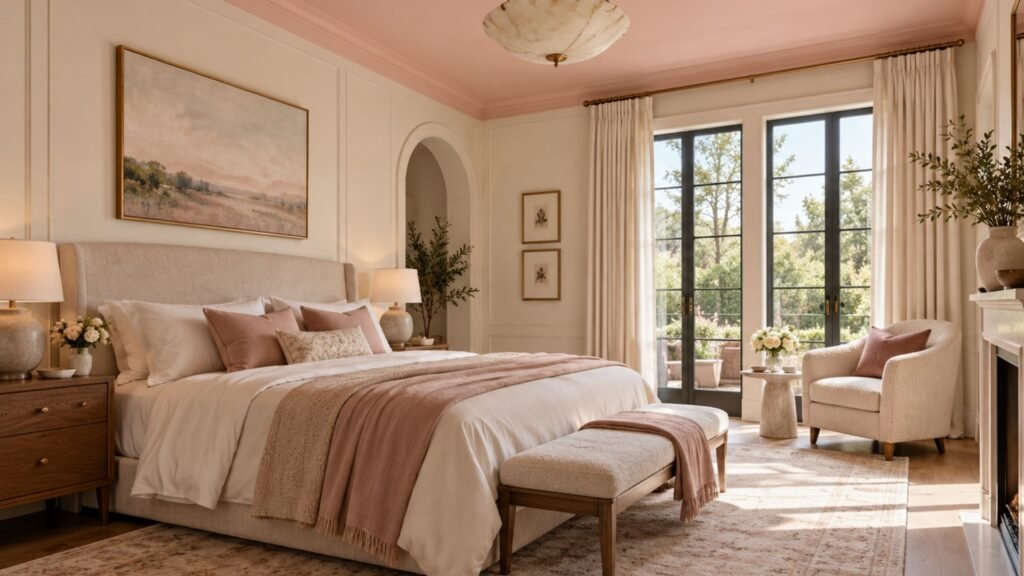
Pink doesn’t need to cover the walls to transform a bedroom.
A pale pink ceiling can introduce a subtle wash of color while keeping the walls warm white.
This works particularly well in a simple Scandinavian-style bedroom with blonde oak furniture, natural linen, and uncluttered surfaces.
A paper pendant light or another lightweight sculptural fixture can help draw attention upward.
Because the ceiling receives light differently from the walls, the pink may appear softer or more muted than expected.
The result is understated but distinctive.
Why it works: The pink ceiling introduces warmth overhead while the main living surfaces remain neutral and visually simple.
Recreate the look: Choose a very light pink with subtle undertones, warm white walls, pale oak furniture, and ivory bedding. Test the color on the ceiling before painting the entire surface.
5. Create Art Deco drama with mauve pink and burgundy
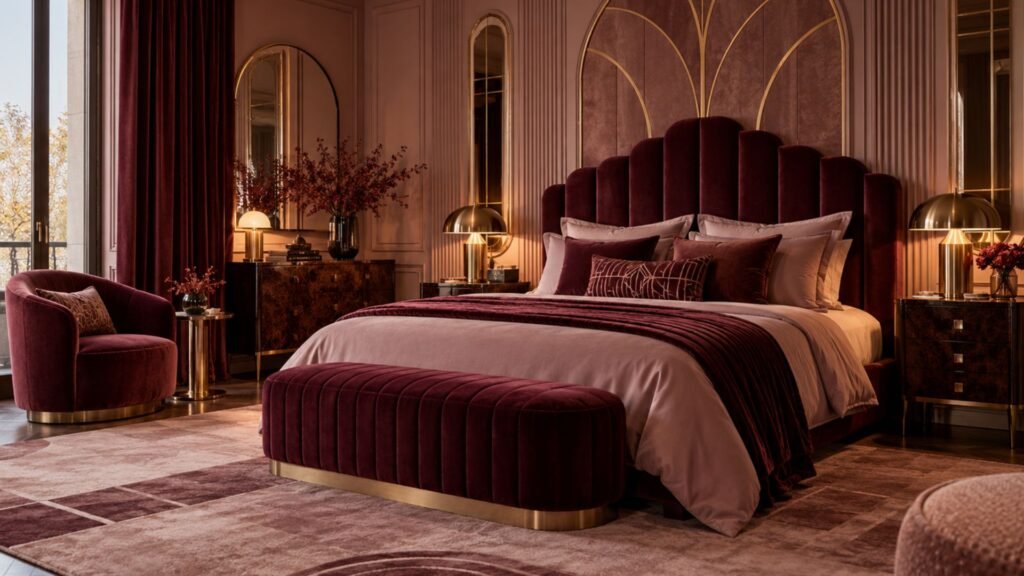
Pink can also create a dark, sophisticated bedroom.
Muted mauve and burgundy are particularly effective when combined with curved furniture and polished materials inspired by Art Deco interiors.
In this design, mauve walls provide a rich background for a burgundy velvet headboard.
Dark timber furniture, smoked glass lighting, and a geometric rug add depth.
A curved dressing table or decorative mirror can reinforce the historical influence without making the room feel like a period reproduction.
The palette should remain concentrated, with a limited amount of cream or ivory providing contrast.
Why it works: The darker red tones strengthen the mauve, producing a layered scheme with more depth than pale pink alone.
Recreate the look: Use a muted mauve wall color, burgundy upholstery, dark wood furniture, and one geometric decorative element. Introduce a small amount of brass or bronze to complement the richer tones.
6. Make a small pink bedroom functional with fitted storage
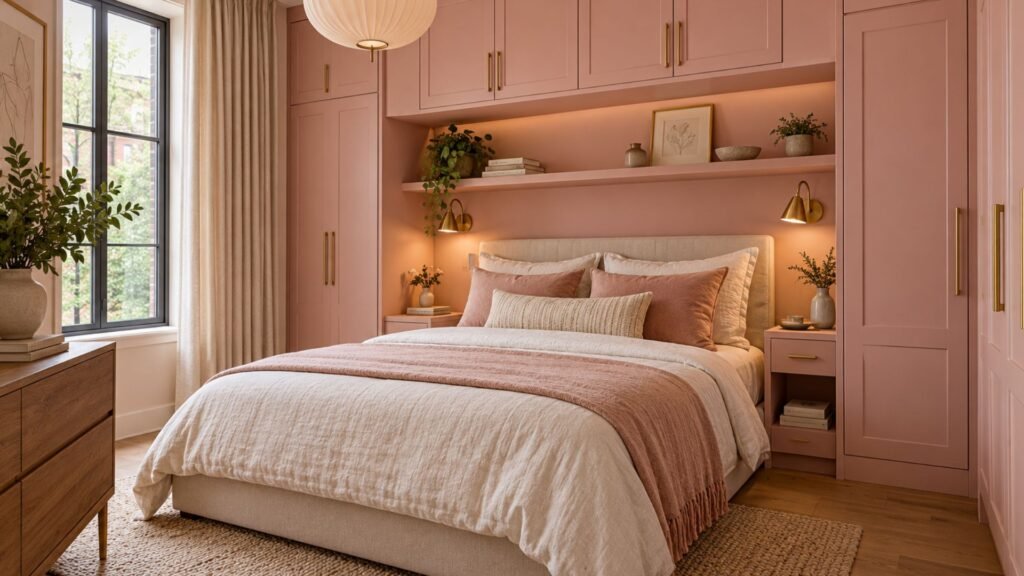
A small bedroom can accommodate pink without becoming visually crowded.
One practical approach is to combine the color with fitted storage.
Dusty pink wardrobes surrounding a simple upholstered bed can create a cohesive architectural feature while providing useful cabinet space.
Integrated bedside shelves and reading lights reduce the number of separate furniture pieces.
Choose cabinet fronts with restrained detailing and discreet hardware so the storage wall doesn’t feel overly decorative.
A light bed and neutral bedding provide enough contrast against the pink cabinetry.
Why it works: Using pink on one continuous storage feature organizes the room while allowing the remaining surfaces to stay visually quiet.
Recreate the look: Use muted pink fitted cabinetry, cream upholstery, slim handles, integrated lighting, and concealed storage. Measure wardrobe door clearances and walking space before planning the installation.
For additional functional layouts, visit our small bedroom ideas guide.
7. Pair pink and chocolate brown for a rich retro bedroom
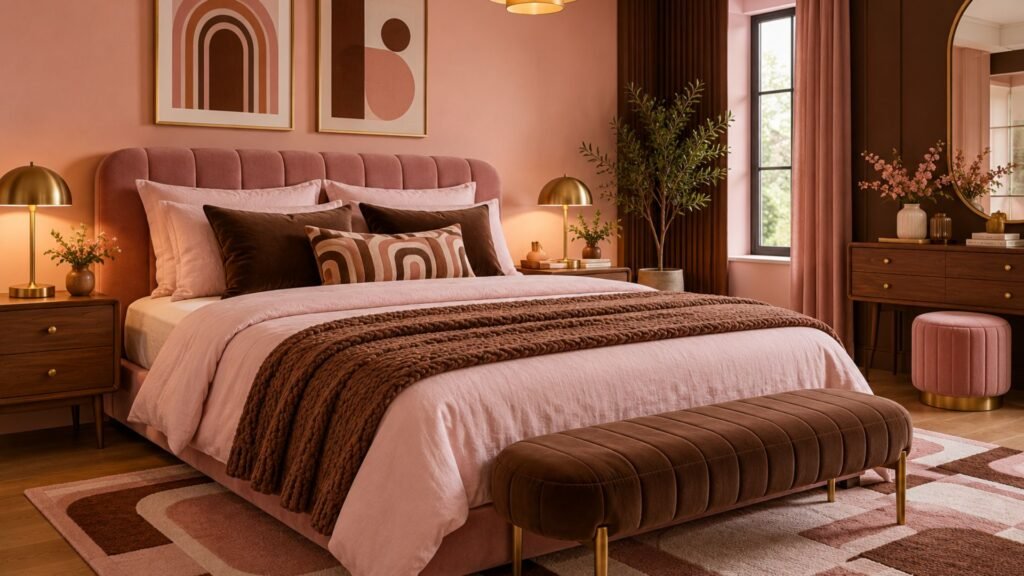
Pink and chocolate brown create a warm, grounded palette with a subtle retro influence.
Unlike pink and white, this pairing relies on two substantial colors that complement one another through their warmth.
A chocolate brown velvet bed can anchor dusty pink walls, while vintage walnut furniture introduces another layer of texture.
Add sculptural mushroom-shaped lighting, a patterned rug, and simple cream bedding.
The room should feel nostalgic without becoming crowded with vintage accessories.
Why it works: Dark brown gives the pink a stronger visual foundation, while cream creates enough contrast to prevent the room from feeling heavy.
Recreate the look: Choose a dusty or muted pink wall color, chocolate brown upholstery, warm walnut furniture, and ivory bedding. Use one distinctive retro light fixture rather than several themed decorations.
If you’re exploring this color combination further, our brown bedroom ideas guide includes additional furniture and material inspiration.
8. Use peachy pink plaster in a Mediterranean bedroom
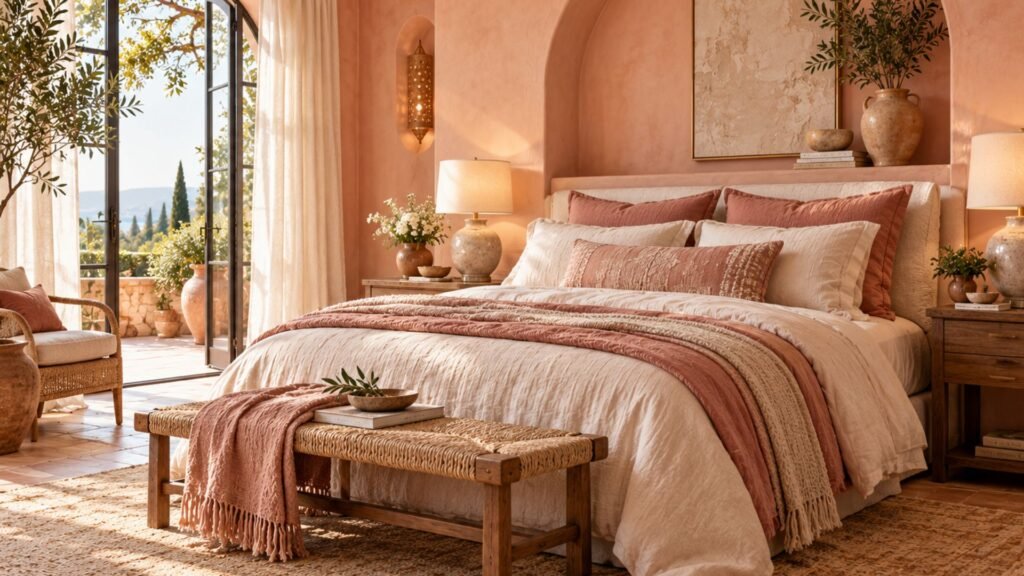
Warm peachy pink can feel almost like a natural plaster color.
In a Mediterranean-style bedroom, it works beautifully with terracotta flooring, rustic timber, and curved architectural details.
An arched window or doorway introduces softness that complements the color.
Choose an antique wooden bed rather than a heavily upholstered frame, allowing the natural materials to remain prominent.
Linen curtains and handmade ceramic lighting reinforce the relaxed atmosphere.
The goal is a sun-warmed interior rather than a conventionally pastel bedroom.
Why it works: Peach pink, clay, and rustic wood share warm undertones, creating a cohesive palette even when the finishes have different textures.
Recreate the look: Choose a warm peach-pink paint or suitable plaster finish, terracotta accents, natural wood furniture, and loose linen textiles. Add a curved decorative detail if the room lacks arches.
9. Combine pink and navy for a tailored contemporary bedroom
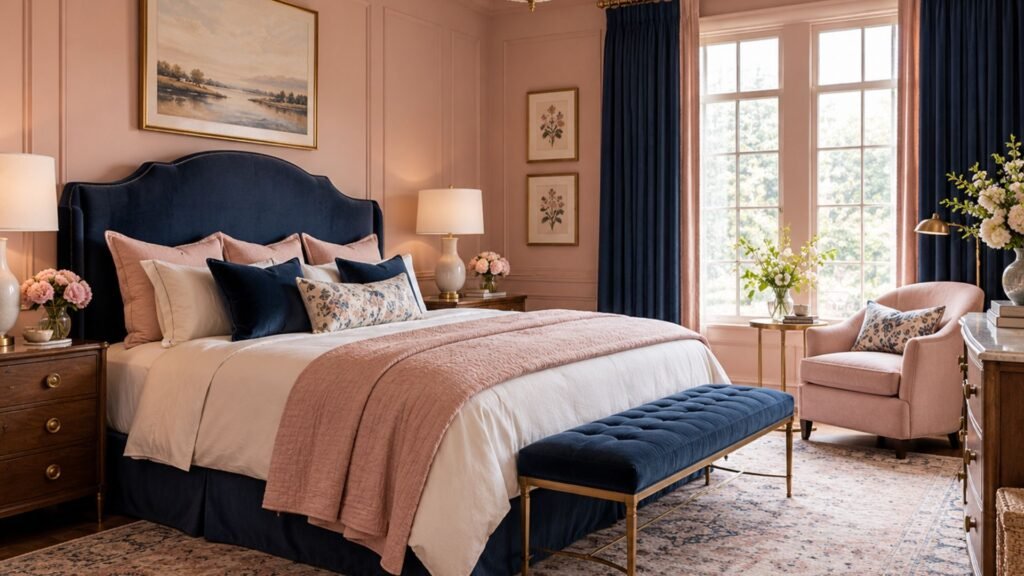
Pink and navy create a strong color contrast without requiring bright or highly saturated shades.
In this design, muted blush walls soften a substantial navy upholstered bed.
Dark walnut nightstands add warmth, while tailored striped bedding gives the room a crisp appearance.
The furniture should feel structured rather than delicate.
A simple bronze pendant or pair of wall sconces adds warmth without introducing another major color.
This combination can suit both traditional and contemporary homes.
Why it works: Navy provides visual weight and structure, while blush prevents the bedroom from feeling too formal or dark.
Recreate the look: Pair dusty pink walls with a navy upholstered bed, cream bedding, one subtle striped textile, and warm timber furniture.
For more ideas involving deep blue, explore our navy bedroom ideas guide.
10. Make a confident statement with raspberry pink
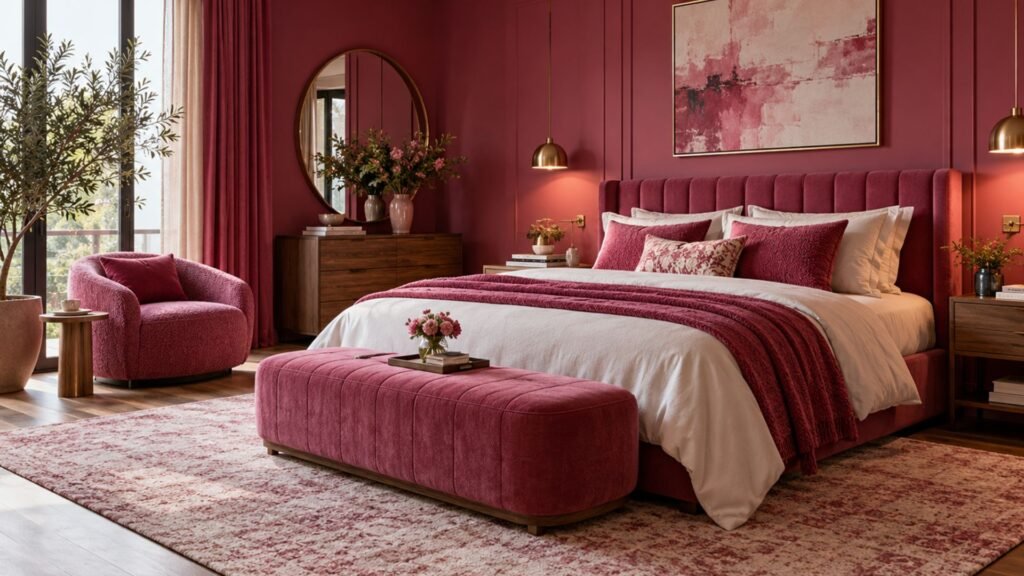
Not every pink bedroom needs to be soft or understated.
A vibrant raspberry pink can create a striking modern interior when applied to one strong architectural surface.
Use a clean geometric feature wall or a painted alcove to contain the color.
A white platform bed and polished concrete floor provide visual contrast, while a cobalt blue chair introduces one deliberate secondary accent.
The furniture should have simple silhouettes so the bright color remains the focal point.
Avoid repeating raspberry across the bedding, curtains, and every accessory. That can make the composition feel overwhelming.
Why it works: A clearly defined area of saturated pink creates energy, while neutral architecture prevents the room from becoming visually chaotic.
Recreate the look: Choose one substantial raspberry feature, white or cream furniture, and a limited secondary accent color. Keep artwork and lighting sculptural but restrained.
11. Bring vintage romance with pink floral wallpaper

A floral pink bedroom can feel timeless when the furniture and materials have genuine character.
Choose wallpaper with a faded rose pattern rather than an overly bright print.
An antique cream iron bed creates contrast, while a darker wooden dresser adds warmth and visual depth.
Layer linen bedding, a vintage-inspired rug, and a small amount of delicate trim.
The main challenge is avoiding too many competing patterns.
If the wallpaper is detailed, let the bedding and curtains remain relatively simple.
Why it works: The wallpaper supplies softness and decorative character, while antique furniture gives the room substance.
Recreate the look: Use faded floral wallpaper on one wall or throughout a traditional room. Combine it with an antique-style iron bed, cream bedding, dark timber, and a warm metal mirror.
12. Create an urban pink bedroom with black industrial details
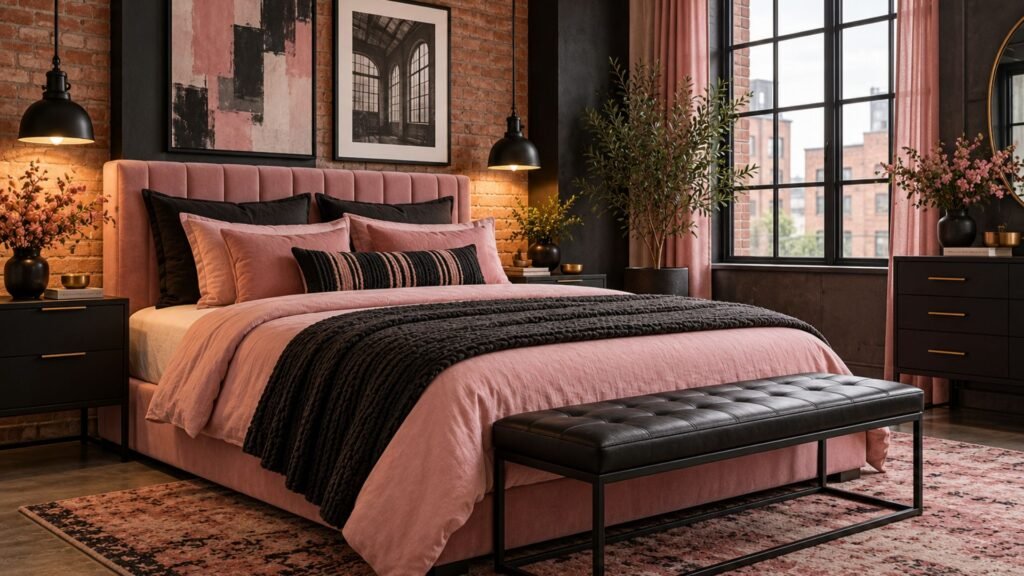
Pink can be particularly effective in an industrial bedroom because it contrasts with hard architectural materials.
In this design, dusty rose plaster walls soften black steel windows and an exposed concrete ceiling.
A low black platform bed provides structure, while warm ivory bedding prevents the interior from becoming too dark.
Choose simple lighting with black or brushed metal finishes.
One large abstract artwork piece can connect the colors without introducing additional ornament.
This approach is very different from a traditional pink bedroom. The visual interest comes from architectural contrast and material texture.
Why it works: Dusty pink introduces warmth against concrete and steel, creating a balanced composition with both softness and structure.
Recreate the look: Pair muted pink walls with black metal furniture, concrete or stone textures, an ivory duvet, and restrained contemporary lighting.
What colors go best with pink in a bedroom?
Pink can work with more colors than its traditional associations might suggest.
The most successful combinations use a deliberate relationship between undertones and materials.
| Pink combination | Overall atmosphere | Recommended materials |
|---|---|---|
| Blush + ivory + oak | Soft and organic | Linen, oak, travertine |
| Pink + walnut | Warm and mid-century | Walnut, brass, wool |
| Rose + sage green | Relaxed and botanical | Painted timber, linen, antique iron |
| Mauve + burgundy | Dramatic and glamorous | Velvet, smoked glass, dark wood |
| Dusty pink + chocolate | Rich and retro | Brown velvet, walnut, patterned textiles |
| Peach pink + terracotta | Warm and Mediterranean | Plaster, terracotta, rustic wood |
| Blush + navy | Tailored and sophisticated | Navy upholstery, dark wood |
| Raspberry + white | Bold and contemporary | Lacquer, concrete, sculptural furniture |
| Dusty pink + black | Architectural and urban | Steel, concrete, natural textiles |
Pink and beige
Pink and beige can create a gentle neutral palette when the undertones work together.
A beige with warm peach or rose influences may blend naturally with dusty pink.
However, a strongly yellow beige can look less harmonious beside a cool lavender-pink.
Compare samples before making a final decision.
For inspiration, explore our beige bedroom ideas guide.
Pink and green
Green can balance pink through natural contrast.
Sage, olive, and forest green all work, but they produce different results.
Sage creates a softer effect, olive feels earthy, and forest green offers a deeper contrast.
Our green bedroom ideas guide explores additional ways to use green in different decorating styles.
Pink and cream
Cream is particularly effective when you want pink to feel warm and understated.
An ivory upholstered bed, cream curtains, and oatmeal textiles can soften a rosy wall color without erasing it.
Use a mixture of matte, woven, and upholstered textures to create depth.
Pink and black
Black gives pink a contemporary edge.
Choose one or two substantial black elements, such as a bed frame or steel windows, instead of scattering numerous small black accessories throughout the room.
The contrast will usually feel more intentional.
How to choose the right pink paint color
Pink paint can be difficult to select because subtle undertones become more noticeable once the color covers a large surface.
A shade that appears neutral on a small sample may look noticeably pink across four walls.
Start by deciding whether you want a barely-there blush, an earthy rose, or a clearly saturated pink.
Compare warm and cool undertones
Warm pinks contain peach, coral, or earthy influences.
Cooler pinks may lean toward violet or lavender.
The right undertone depends on the room’s furniture, flooring, and natural light.
For example, a peachy pink can complement warm oak or terracotta. A cooler dusty rose might work better beside certain gray or burgundy finishes.
For a broad comparison, browse Benjamin Moore’s pink paint color collection, which includes everything from pale blush to stronger pinks.
Consider muted rose as an alternative to traditional pink
If you want a more grounded color, a muted brown-pink may be worth considering.
Sherwin-Williams Redend Point SW 9081 is an example of an earthy, pinkish-brown paint.
This type of shade can work particularly well with cream, walnut, terracotta, and natural woven materials.
It’s a useful option when bright pink feels too decorative but beige feels insufficiently colorful.
Test paint in different lighting
Pink can shift noticeably throughout the day.
A warm blush may appear peachier in late sunlight. A cooler rose can look more muted under certain artificial lights.
Paint a large sample or use removable swatches and observe them in several locations.
Benjamin Moore’s paint color sampling guide explains how to evaluate samples under different lighting conditions.
Check the color next to your existing bedding, flooring, and furniture before making a final choice.
Choose the paint finish carefully
Matte and low-sheen finishes can give pink walls a softer, more understated appearance.
More reflective finishes may emphasize surface texture or imperfections but can be appropriate for certain doors, trim, and cabinetry.
Use a finish recommended for the surface and its maintenance requirements.
How to decorate a pink bedroom without making it look childish
Pink doesn’t automatically make a bedroom look youthful or overly decorative.
The furniture, materials, and color placement determine the overall style.
A blush bedroom with a low oak bed and linen bedding will feel different from a room filled with bright pink accessories, novelty artwork, and elaborate decorative details.
To create a more mature appearance, begin with the architectural decisions.
Choose furniture with well-considered proportions, introduce natural materials, and give the main pink feature a clear role.
Dark walnut, black metal, chocolate brown, stone, and tailored upholstery can all create contrast.
Avoid matching every object to the same shade of pink.
A more limited palette usually allows the room’s shapes and materials to become noticeable.
Can pink work in a small bedroom?
Yes. Pink can work well in compact bedrooms, particularly when the color is integrated with storage and furniture.
A pale pink wall can introduce warmth without requiring additional decorative elements.
If you want a stronger color, consider painting fitted wardrobes, the headboard wall, or an alcove.
The main issue in a small bedroom isn’t simply how much pink you use. Furniture proportions, circulation, and useful storage have greater practical consequences.
Before purchasing a new bed or wardrobe, check the floor area, door positions, and clearance around the furniture.
Choose a design that supports the way you use the room.
Pink bedroom ideas without painting
You can introduce pink without changing the walls.
A dusty rose upholstered headboard creates a focal point against cream or beige walls.
Pink curtains can frame a window and introduce a larger block of color.
A pink quilt or duvet can soften a darker bed frame.
A patterned rug containing muted rose can connect existing furniture to a new color palette.
The key is deciding how prominently pink should appear.
One significant item is often more effective than numerous small pink decorations.
If you already have cream or beige furnishings, try a rose-colored throw before investing in new upholstery.
Budget-friendly ways to decorate with pink
You don’t need a complete renovation to create a beautiful pink bedroom.
Painting an existing dresser or bedside cabinet can introduce color at relatively low cost.
A vintage wooden bed may look more interesting against pink walls than an entirely new matching bedroom set.
Changing the bedding can also transform the palette.
If you’re working with a limited budget, prioritize the most visible surfaces: the wall behind the bed, the bed itself, and the main lighting.
Secondhand mirrors, timber furniture, and framed artwork can add character without requiring excessive purchases.
For additional ideas focused on comfort and layered materials, explore our cozy bedroom ideas.
The Wallsaide pink bedroom design check
Before completing your bedroom, consider four decisions.
1. Choose the role of pink.
Will it appear on the walls, furniture, upholstery, or textiles? Give it a clear visual purpose.
2. Balance the undertones.
Check whether the pink complements your flooring, existing wood finishes, and neutral fabrics.
3. Introduce enough material contrast.
Wood, metal, stone, woven fibers, and upholstery can prevent a pink bedroom from feeling flat or overly coordinated.
4. Evaluate the room after sunset.
Pink may change appearance under artificial lighting. Make sure the paint and textiles look appealing when you use the bedroom in the evening.
The goal is a room that feels complete rather than one that simply contains several matching pink objects.
Common pink bedroom decorating mistakes
Choosing the wrong undertone
A cool pink may conflict with very warm flooring, while a peachy pink can become too orange beside certain furnishings.
Compare samples before committing.
Matching every accessory
Pink walls, curtains, bedding, furniture, and decorative objects in nearly identical shades can make a room feel overly coordinated.
Use contrast in color, texture, and material.
Relying only on white furniture
White furniture can complement pink, but it’s not the only option.
Walnut, oak, dark wood, black metal, and upholstered finishes can give the room greater depth.
Using too many decorative patterns
Floral wallpaper, patterned bedding, printed curtains, and a highly detailed rug may compete.
Choose one principal pattern and let the remaining surfaces support it.
Ignoring the lighting
Pale pink can appear washed out under some conditions, while deeper rose can look darker than expected.
Test paint under the lighting you actually use.
Frequently asked questions about pink bedrooms
Is pink a good color for a bedroom?
Yes. Pink can work in bedrooms of many styles, from minimalist and Scandinavian to traditional and contemporary. The right shade depends on your preferred atmosphere, furnishings, and lighting.
How do you make a pink bedroom look sophisticated?
Use muted pink shades, natural materials, well-proportioned furniture, and a limited palette. Walnut, chocolate brown, black metal, stone, and tailored upholstery can provide useful contrast.
What colors go best with pink bedroom walls?
Cream, beige, walnut brown, sage green, olive green, navy, burgundy, and black can all work well. Choose combinations that complement the pink’s undertones.
Is blush pink still suitable for modern bedrooms?
Yes. Blush can function as a warm neutral in a contemporary interior when paired with clean-lined furniture, natural textures, and restrained decoration.
Does pink make a small bedroom look smaller?
Not necessarily. The effect depends on shade, contrast, lighting, and furniture placement. A compact bedroom can use pale or deep pink successfully when the layout is carefully planned.
What color bedding works with pink walls?
Ivory, cream, oatmeal, muted green, chocolate brown, and selected burgundy or navy accents can work. Choose bedding that creates the level of contrast you prefer.
Can pink and brown work together?
Yes. Dusty pink and chocolate brown can create a warm, rich palette. Walnut furniture and cream bedding can help balance the two colors.
How can I add pink without painting my bedroom?
Try a pink upholstered headboard, curtains, quilt, rug, or painted furniture piece. Start with one substantial element and evaluate the balance before adding smaller accents.
Final thoughts
The best pink bedroom ideas use color as one part of a complete interior design rather than relying on pink alone to create personality.
Dusty blush and natural plaster can produce a quiet organic modern retreat. Walnut makes pale pink feel structured and sophisticated. Sage green introduces botanical character, while burgundy, chocolate brown, and black create deeper, more expressive interiors.
The most important decision is choosing a shade and material palette that work with your existing space.
Start with the largest surfaces, balance undertones and contrast, and introduce furniture and lighting that suit the room’s architecture.
Whether you prefer a subtle blush or a saturated raspberry accent, pink can create a bedroom that feels warm, distinctive, and thoughtfully finished.
For a broader approach to planning your space, explore our complete bedroom ideas guide.
About the Author
Emma Carter writes interior design and decorating guides for Wallsaide, focusing on beautiful color combinations, practical styling, and functional living spaces. Her articles help readers understand how furniture, materials, lighting, and color work together to create interiors they can adapt to their own homes.