
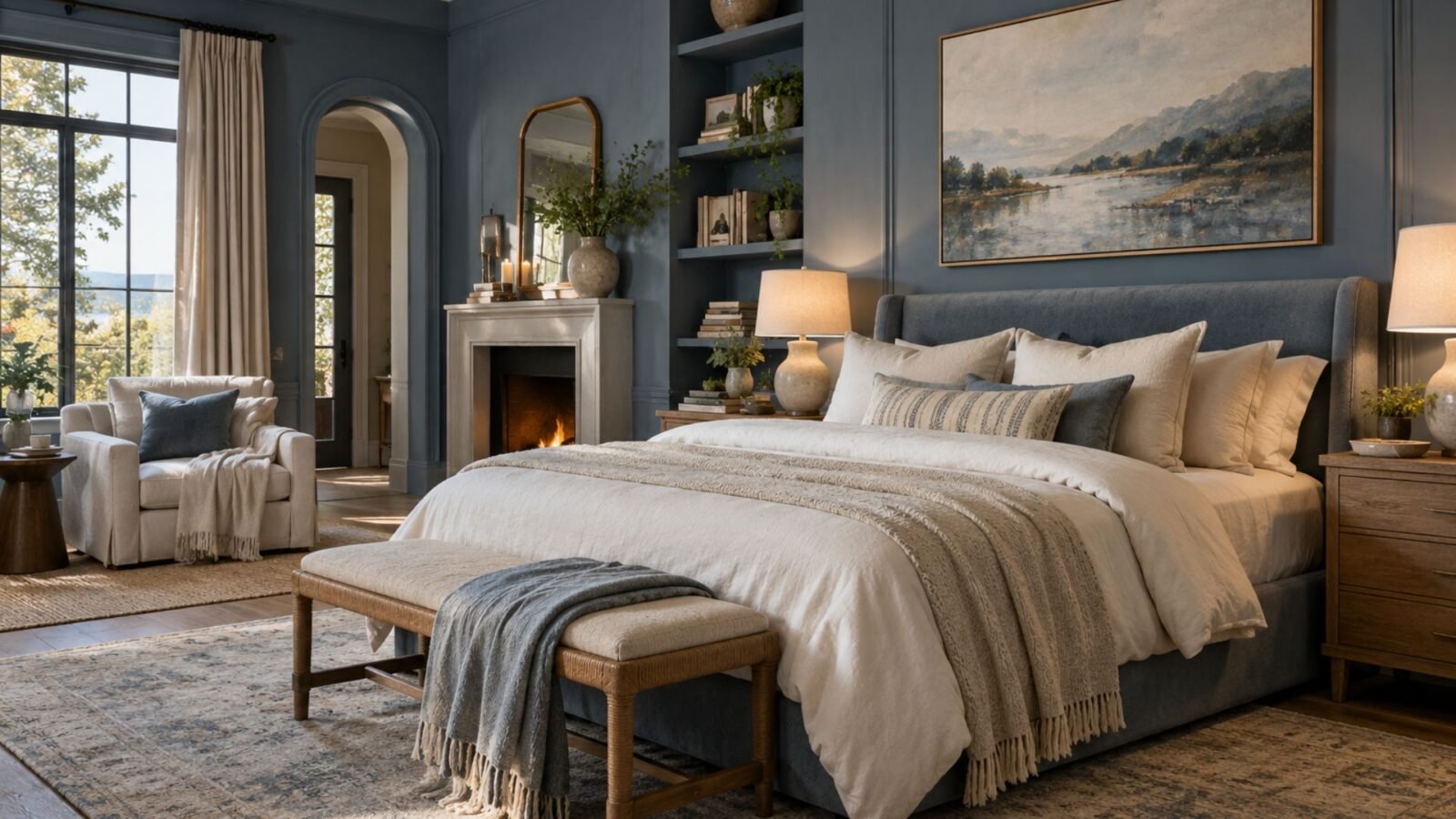

Discover how to choose the right shade of blue, balance it with beautiful materials, and create a bedroom that feels personal, comfortable, and thoughtfully designed.
- Why Blue Works So Well in Bedroom Design
- 12 Blue Bedroom Ideas for Different Styles and Spaces
- 1. Create a powder blue Parisian bedroom with classic molding
- 2. Combine muted blue and natural oak in a Scandinavian bedroom
- 3. Make cobalt blue the statement in a contemporary bedroom
- 4. Bring dusty blue into an English country bedroom
- 5. Pair Mediterranean blue with warm terracotta
- 6. Keep an ice blue bedroom quiet and minimalist
- 7. Pair blue with chocolate brown for sophisticated contrast
- 8. Design a small blue bedroom around practical built-in storage
- 9. Create a romantic blue bedroom with botanical wallpaper
- 10. Use slate blue in an industrial loft bedroom
- 11. Combine blue and butter yellow for a playful vintage bedroom
- 12. Create an elegant blue twin guest bedroom
- Beautiful Color Combinations for Blue Bedrooms
- How to Choose the Right Blue Paint for Your Bedroom
- Identify whether your blue is warm or cool
- Consider how much blue you want
- Understand light reflectance value
- Test blue paint at different times of day
- Where Should You Use Blue in a Bedroom?
- Blue bedroom walls
- Blue upholstered headboards
- Blue wardrobes and fitted cabinetry
- Blue bedding and curtains
- How to Decorate a Small Blue Bedroom
- Budget-Friendly Blue Bedroom Decorating Ideas
- The Wallsaide Blue Bedroom Design Check
- Common Blue Bedroom Decorating Mistakes
- Using too many unrelated blue shades
- Forgetting to introduce warmth
- Choosing paint from a phone screen
- Overdecorating a small bedroom
- Matching every decorative object
- Frequently Asked Questions
- Is blue a good color for a bedroom?
- What is the most relaxing shade of blue for a bedroom?
- What colors go best with blue bedroom walls?
- Does dark blue make a small bedroom look smaller?
- Can I combine blue and brown in a bedroom?
- Is light blue or dark blue better for a bedroom?
- What color curtains work with blue bedroom walls?
- Can I create a blue bedroom without painting?
- Final Thoughts
- About the Author
Blue bedroom ideas offer far more variety than the familiar combination of pale blue walls and white bedding. From powder blue and warm oak to dramatic cobalt, dusty denim, and sophisticated slate, the right shade can give your bedroom an entirely different character.
The secret isn’t simply choosing a beautiful blue. It’s understanding how that color works with your natural light, furniture, flooring, and the atmosphere you want to create.
These 12 blue bedroom ideas explore distinctive decorating styles, with practical suggestions for adapting each design to your own space.
Why Blue Works So Well in Bedroom Design
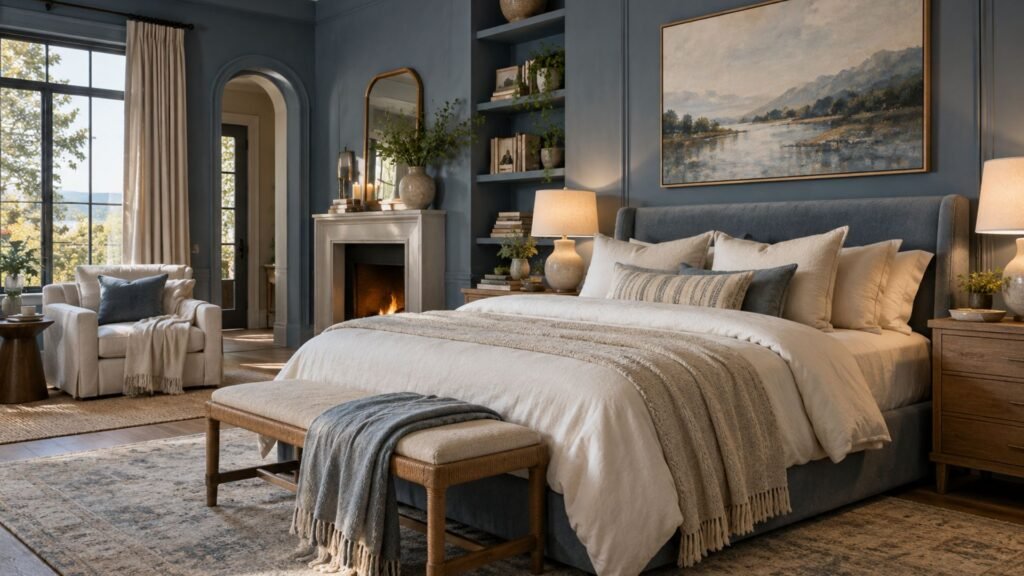
Blue is unusually versatile because its shades can feel airy, restrained, dramatic, traditional, or contemporary.
Pale blue often works as a subtle background for light furniture. Mid-tone denim and dusty blues introduce more noticeable color without necessarily dominating the room. Cobalt creates a bold focal point, while deep slate blue can give a bedroom an atmospheric quality.
However, blue isn’t automatically calming. A bright, saturated shade used across every surface can feel more energetic than restful. The surrounding materials, contrast, lighting, and amount of color matter just as much as the paint itself.
Blue also changes character depending on what you pair it with.
Warm oak and linen make it feel relaxed. Walnut and chocolate brown create richness. Brass adds warmth, while cool white and polished metal produce a crisper appearance.
If you’re comparing several color families before decorating, our bedroom color ideas guide is a useful starting point.
12 Blue Bedroom Ideas for Different Styles and Spaces
The following designs explore twelve distinct approaches to decorating with blue. Each focuses on a specific architectural feature, material combination, or room requirement rather than simply changing the wall color.
1. Create a powder blue Parisian bedroom with classic molding
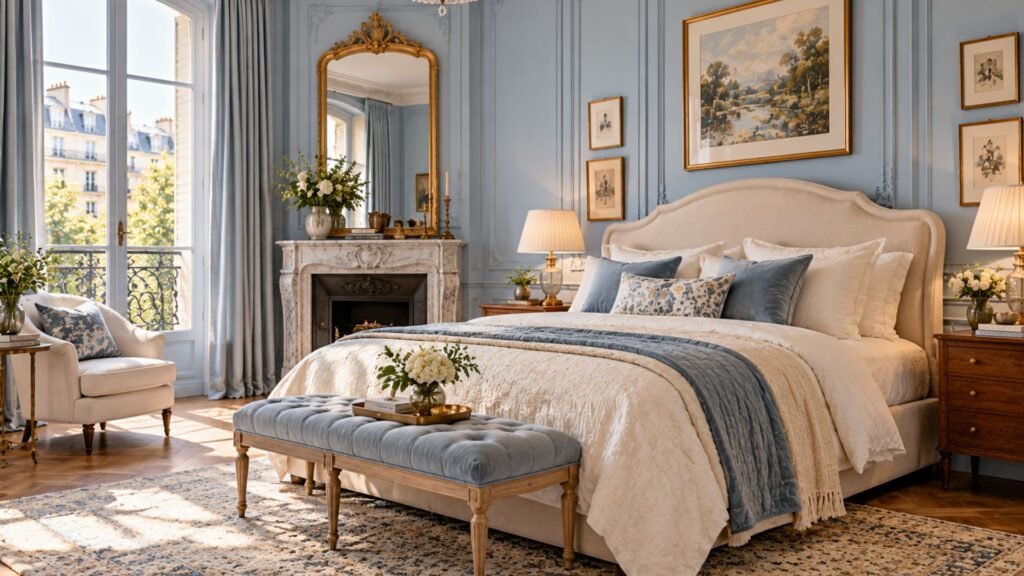
Powder blue can feel particularly elegant when introduced into a room with traditional architectural details.
Imagine tall walls finished in a delicate blue, refined plaster molding, an antique marble fireplace, and a softly curved upholstered bed.
The pale color keeps the architecture visible without giving the room the starkness of plain white walls.
Warm cream bedding, herringbone timber flooring, and antique brass lighting provide contrast while preserving the sophisticated atmosphere.
The important detail is the relationship between blue and the architectural features. If the molding is already beautiful, painting the walls and trim the same pale blue can make the room feel more cohesive.
Recreate the look: Choose a soft powder blue with a slightly gray undertone. Introduce cream upholstery, warm wooden furniture, and one antique-inspired statement piece. If your bedroom lacks ornate molding, simple applied wall trim can provide a more affordable interpretation.
2. Combine muted blue and natural oak in a Scandinavian bedroom
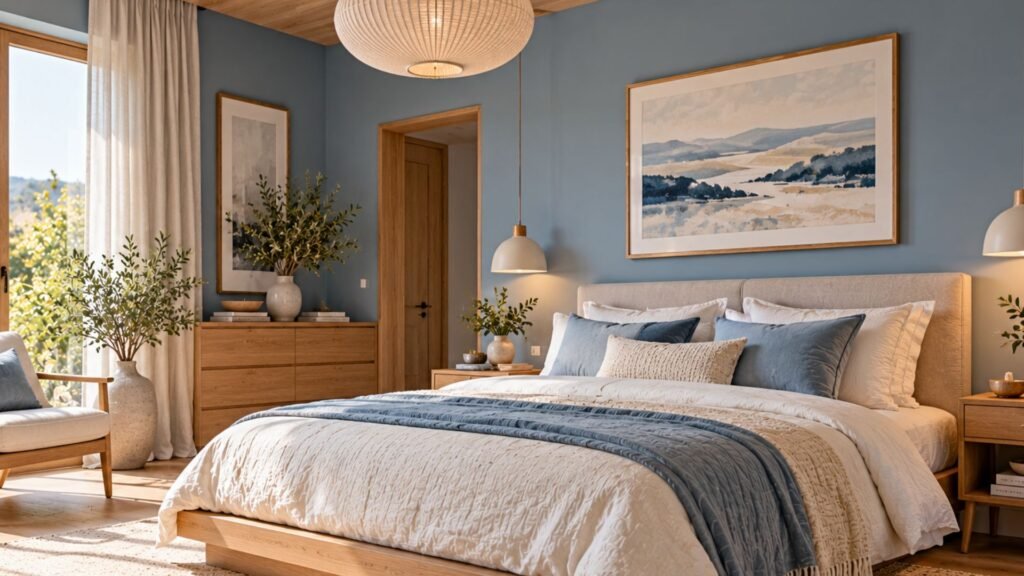
A Scandinavian-inspired blue bedroom relies on simplicity, natural materials, and well-considered proportions.
Muted blue walls can provide gentle color behind a low oak platform bed. Light timber flooring, uncluttered nightstands, and textured bedding help the room feel warm rather than cold.
The furniture should look purposeful, with clean silhouettes and enough open space to move around comfortably.
Instead of adding numerous decorative objects, introduce texture through linen, wool, timber grain, and perhaps a single sculptural pendant light.
Why it works: Oak’s natural warmth counterbalances the cooler character of blue, while minimal furniture keeps the room visually organized.
Recreate the look: Use a gray-muted blue on the walls, pale oak furniture, ivory bedding, and warm white lighting. Keep wall decoration limited to one carefully selected piece.
For more approaches that balance clean lines with comfortable materials, explore our modern bedroom ideas.
3. Make cobalt blue the statement in a contemporary bedroom
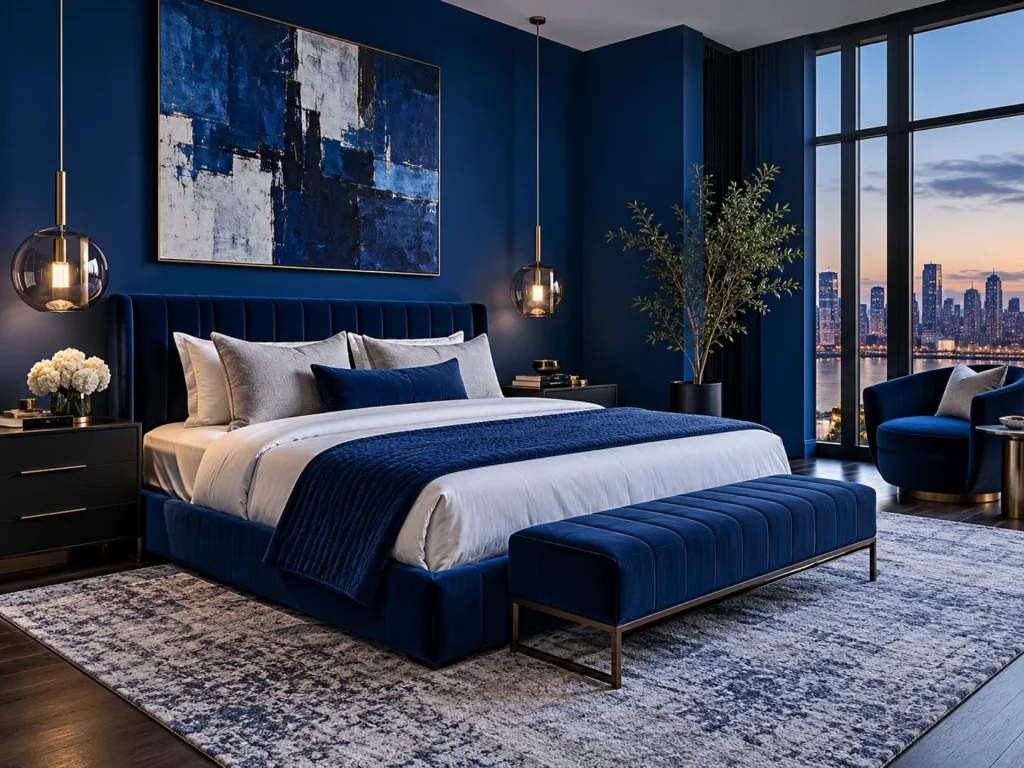
Cobalt blue brings a very different energy to a bedroom than powder blue or dusty denim.
Its saturation makes it particularly effective as a concentrated architectural feature rather than a color repeated indiscriminately throughout the room.
A cobalt-painted recessed wall behind the bed can create a striking focal point. Pair it with a sculptural white bed, black or polished metal furniture, and carefully positioned lighting.
Keeping the bedding mostly neutral allows the saturated blue to remain the dominant visual element.
The result can feel contemporary and expressive without becoming visually chaotic.
Recreate the look: Paint a clearly defined wall or alcove cobalt blue. Use a simple bed silhouette, white bedding, and one metallic finish. Avoid adding several equally saturated accent colors unless you’re deliberately pursuing a maximalist design.
4. Bring dusty blue into an English country bedroom
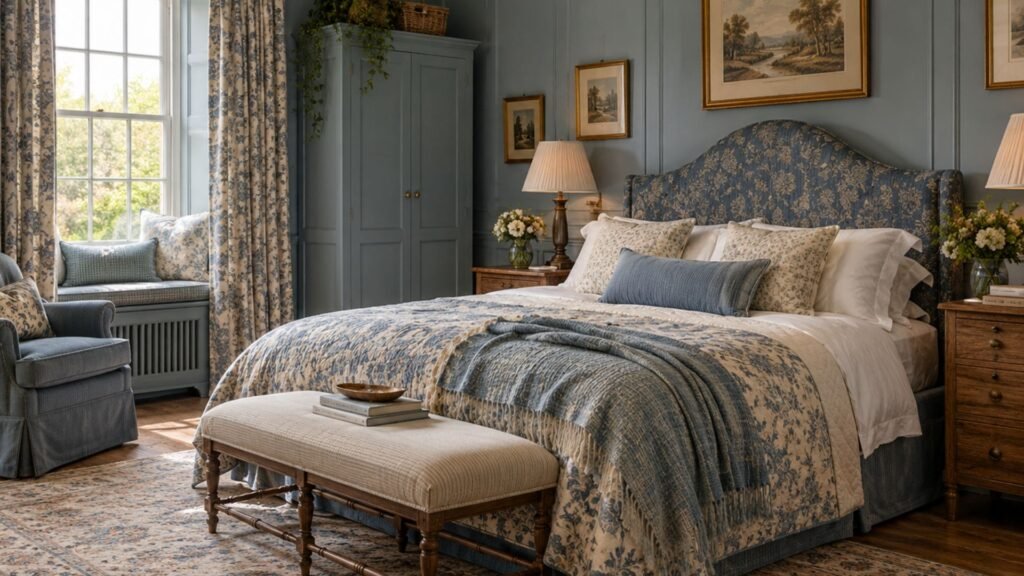
Dusty blue is well suited to traditional bedrooms because it works naturally with aged timber, floral patterns, and decorative details.
Instead of painting the entire room blue, consider a delicate floral wallpaper with a muted blue background.
Dark antique furniture introduces contrast, while warm cream bedding makes the arrangement feel welcoming.
Painted window trim or a small dresser can repeat one of the wallpaper’s blue tones without requiring matching fabrics everywhere.
The design should feel collected over time rather than purchased as a complete furniture set.
Recreate the look: Choose a small-scale floral print, an antique or vintage-inspired wooden bed, and natural cotton bedding. Repeat the blue once in painted furniture or architectural trim, then allow wood and cream fabrics to provide balance.
5. Pair Mediterranean blue with warm terracotta
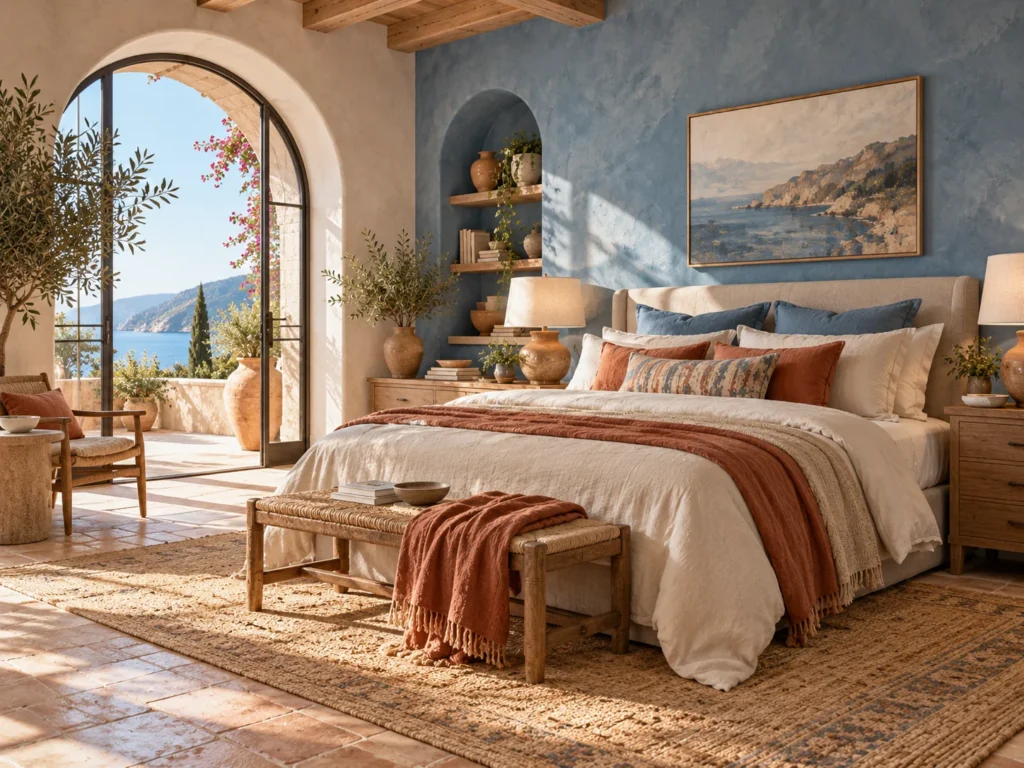
Blue and terracotta offer a beautiful contrast between cool and warm colors.
In a Mediterranean-inspired bedroom, muted blue plaster can sit alongside terracotta flooring, rustic timber, and simple natural textiles.
Rounded architectural openings or an arched niche behind the bed give the room a distinct character.
Unlike a conventional blue-and-white coastal interior, this approach benefits from visible clay, textured plaster, and slightly imperfect handmade finishes.
The blue should feel connected to the warm architecture rather than appearing as a bright decorative accent placed into an otherwise earthy room.
Recreate the look: Combine muted blue walls with terracotta pottery, warm wood, and ivory linen. If replacing flooring isn’t practical, introduce clay tones through a large rug or a limited selection of textiles.
6. Keep an ice blue bedroom quiet and minimalist

Ice blue can be an effective choice when you want color that remains subtle.
In a minimalist bedroom, pale blue walls provide a gentle difference from white cabinetry and bedding.
The room’s appeal comes from proportion, surface quality, and carefully controlled contrast.
A floating or low-profile bed, concealed storage, and translucent curtains keep the arrangement visually light.
To prevent the room from feeling overly cold, introduce one warmer surface, such as pale oak flooring or natural woven upholstery.
Recreate the look: Select a very pale blue and compare it against your existing white finishes. Keep furniture silhouettes straightforward, choose discreet lighting, and allow empty space to become part of the composition.
This approach works particularly well when you prefer a restrained bedroom without numerous accessories.
7. Pair blue with chocolate brown for sophisticated contrast
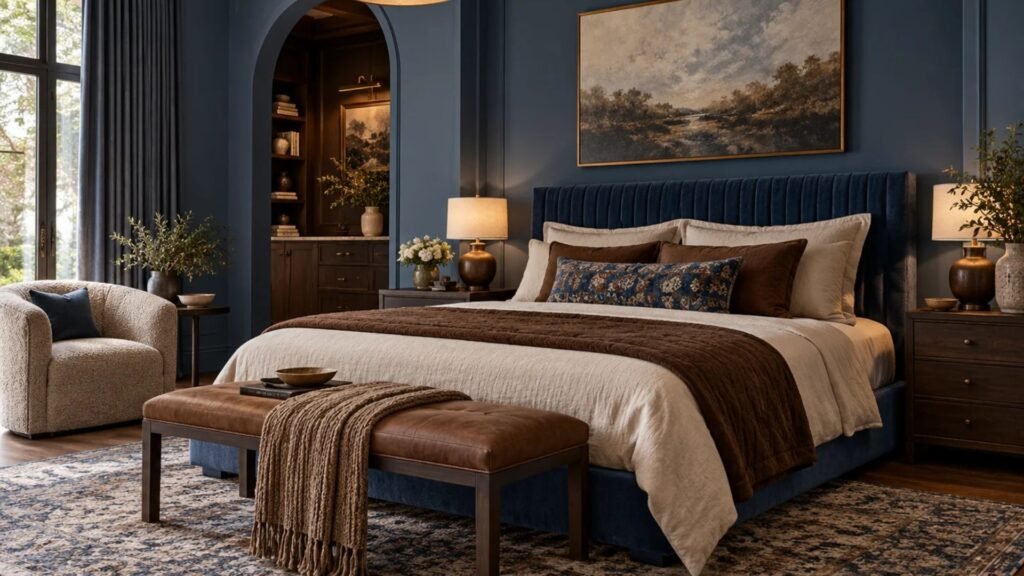
Blue and chocolate brown create an unexpectedly rich combination.
The contrast is especially attractive when the blue is muted rather than overly bright.
Smoky blue walls provide a cool background, while a chocolate brown headboard and walnut furniture add depth.
Brass lighting introduces warmth, and ivory bedding separates the darker finishes so the bed remains clearly defined.
This design can feel elegant and tailored without depending on elaborate architectural decoration.
Why it works: Brown grounds the blue palette, while the cooler wall color prevents the wooden and upholstered elements from feeling visually heavy.
Recreate the look: Choose smoky or gray-blue walls, one substantial chocolate brown upholstered piece, dark wooden furniture, and warm ivory textiles.
For additional ways to balance dark timber and upholstery, see our brown bedroom ideas guide.
8. Design a small blue bedroom around practical built-in storage
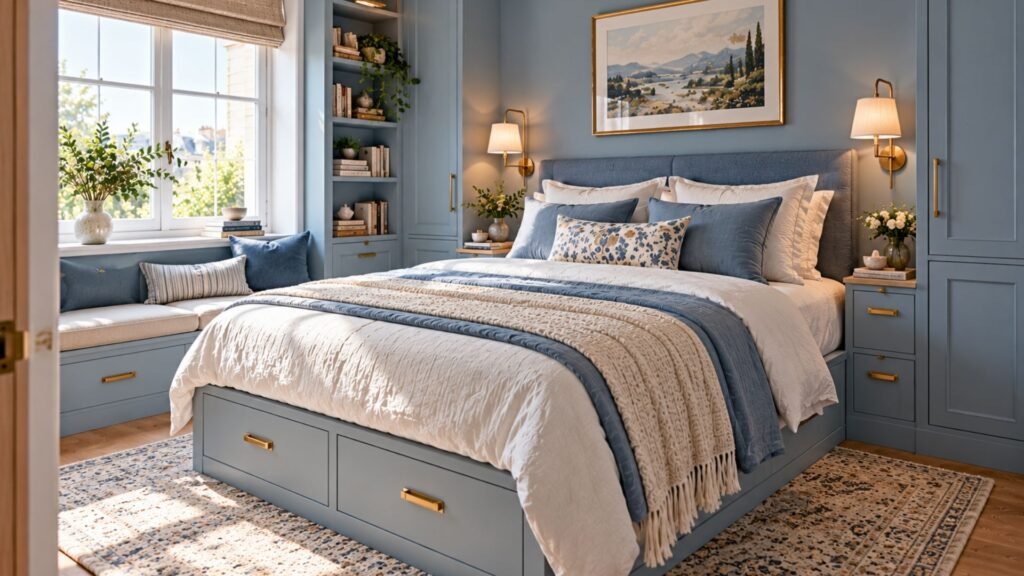
Blue bedroom ideas can also solve practical design problems in compact rooms.
Instead of placing several separate pieces of furniture around the bed, fitted storage can organize clothing, bedside essentials, and less frequently used belongings into one coordinated composition.
Dusty blue cabinetry can become the room’s main color feature, allowing the remaining walls and bedding to stay light.
An inset headboard, integrated bedside lighting, and under-bed drawers can reduce the need for freestanding furniture.
However, built-in cabinetry needs careful planning. Storage that is too deep or poorly positioned can make a small room harder to use.
Recreate the look: Choose flat-front dusty blue wardrobes, integrated warm lighting, slim bedside ledges, and cream bedding. Measure the available walking space and cabinet-door clearances before planning fitted units.
Our small bedroom ideas guide explores more ways to improve layouts and furniture proportions.
9. Create a romantic blue bedroom with botanical wallpaper
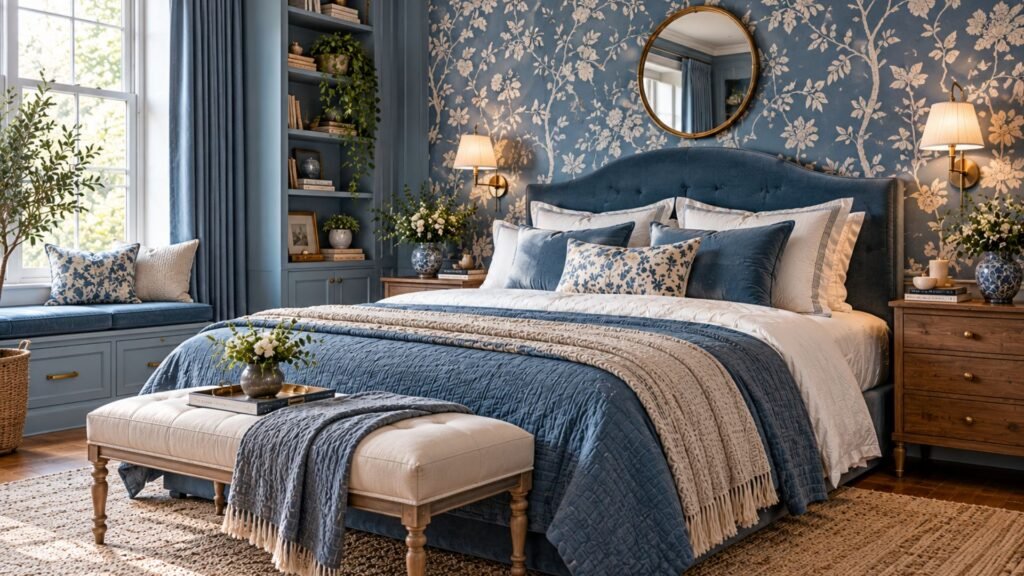
Botanical wallpaper introduces blue through pattern rather than a single flat-painted surface.
A wallpaper featuring faded blue flowers, leaves, or delicate branches can create a romantic bedroom with vintage character.
Pair it with a cream-painted bed, warm wooden dresser, and softly patterned upholstery.
The wallpaper should provide the room’s main visual detail.
If you combine botanical walls with heavily patterned bedding, curtains, rugs, and furniture, the room can quickly become difficult to read.
Recreate the look: Choose botanical wallpaper for one feature wall or a defined architectural recess. Repeat one blue tone in a small upholstered element, keep the bedding mostly cream, and introduce antique-inspired lighting.
10. Use slate blue in an industrial loft bedroom

Slate blue is particularly effective in industrial interiors because its muted quality complements brick, concrete, and black metal.
A painted brick wall in slate blue can become a defining architectural surface behind a simple black steel bed.
Exposed beams, large windows, and weathered timber add character that doesn’t need to be concealed.
Warm leather seating or natural wood furniture helps counterbalance the cooler materials.
This bedroom should feel architectural rather than decorated around a theme.
Recreate the look: Use slate blue on one textured wall, introduce matte black metal, and balance the arrangement with cognac leather or natural timber. Keep bedding in warm white or oatmeal to avoid making the room overly dark.
11. Combine blue and butter yellow for a playful vintage bedroom

Blue and butter yellow offer a brighter, more cheerful bedroom palette.
The combination works particularly well when one color is dominant and the other appears through a substantial but limited feature.
Muted cornflower blue walls provide a strong background for a butter yellow upholstered headboard.
Vintage-style furniture, patterned curtains, and playful ceramic lighting can reinforce the design.
The yellow should have a creamy quality rather than an intensely saturated neon appearance.
Why it works: Blue and yellow create distinct areas of color while still allowing white bedding and natural materials to tie the arrangement together.
Recreate the look: Use cornflower blue walls, a butter yellow headboard or chair, and warm white bedding. Choose a single patterned textile that contains both colors, rather than introducing several competing prints.
12. Create an elegant blue twin guest bedroom
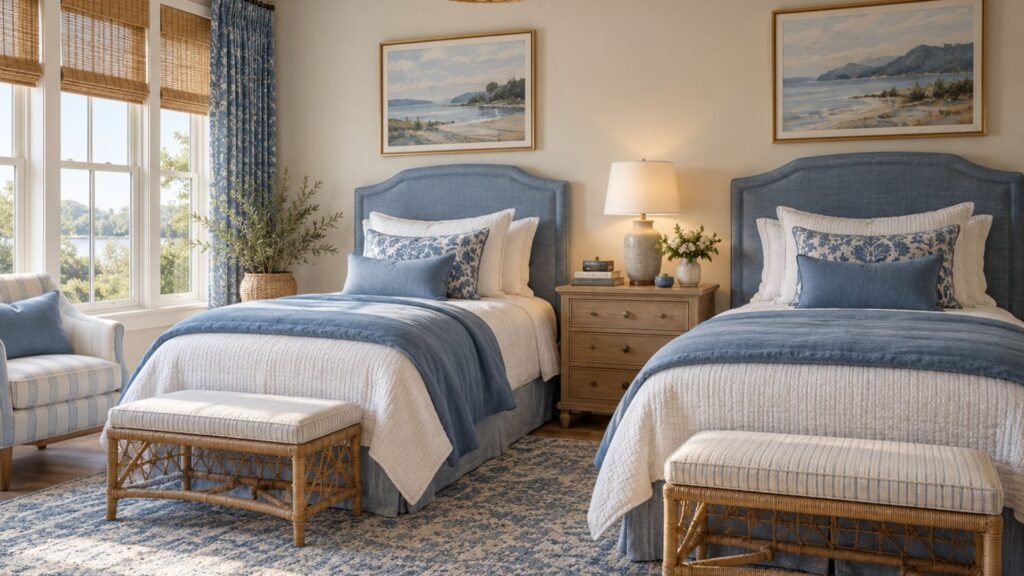
A twin guest bedroom benefits from a clear layout and careful symmetry.
Two dusty blue upholstered beds can establish the palette without requiring painted blue walls.
A shared wooden nightstand provides a central element between the beds, while matching reading lights create a balanced arrangement.
Subtle striped bedding or a patterned rug can connect the two sleeping areas.
The design should also be practical. Guests need accessible lighting, convenient charging points, and somewhere to store small belongings.
Recreate the look: Choose coordinating blue bed frames, ivory walls, a shared nightstand, and warm brass lighting. Keep enough clearance around the beds for comfortable movement and easy access.
Beautiful Color Combinations for Blue Bedrooms
The best blue bedroom ideas are built around a deliberate color combination, not simply a favorite shade of paint.
Blue can feel warmer or cooler depending on its undertones and surrounding materials.
| Blue bedroom color combination | Overall effect | Recommended materials |
|---|---|---|
| Powder blue + cream + brass | Elegant and traditional | Upholstery, marble, aged brass |
| Dusty blue + natural oak | Relaxed and contemporary | Oak, linen, wool |
| Cobalt blue + white + black | Bold and graphic | Lacquer, metal, smooth textiles |
| Slate blue + walnut | Rich and sophisticated | Walnut, leather, bronze |
| Blue + terracotta | Earthy and distinctive | Clay, plaster, woven fibers |
| Blue + chocolate brown | Warm and tailored | Velvet, dark wood, brass |
| Cornflower blue + butter yellow | Cheerful and vintage-inspired | Cotton, painted wood, ceramics |
Blue and cream
Cream introduces warmth without creating the strong contrast that bright white can produce.
This combination is especially effective with powder blue, slate blue, and dusty blue walls.
Cream bedding, upholstered furniture, and curtains can make a blue bedroom feel softer and more layered.
For inspiration on using warm pale tones, explore our cream bedroom ideas.
Blue and natural wood
Wood is one of the easiest ways to balance a blue bedroom.
Light oak creates a fresh, understated result, while walnut introduces a deeper, more sophisticated atmosphere.
Consider the wood’s undertone and how it relates to the blue.
Yellow-toned oak may create a different effect from red-toned cherry or very dark walnut.
Blue and white
Blue and white can produce a crisp, fresh bedroom palette, particularly in coastal and minimalist settings.
However, repeating bright white across the walls, bedding, flooring, and furniture can make the room feel stark.
Introduce texture through linen, wool, wood, or woven materials to keep the design visually comfortable.
Blue and brown
Brown provides warmth and creates a useful contrast against cool blue.
You can introduce it through a headboard, wardrobe, leather chair, timber flooring, or small furniture pieces.
The combination works particularly well when the blue is muted and the brown has a rich, natural appearance.
How to Choose the Right Blue Paint for Your Bedroom
Choosing the right blue involves more than selecting an attractive photograph.
A paint shade can change noticeably depending on your room’s orientation, lighting, furnishings, and neighboring colors.
Identify whether your blue is warm or cool
Blues may lean toward green, violet, gray, or a relatively pure blue appearance.
A green-leaning blue often feels different from a violet-leaning blue, even when both have similar brightness.
Compare paint samples with your existing floor, bed, and curtains.
A blue that looks understated in isolation may appear much brighter beside warm beige or yellow-toned wood. For inspiration across different undertones and intensities, explore the Sherwin-Williams blue paint color collection, which includes light, dark, warm, cool, and muted blue shades.
Consider how much blue you want
A pale blue used on every wall can create a subtle background.
A saturated cobalt used on every wall creates a far stronger visual impression.
Neither approach is inherently wrong, but they serve different purposes.
Before painting, decide whether blue should act as a background, a focal point, or a supporting accent.
This will help you determine whether to use it on walls, upholstery, cabinetry, or smaller furnishings.
Understand light reflectance value
Light reflectance value, commonly abbreviated LRV, measures how much visible light a paint color reflects under standardized conditions.
Higher-LRV paints generally reflect more light than lower-LRV paints.
However, LRV alone doesn’t determine whether a bedroom feels spacious, cozy, or bright. For a practical example, Benjamin Moore Blue 2066-10 has a light reflectance value (LRV) of 6.24, illustrating how little light a particularly deep blue paint reflects compared with lighter shades.
Window size, room proportions, furniture contrast, and artificial lighting all influence the overall appearance.
Use LRV to compare paint options, not as the only factor in your decision.
Test blue paint at different times of day
Natural light can significantly affect the appearance of blue.
Cool daylight may emphasize gray or violet undertones, while warm afternoon light can change the way certain blues appear. Benjamin Moore’s guide to testing paint color samples recommends evaluating larger samples in different locations and lighting conditions before committing to a final wall color.
Artificial lighting introduces another variable.
Test large paint samples on more than one wall, then observe them during the morning, afternoon, and evening.
Compare them against your actual bedding, furniture, and flooring before committing to the final color.
Where Should You Use Blue in a Bedroom?
You don’t have to paint the walls blue to create a blue bedroom.
The strongest design depends on giving the color a clear role.
Blue bedroom walls
Walls provide the largest continuous area of color.
Muted blues can work as a background for wooden furniture, while more saturated blues create strong focal points.
Use bedding and upholstery to introduce light-dark contrast.
Blue upholstered headboards
A blue headboard introduces a substantial amount of color without requiring wall paint.
Velvet can create a more luxurious appearance, while linen or woven upholstery provides a softer effect.
This works especially well against cream, warm white, or pale neutral walls.
Blue wardrobes and fitted cabinetry
Painted cabinetry can connect storage with the room’s design.
Dusty blue wardrobes can feel understated, while dark slate blue cabinets create greater contrast.
Choose cabinet hardware and lighting that complement the specific shade.
Blue bedding and curtains
Textiles are the easiest way to experiment before making permanent changes.
Try a blue duvet, patterned curtains, or a substantial throw.
Avoid purchasing multiple small accessories in different blue shades without checking how they work together.
How to Decorate a Small Blue Bedroom
Small rooms can benefit from blue, but proportion and practical storage matter more than any single color choice.
Start by identifying the room’s largest visual elements: the bed, wardrobes, window treatments, and flooring.
If you choose blue walls, allow the furniture and bedding to provide sufficient contrast.
If the room has limited storage, consider painted cabinetry rather than adding freestanding furniture that reduces circulation.
A low-profile bed and slim bedside tables may preserve more visible floor area.
You can also use blue selectively through the headboard or bedding when you want to retain neutral walls.
A useful rule: Don’t select smaller furniture simply because the room is small. Select furniture that fits the space, accommodates your actual needs, and leaves comfortable paths around the bed.
Budget-Friendly Blue Bedroom Decorating Ideas
Creating a stylish blue bedroom doesn’t require replacing every piece of furniture.
Begin with the change that will have the greatest visual impact.
A painted accent wall can establish the palette. A blue upholstered headboard can create a focal point. New bedding may be enough to refresh a room with existing neutral furniture.
Consider refinishing a dresser in dusty blue rather than buying a new storage unit.
Secondhand lamps, artwork, and vintage furniture can add personality without requiring everything to match.
If the room already has good furniture and flooring, focus on lighting, textiles, and color relationships before investing in additional decorative objects.
For more comfortable, layered approaches, see our cozy bedroom ideas.
The Wallsaide Blue Bedroom Design Check
Before finalizing your bedroom, consider four questions.
1. Does the blue suit the room’s light?
Observe the chosen shade in natural daylight and under your everyday lighting. A beautiful paint sample should remain appealing throughout the day.
2. Have you balanced warm and cool materials?
Blue, gray, white, and polished metal can produce a relatively cool palette. Wood, cream textiles, or warm metallic finishes may introduce a more comfortable contrast.
3. Is the main focal point clear?
Decide whether the bed, artwork, architectural wall, or upholstered headboard should attract the most attention.
Several equally strong features can compete visually.
4. Does the furniture arrangement work?
Check walking space, storage access, bedside lighting, and the proportions of larger furniture.
A beautiful color scheme cannot compensate for a bedroom that’s awkward to use.
These decisions help translate inspiration into a space that works for everyday living.
Common Blue Bedroom Decorating Mistakes
Using too many unrelated blue shades
Powder blue, cobalt, teal-blue, slate, and cornflower blue don’t automatically coordinate because they belong to the same broad color family.
Choose a dominant blue and introduce related tones deliberately.
Forgetting to introduce warmth
A room filled entirely with cool blue, gray, and stark white may feel more clinical than intended.
Warm wood, ivory textiles, brass, or a muted earthy accent can help balance the palette.
Choosing paint from a phone screen
Photographs are affected by editing, camera settings, display brightness, and surrounding lighting.
Always compare physical paint samples before making a final decision.
Overdecorating a small bedroom
A compact bedroom doesn’t need numerous blue accessories to communicate its color scheme.
A blue wall, headboard, or wardrobe may already create enough visual impact.
Matching every decorative object
Identical blue bedding, curtains, lamps, cushions, and artwork can make a room feel overly coordinated.
Allow different materials and neutral surfaces to support the main color.
Frequently Asked Questions
Is blue a good color for a bedroom?
Yes. Blue offers a broad range of decorating possibilities, from pale and understated to rich and dramatic. The most suitable shade depends on the atmosphere you prefer, your room’s lighting, and its existing furniture.
What is the most relaxing shade of blue for a bedroom?
Muted powder blue, dusty blue, and soft gray-blue are often chosen for understated bedroom palettes. However, color preferences are personal, and no paint shade guarantees better sleep or relaxation.
What colors go best with blue bedroom walls?
Cream, ivory, warm white, oak, walnut, chocolate brown, terracotta, brass, and soft yellow can all complement blue. The best combination depends on the blue’s undertone and intensity.
Does dark blue make a small bedroom look smaller?
Not necessarily. Dark blue can create a more enclosed appearance, but it can also give a compact room depth and character. Furniture proportions, lighting, contrast, and layout have a significant influence on the overall result.
Can I combine blue and brown in a bedroom?
Absolutely. Dusty blue and chocolate brown create a sophisticated combination, while pale blue and warm oak can feel light and contemporary. Use cream or ivory textiles to separate darker finishes when necessary.
Is light blue or dark blue better for a bedroom?
Light blue often produces a softer visual impression, while dark blue can create a more atmospheric interior. Choose according to your preferred style, available daylight, furniture, and how much color you want in the room.
What color curtains work with blue bedroom walls?
Warm white, ivory, oatmeal, beige, and muted blue curtains can all work. Patterned curtains may also look attractive if their colors relate to the bedding and furniture.
Can I create a blue bedroom without painting?
Yes. Blue bedding, upholstered headboards, curtains, rugs, or painted furniture can establish a blue color scheme against neutral walls.
Final Thoughts
The most beautiful blue bedroom ideas aren’t defined by a single fashionable shade. They come from understanding how blue works with your architecture, furniture, materials, and natural light.
Powder blue can create a refined traditional bedroom. Cobalt introduces bold contemporary character. Dusty blue pairs naturally with oak and vintage details, while slate blue offers a more architectural, atmospheric approach.
Start with the role you want blue to play, whether that’s a subtle background or a strong focal point.
Then choose supporting colors, practical furniture, and lighting that make the room feel balanced.
A well-designed blue bedroom should look beautiful, function comfortably, and reflect the way you actually want to live.
For a broader decorating framework, explore our bedroom ideas guide and adapt the inspiration to your own space.
About the Author
Emma Carter writes interior design inspiration and practical decorating guides for Wallsaide. Her articles help readers understand how color, furniture, materials, and lighting can work together to create beautiful, functional homes.