

From dramatic forest-green walls to fresh mint interiors and jewel-toned furniture, discover beautiful ways to decorate with green and make every design your own.
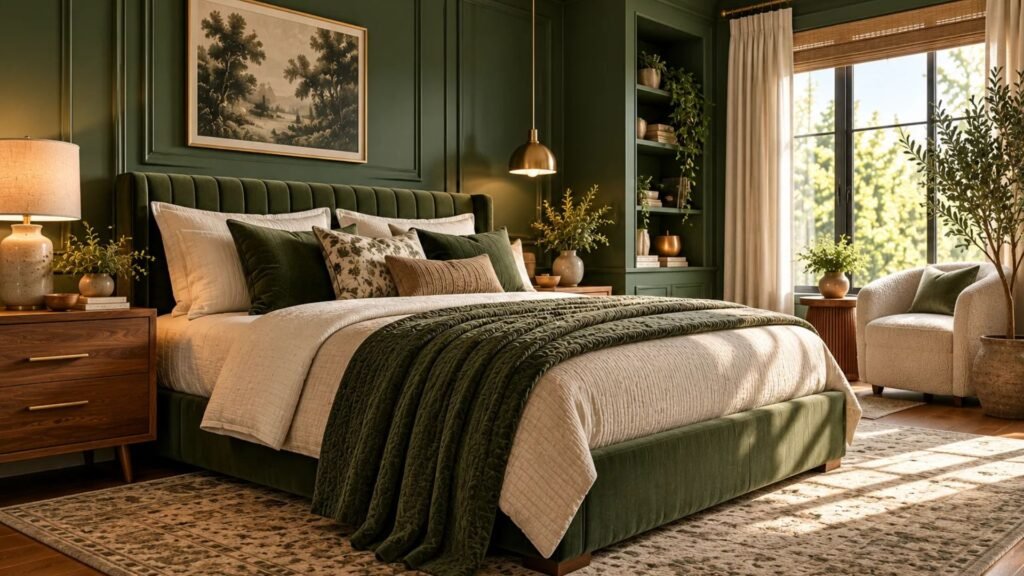
Green bedroom ideas offer far more variety than a simple accent wall or botanical bedding. Deep forest green can create a rich, architectural interior, while mint, sea-glass, and pistachio shades bring an entirely different character to a bedroom.
The key is choosing the right green for your decorating style and combining it with materials that give the room definition. Walnut furniture adds warmth to deep green, black metal creates sharper contrast, and cream textiles soften more saturated shades.
Whether you prefer a modern green bedroom, a traditional retreat, or a compact room with clever storage, these 12 designs offer distinctive inspiration and realistic ways to recreate each look.
Why green works beautifully in bedroom design
Green is unusually versatile because its many shades can support completely different interior styles.
Dark forest green creates visual depth, emerald feels rich and decorative, and pale mint can bring a playful vintage character to a room.
The undertone makes an important difference.
Yellow-influenced greens often coordinate naturally with warm wood and earthy textiles. Blue-influenced greens can feel cooler and more architectural, particularly beside stone, black metal, and crisp white.
The amount of green also matters. Painting every wall creates a stronger visual statement than introducing green through one headboard or a pair of curtains.
A successful green bedroom starts with a clear design direction, then uses color, furniture, and texture to support it.
12 green bedroom ideas for different styles
1. Create a forest green bedroom with warm walnut furniture
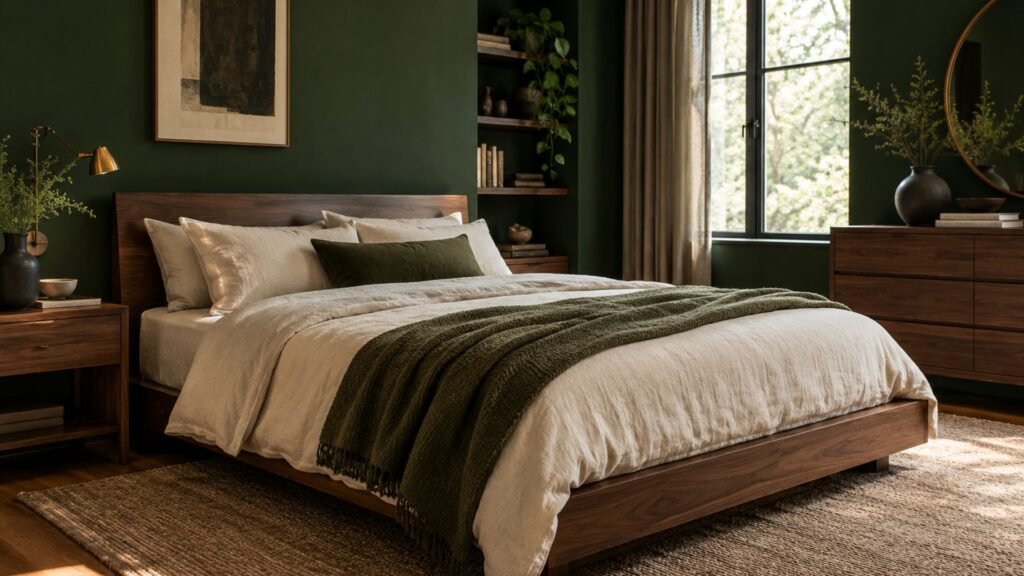
Visual brief: A contemporary residential bedroom photographed diagonally from a corner, featuring deep forest-green walls, a low walnut bed, and a distinctive asymmetrical window.
Forest green and walnut create a particularly attractive combination because the dark green establishes depth while the wood introduces warmth.
For a modern interpretation, choose matte forest-green walls, a simple walnut platform bed, and off-white bedding. The contrast between the deep walls and pale linens keeps the sleeping area clearly defined.
Consider integrating a slim wooden shelf beside the bed instead of adding bulky matching nightstands.
A restrained wall light or simple pendant can complete the composition without distracting from the color.
The room works best when forest green remains the dominant visual element rather than competing with several additional accent colors.
Recreate the look: Test a deep forest-green wall color against your existing wood flooring. Add walnut or medium-brown furniture, keep the bedding light, and introduce one understated metal finish for contrast.
For more ways to coordinate rich wood finishes, explore our brown bedroom ideas.
2. Bring Art Deco elegance into an emerald green bedroom
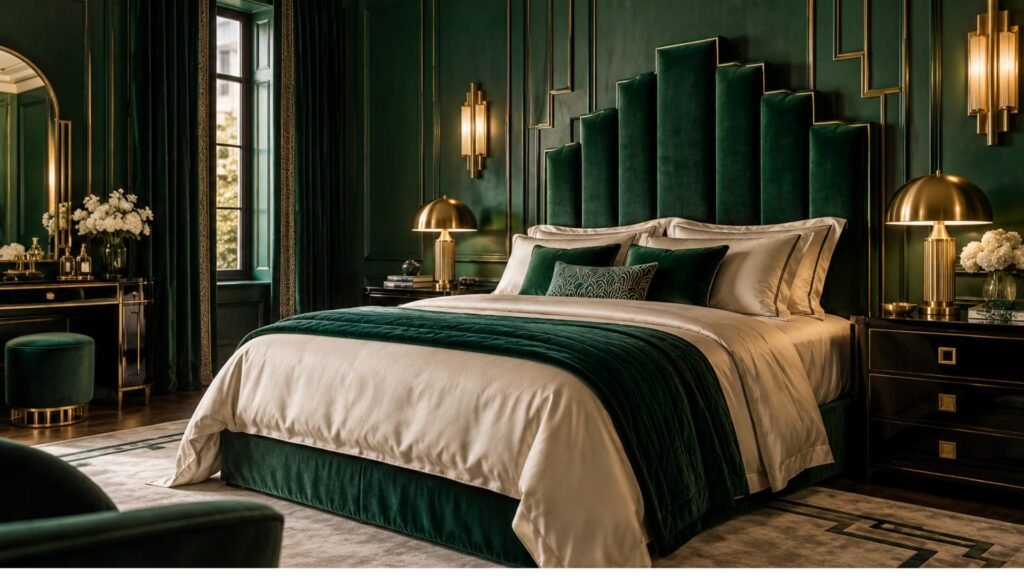
Visual brief: A glamorous 1930s-inspired bedroom with emerald wall panels, a stepped geometric headboard, black lacquer furniture, and an angled editorial camera composition.
Emerald green is a strong choice when you want the bedroom to feel bold and deliberately decorative.
Unlike softer botanical greens, emerald has a jewel-like quality that works beautifully with Art Deco furniture and geometric details.
Try emerald-painted architectural panels, a tall geometric upholstered headboard, and compact black lacquer bedside cabinets.
Introduce brass through carefully selected lighting or furniture hardware rather than covering every surface in metallic accents.
The bed can remain relatively simple, dressed in ivory or champagne-colored linens to balance the richness of the surrounding surfaces.
Choose geometric shapes that repeat subtly across the room, such as stepped furniture edges or a patterned rug.
Recreate the look: Use saturated emerald on the main wall, select one unmistakably Art Deco furnishing, and repeat a restrained brass finish through two or three details. Keep surrounding textiles comparatively plain.
3. Combine green and dusty pink in a traditional bedroom

Visual brief: A heritage bedroom with a fireplace, muted green walls, antique brass bed, dusty pink curtains, and a small decorative rug, viewed from the doorway.
Green and dusty pink can create a sophisticated traditional bedroom when both shades are relatively muted.
Instead of pairing bright green with strong pink, consider a softened botanical green alongside faded rose curtains or upholstery.
This combination looks particularly effective in rooms with decorative molding, fireplaces, or antique furniture.
A slender brass bed, dark wooden chest, and faded patterned rug can reinforce the heritage character.
Keep the bedding mostly ivory so the surrounding colors remain distinct.
The goal is to create the impression of a thoughtfully collected room rather than a perfectly matched furniture set.
Recreate the look: Choose a mid-toned green with a muted finish and introduce dusty pink through one substantial fabric, such as curtains. Add vintage wooden furniture and limit additional colors to warm neutrals.
4. Use deep green paneling to highlight bedroom architecture

Visual brief: A tall-ceilinged traditional bedroom with deep green walls, paneled doors and architectural molding, photographed from the side to emphasize the painted joinery.
Dark green becomes especially interesting when used on architectural details rather than plain walls alone.
Painted paneling, molding, and doors can create a continuous appearance that emphasizes the room’s proportions.
Choose one deep green shade for the walls and woodwork, then consider leaving the ceiling a contrasting ivory.
This allows the molding and door frames to stand out through shadows rather than additional colors.
A slender black metal bed works well because its open frame prevents the furniture from competing with the substantial walls.
Keep decorative accessories selective and let the architecture provide the character.
Recreate the look: Paint existing paneling and trim in a coordinated deep green. If your walls are plain, consider adding appropriately proportioned molding before painting. Use simple furniture and pale bedding to establish contrast.
5. Try a mint green bedroom with vintage character
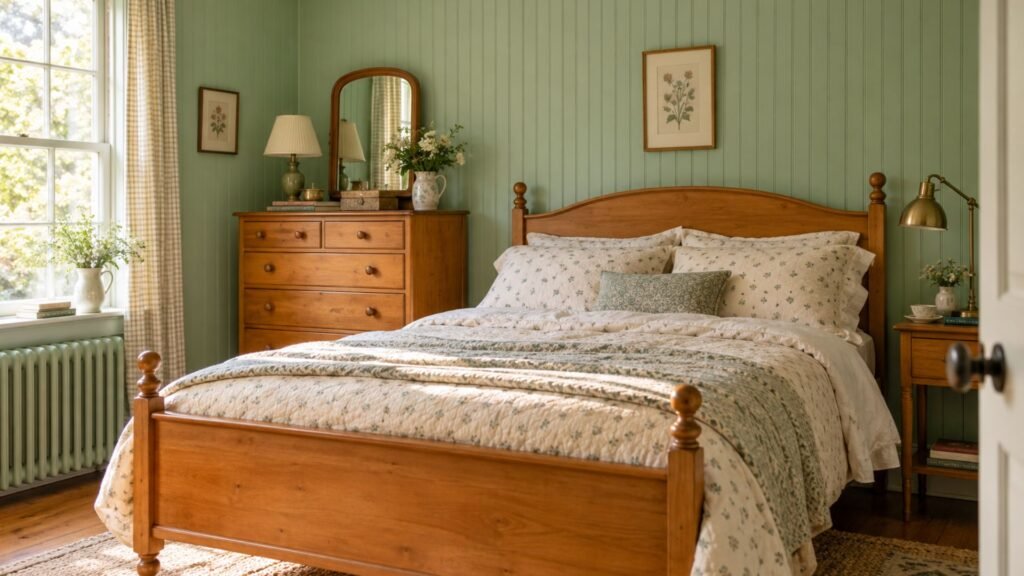
Visual brief: A cheerful mid-century cottage bedroom with mint-painted beadboard, honey-colored maple furniture, a vintage dresser, and daylight entering from a left-side window.
Mint green offers a lighter, more playful interpretation of green bedroom decor.
Its soft blue-green quality can feel particularly attractive in vintage bedrooms with painted timber, simple furniture, and modest decorative details.
Consider mint-green beadboard behind a wooden bed, cream upper walls, and a vintage maple dresser.
A small checked or striped bedcover adds character without overwhelming the room.
Avoid making every furnishing mint green. The color becomes more effective when contrasted with natural timber and white surfaces.
A simple wall-mounted reading light and framed vintage print can reinforce the style.
Recreate the look: Paint a beadboard feature or existing wooden furniture in a pale mint shade. Pair it with honey-colored wood, cream bedding, and one modest patterned textile.
6. Design a sea-glass green bedroom with coastal character
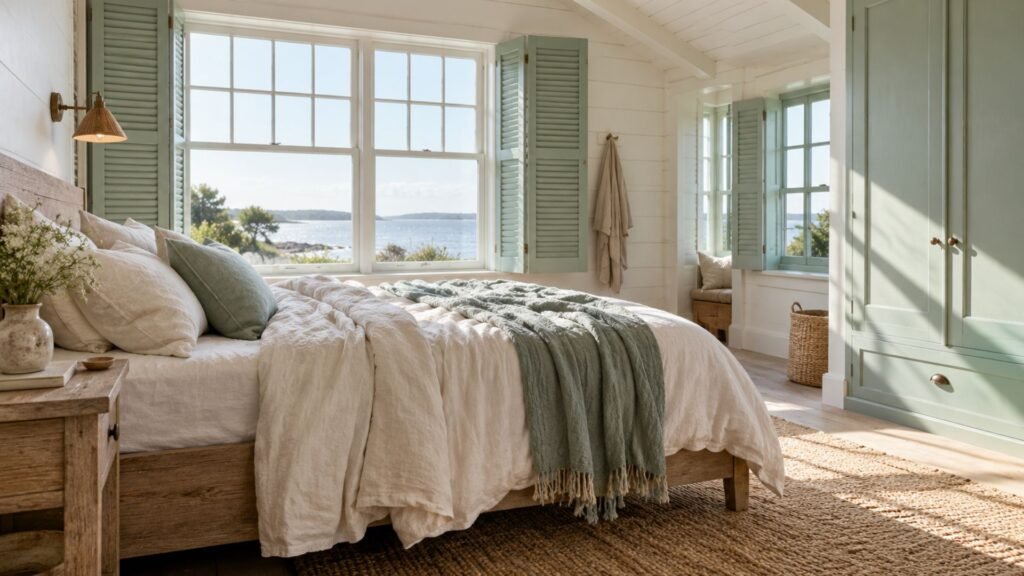
Visual brief: A breezy coastal cottage bedroom with a sloped ceiling, sea-glass-painted shutters, white shiplap walls, and a weathered wooden bed near a broad window.
Sea-glass green introduces a cooler color direction that works beautifully in coastal interiors.
This shade typically contains blue influences, creating a different appearance from earthy forest or moss green.
Rather than painting an entire bedroom, consider introducing sea-glass green through shutters, a painted wardrobe, or a substantial furniture piece.
Pair it with white-painted timber, relaxed linen bedding, and light natural wood.
Simple furniture and generous daylight help the room feel airy.
Avoid relying on obvious nautical decorations. The shutters, materials, and color palette should communicate the coastal character.
Recreate the look: Choose a muted blue-green shade, introduce it through one architectural or furniture feature, and coordinate it with white walls and pale wood. Keep textiles soft and relatively plain.
7. Create a moss green bedroom inspired by woodland cabins

Visual brief: An authentic mountain-cabin bedroom with exposed timber roof beams, a rough stone fireplace, moss-green wool blankets, and an off-center wooden bed.
A woodland-inspired bedroom can use green without relying primarily on painted walls.
Moss green works particularly well alongside dark timber, stone, wool, and other natural materials.
In a rustic cabin, try a substantial wooden bed with moss-green wool bedding, exposed ceiling beams, and a textured woven rug.
The architectural materials provide warmth while the green textiles connect the interior with the surrounding landscape.
Keep accessories useful rather than decorative for their own sake.
A wall-mounted reading light, sturdy wooden nightstand, and comfortable chair can complete the room.
Recreate the look: Start with moss-green bedding or curtains, introduce natural timber, and use wool or textured cotton. If your bedroom lacks cabin architecture, keep the rustic interpretation restrained rather than adding imitation beams and excessive themed accessories.
For additional layered and welcoming designs, visit our cozy bedroom ideas.
8. Make botanical green wallpaper the main feature

Visual brief: An English-country bedroom with an oversized leafy green wallpaper design, a dark wooden spindle bed, plain white bedding, and an antique chest, photographed from an elevated side angle.
Botanical wallpaper is one of the most expressive ways to introduce green into a bedroom.
Unlike a solid green wall, a patterned design introduces movement and variation through leaves, branches, or floral forms.
Choose wallpaper with a clear color direction and enough open space between the motifs to avoid overwhelming the bedroom.
Large-scale green leaves against a pale background can create a strong feature wall.
Pair the wallpaper with a dark wooden bed and plain white or cream bedding.
Avoid introducing several competing patterns through the curtains and rug.
Recreate the look: Select one botanical wallpaper pattern and order a sample before purchasing. Use it behind the bed, keep nearby furniture simple, and repeat one of its green shades through a small textile or accessory.
9. Introduce pistachio green through playful color blocking
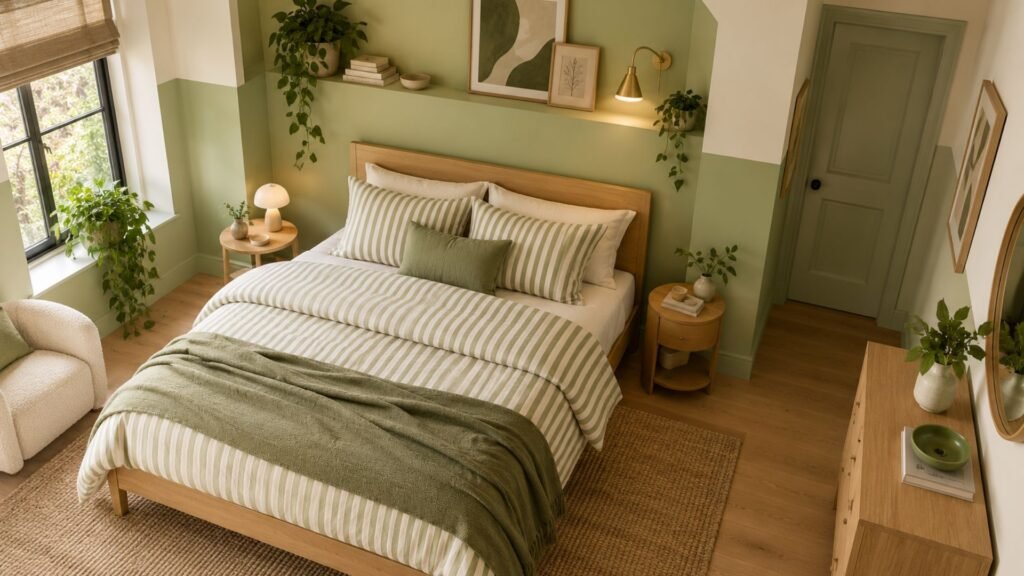
Visual brief: A compact contemporary bedroom with pale pistachio lower walls, an arched painted alcove, light oak furniture, and a geometric floor lamp, photographed from a high corner angle.
Pistachio green can make a bedroom feel lively without requiring highly saturated paint.
Its yellow-green influence creates a fresh contrast with warm white, pale oak, and selected pastel accents.
Instead of covering every wall, try a color-blocked treatment.
Paint the lower portion of a wall pistachio green and keep the upper section cream. Alternatively, highlight an architectural alcove or recessed storage area.
A simple wooden bed and restrained striped bedding will reinforce the playful character.
The painted shapes should relate to the actual furniture arrangement rather than appearing randomly positioned.
Recreate the look: Choose a light pistachio green, mark the intended paint boundary carefully, and coordinate it with cream walls and pale wood. Keep the remaining accessories simple so the painted feature remains prominent.
10. Pair saturated green with black for a modern bedroom

Visual brief: A loft-style bedroom with green plaster walls, black steel-framed canopy bed, exposed structural details, and an industrial window positioned behind the camera.
Green and black create a distinctive modern bedroom when both colors are used with clear intention.
Choose a saturated green wall finish and combine it with black metal furniture, simple upholstery, and minimal accessories.
A slim black canopy bed can become the main architectural feature.
Unlike a heavy upholstered bed, the open metal structure allows the green walls to remain visible.
Consider one contemporary pendant and a black wall-mounted shelf rather than traditional matching nightstands.
Use pale bedding to prevent the composition from becoming too dark.
Recreate the look: Choose a strong green wall color, introduce a slim black bed frame, and use white or ivory bedding. Keep black concentrated in substantial furniture and lighting rather than numerous small decorations.
Explore our modern bedroom ideas for additional contemporary layouts and furniture combinations.
11. Choose a green velvet bed instead of painting the walls

Visual brief: A light-filled gallery-like bedroom with a vivid jade-green velvet bed against warm-white walls, pale stone side furniture, and no major artwork above the headboard.
Green bedroom ideas do not always require green walls.
An upholstered bed can introduce a substantial amount of color while allowing the rest of the bedroom to remain light.
A jade-green velvet bed against cream walls creates a particularly strong focal point.
Keep the surrounding furniture relatively simple so the upholstery becomes the main decorative feature.
A pale stone bedside table, understated lighting, and crisp bedding help balance the rich velvet.
This approach also offers more flexibility if you prefer to keep existing wall colors.
Recreate the look: Choose one large upholstered piece in a recognizable green shade. Keep the walls neutral, introduce minimal accessories, and use bedding that contrasts with the upholstery rather than blending into it.
12. Make a small green bedroom practical with integrated storage
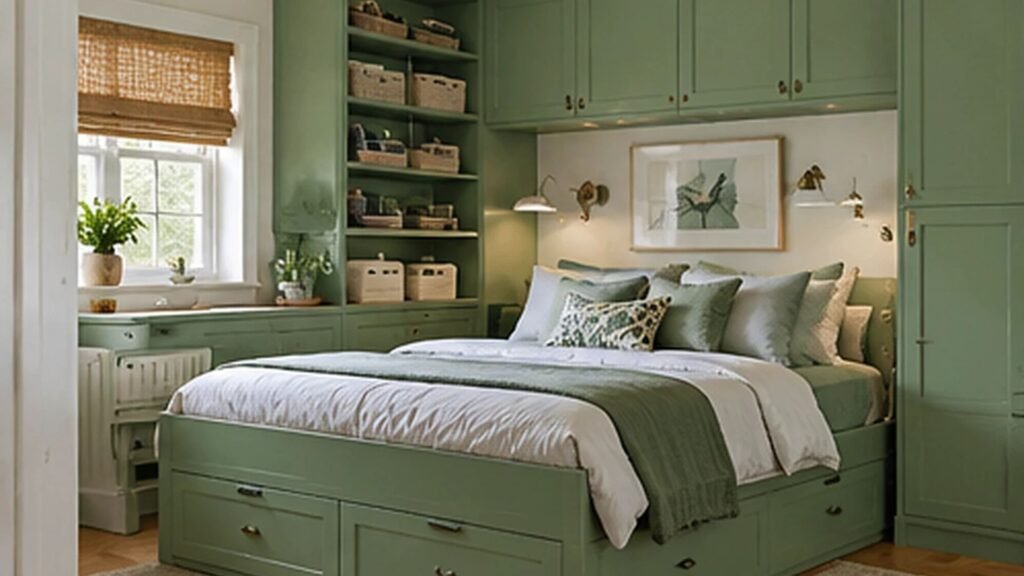
Visual brief: A genuinely narrow apartment bedroom viewed through the doorway, featuring pale green built-in storage, a compact bed with drawers, and a visible clear walking path.
A small green bedroom can look distinctive without sacrificing valuable floor space.
The key is incorporating the color into useful surfaces rather than filling the room with additional decorative furniture.
Consider pale green built-in wardrobes, a simple wooden bed with under-bed drawers, and a floating bedside shelf.
Wall-mounted reading lights free up space on narrow bedside surfaces.
Keep the bedding simple, allowing the green cabinetry to establish the room’s color identity.
The result should feel practical and intentional rather than crowded.
Recreate the look: Paint existing wardrobes or storage cabinetry in a light green that complements the walls. Use compact furniture, wall-mounted lighting, and storage that reduces the need for additional pieces.
For more detailed space-saving solutions, see our small bedroom ideas.
How to choose the right green paint for a bedroom
Green paint can look surprisingly different once applied to an actual bedroom wall.
Some greens contain strong yellow undertones, while others lean blue, gray, or nearly black.
Understanding these differences is more useful than selecting a shade based solely on its name.
Compare warm and cool greens
Warm greens often contain yellow influences and can coordinate beautifully with natural timber, tan leather, and cream fabrics.
Cool greens may contain blue influences and can work well with stone, black metal, and crisp white.
Neither is automatically better for a bedroom.
Compare the paint against permanent features such as flooring, doors, and large furniture.
Understand the importance of saturation
A muted green may blend into the surrounding materials, while a saturated emerald or vivid botanical green becomes a strong visual feature.
Consider whether you want the walls to serve as a backdrop or become the main decorative statement.
Deep green can work beautifully, but it needs appropriate contrast and lighting.
Test green in real lighting
Natural and artificial lighting can change the appearance of green paint throughout the day.
A shade that appears balanced in morning daylight may look darker or more yellow under evening lamps.
Benjamin Moore’s green bedroom paint collection offers examples of different green depths and undertones.
Sherwin-Williams’ room-orientation guide explains how window direction and daylight influence paint appearance.
Use these references as starting points, but always test actual samples in your bedroom.
The Wallsaide Green Intensity Test
Before choosing green for your walls, furniture, or bedding, evaluate three things: intensity, placement, and contrast.
This simple method helps determine whether a particular green will work with your existing room.
Step 1: Choose the intensity
Begin with three possible shades: one pale, one medium, and one deep.
For example, compare light mint, medium botanical green, and deep forest green.
Place each sample near your flooring and major furniture.
The purpose is to discover how much visual weight you want the green to carry.
Step 2: Decide where green belongs
A green wall creates a different effect from a green upholstered bed.
Consider three possible placements:
- Walls: Suitable when green should define the entire room.
- Furniture: Useful when you want a prominent color feature without repainting.
- Textiles: A flexible approach for testing green through bedding, curtains, or rugs.
Choose placement based on the effect you want, not simply the size of the room.
Step 3: Test the necessary contrast
Place an ivory textile, a wood sample, and one darker material beside the green.
Compare which combination makes the green look most balanced.
A forest-green wall may work beautifully with walnut and cream, while pale mint may benefit from a stronger wooden furniture finish.
Step 4: Check the result throughout the day
Review the samples in morning light, afternoon light, and under the lamps you use in the evening.
If the shade changes too dramatically for your preference, test a more muted alternative.
The objective is to choose a green that works with your bedroom’s existing conditions rather than copying a color from a photograph.
Beautiful green bedroom color combinations
The best green bedroom color schemes depend on the shade of green and the atmosphere you want to create.
Green and cream: A versatile combination that gives stronger greens a light, warm background. Suitable for both modern and traditional rooms.
Forest green and walnut: Rich and architectural, particularly with simple furniture and contrasting pale bedding.
Emerald green and black: Dramatic and decorative, especially with Art Deco-inspired geometric details.
Green and dusty pink: A softer contrast suited to vintage and heritage interiors.
Mint green and natural maple: Light and playful, with a recognizable retro influence.
Green and brass: A refined combination when metallic details are used selectively through lighting and furniture hardware.
Green and white: Crisp and adaptable, especially in coastal bedrooms and rooms with painted timber.
For a broader selection of palettes, explore Wallsaide’s bedroom color ideas.
How to make dark green bedroom walls feel balanced
Dark green walls can create a distinctive bedroom, but the remaining surfaces need enough variation to maintain definition.
Start with the bed.
Ivory, cream, or pale stone-colored bedding can create useful contrast against forest or deep botanical green.
Next, consider the furniture.
Warm wood introduces a different material quality, while black metal creates sharper architectural lines.
A textured rug can help separate the bed from darker flooring.
Lighting deserves particular attention. Combine useful bedside reading lights with general illumination rather than relying entirely on decorative lamps.
Avoid adding several competing accent colors simply to brighten the room.
Deep green is most effective when the supporting materials reinforce its character.
Green bedroom decorating ideas on a budget
You can introduce green into a bedroom without replacing the bed or painting every wall.
Start with improvements that create a noticeable change.
- Paint an existing dresser. A suitable green paint can transform a plain wooden storage piece into a focal point.
- Refresh the bedding. Green bedding is an accessible way to introduce color without a permanent commitment.
- Try removable wallpaper. A botanical design can add character to a suitable wall without a full renovation.
- Use secondhand furniture. Antique wooden pieces can coordinate beautifully with green walls.
- Update curtains. Green curtains can establish a color direction while keeping the walls neutral.
- Paint a defined architectural feature. A door, wardrobe, or alcove may provide more interest than a random accent wall.
Prioritize purchases that improve the bedroom’s function as well as its appearance.
Common mistakes when decorating with green
Choosing green without checking its undertone
A green that looks muted on a paint card can appear much brighter beside warm flooring.
Compare samples against existing materials before painting.
Using too many green shades
Forest, mint, emerald, and yellow-green do not automatically work together.
Choose one dominant green and introduce closely related shades only when they contribute something useful.
Ignoring furniture contrast
Dark green walls and equally dark furniture can merge visually.
Introduce a difference in material, color depth, or upholstery.
Making every detail botanical
Leaf-patterned wallpaper, green bedding, botanical artwork, and numerous plants can become visually repetitive.
Choose one primary botanical feature and let the surrounding materials provide balance.
Copying a design without considering architecture
A dramatic emerald bedroom may look beautiful in a tall historic room but require adjustment in a compact apartment.
Adapt the color placement, furniture proportions, and lighting to your space.
Choosing decorative lighting without considering function
A beautiful pendant is not a substitute for appropriate reading and general lighting.
Plan fixtures according to where you actually need illumination.
Frequently asked questions
Is green a good color for a bedroom?
Yes. Green is versatile enough to work in modern, traditional, rustic, coastal, and vintage bedrooms. Different shades create different visual effects, so the best choice depends on the room’s style, light, and existing materials.
What shade of green is best for bedroom walls?
Forest green, muted botanical green, mint, and sea-glass green can all work well. Choose according to the room’s lighting, furniture, and the amount of visual contrast you want.
What colors go with green bedroom walls?
Cream, white, walnut brown, black, dusty pink, brass, and selected natural wood tones can complement green. The most successful pairing depends on whether the green has warm or cool undertones.
Can dark green work in a small bedroom?
Yes. Dark green can look attractive in small rooms, particularly when furniture dimensions, lighting, and contrasting surfaces are considered carefully. Light colors are not a requirement for every compact space.
How can I make a green bedroom look modern?
Choose clean-lined furniture, simple textiles, and a clear contrast between green and supporting materials. Black metal, sculptural lighting, and streamlined wooden furniture can reinforce a contemporary style.
Does green go with brown bedroom furniture?
Yes. Green and brown can complement each other particularly well through forest-green walls and walnut furniture, or lighter green walls with vintage timber pieces. Check the undertones together before committing.
How do I decorate with green without painting?
Introduce green through an upholstered headboard, duvet cover, curtains, rug, or painted furniture. One substantial green piece is often more effective than several small accessories.
Should I choose a light or dark green bedroom?
Choose light green if you prefer a pale, visually open foundation. Choose dark green if you want stronger color depth and a more enveloping appearance. Neither option is universally better; the deciding factors are your room and decorating preferences.
Final thoughts
Green bedroom ideas can suit almost any decorating style when the shade and materials are chosen deliberately.
Forest green and walnut create richness, emerald introduces Art Deco character, and mint gives vintage interiors a fresh personality.
Botanical wallpaper, painted cabinetry, and velvet upholstery offer alternatives to conventional green walls.
The strongest approach is to decide what role green should play before selecting furniture and accessories.
Choose a shade that complements your room, test it in different lighting, and create enough contrast for the design to feel intentional.
A beautiful green bedroom should express your personal style rather than simply follow a color trend.
About the author
Emma Carter writes interior design inspiration and practical decorating guides for Wallsaide. Her articles help readers understand how colors, materials, furniture, and lighting work together to create attractive, functional homes.