
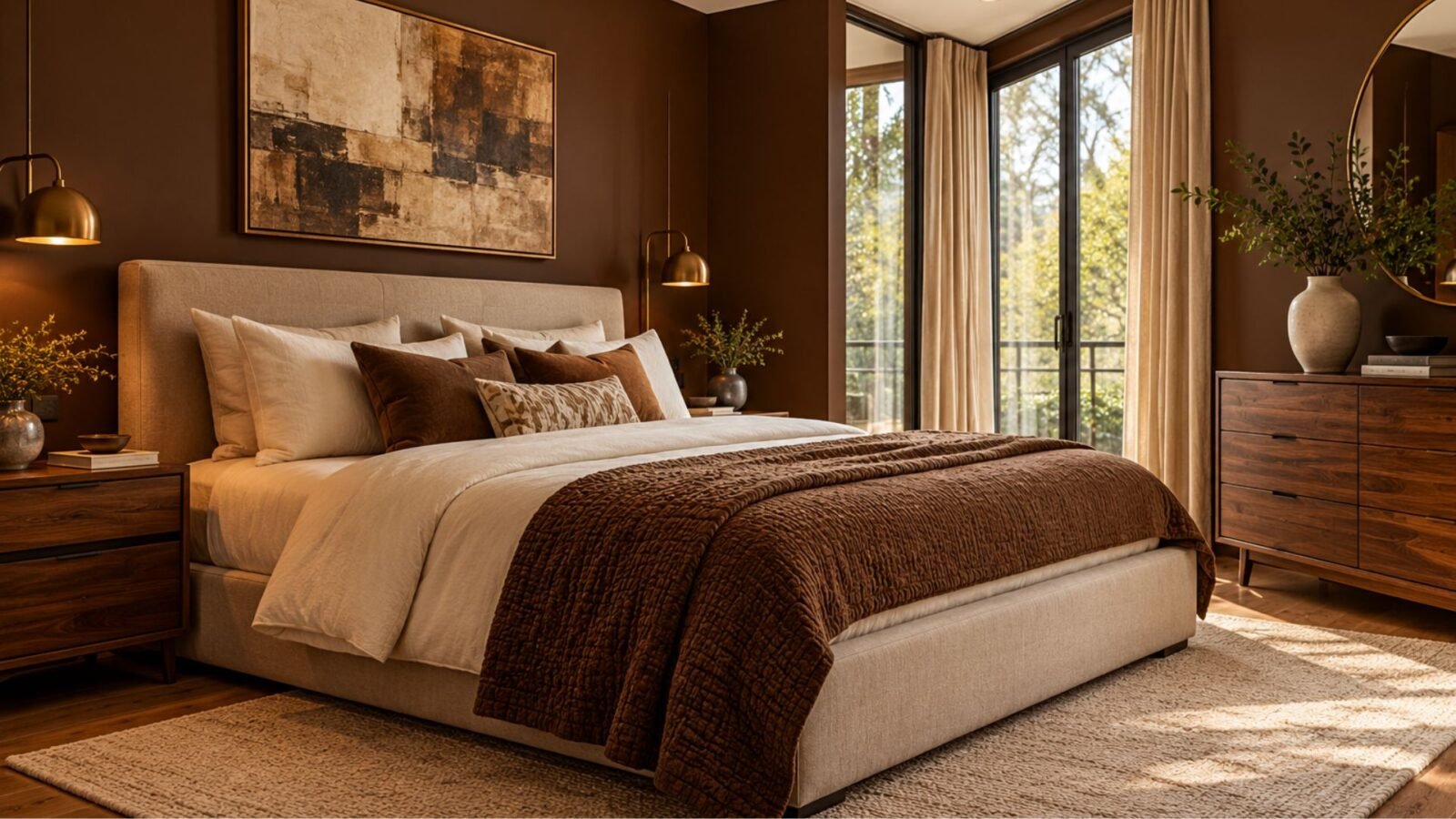

From dramatic chocolate walls to caramel leather and rich walnut furniture, explore beautiful ways to decorate with brown and make the color work in your own bedroom.
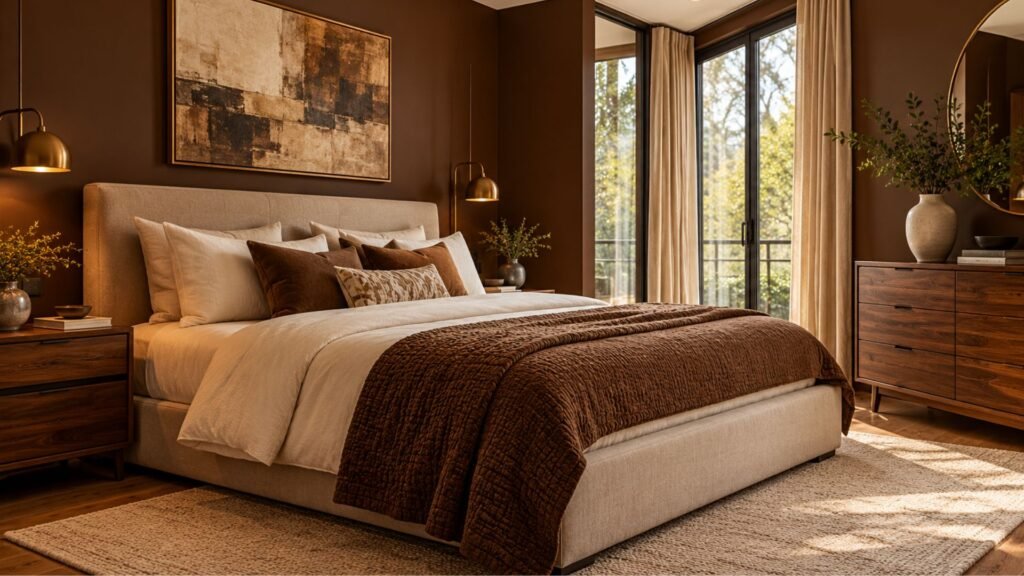
Brown bedroom ideas are far more versatile than they first appear. Deep chocolate walls can create a dramatic, enveloping room, while warm caramel furniture and lighter mocha tones produce an entirely different atmosphere.
The most successful brown bedrooms balance the richness of the color with well-chosen materials, lighting, and contrast. Cream bedding can brighten dark wood furniture, while slate blue or dusty pink introduces a distinctive personality.
Whether you prefer a modern brown bedroom, a vintage-inspired retreat, or a small space with subtle earthy accents, these ideas demonstrate how to use brown without making the room feel heavy, muddy, or dated.
Why brown works beautifully in bedroom design
The best brown bedroom ideas use the color intentionally, whether through dramatic painted walls, rich wooden furniture, or carefully selected textiles.
Brown is a natural choice for interiors because it appears in familiar materials such as timber, leather, woven fibers, and stone.
Unlike beige or cream, deeper browns can establish a strong focal point or surround the room with a noticeably richer color.
However, brown is not a single shade.
Chocolate often has a warmer, reddish quality. Espresso approaches near-black, while caramel and cognac lean golden or orange. Mushroom brown contains more gray, creating a softer, muted appearance.
These distinctions matter when choosing paint, furniture, and bedding.
A chocolate wall may look beautiful with ivory bedding but compete with orange-toned flooring. A cooler mushroom brown might coordinate with that flooring more comfortably.
The following designs explore different ways of using brown as the room’s main color, furniture finish, or decorative foundation.
10 brown bedroom ideas worth recreating
1. Create a dramatic bedroom with chocolate brown walls
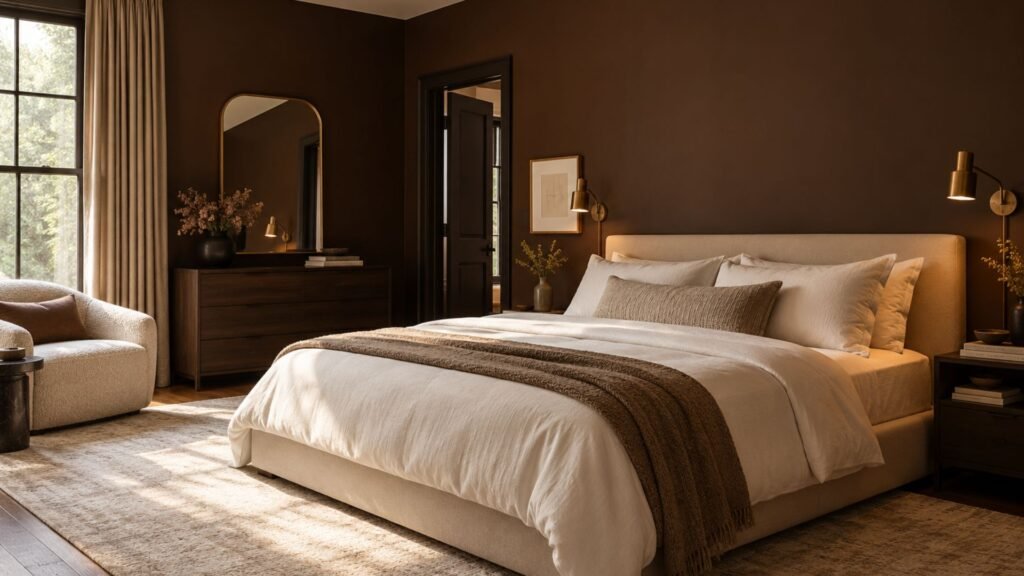
Chocolate brown walls can turn an ordinary bedroom into a distinctive, enveloping space.
Instead of treating brown as a small accent, use it across the walls to establish a strong architectural foundation.
A rich cocoa shade looks particularly effective when paired with a lighter ceiling, ivory bedding, and carefully selected furniture.
Consider a simple upholstered bed, two slim bronze reading lights, and a pale textured rug. The lighter surfaces create enough contrast to prevent the bedroom from looking uniformly dark.
A matte or low-sheen paint finish can make deep brown walls appear smoother and more understated, although the right finish depends on durability and cleaning needs.
Keep artwork selective. One substantial piece may have more impact than several small decorations competing with the dark walls.
Recreate the look: Choose a chocolate brown paint with an undertone that complements your flooring. Test it on multiple walls, keep the ceiling lighter if desired, and use ivory bedding to define the bed clearly.
2. Combine espresso wood paneling with soft ivory
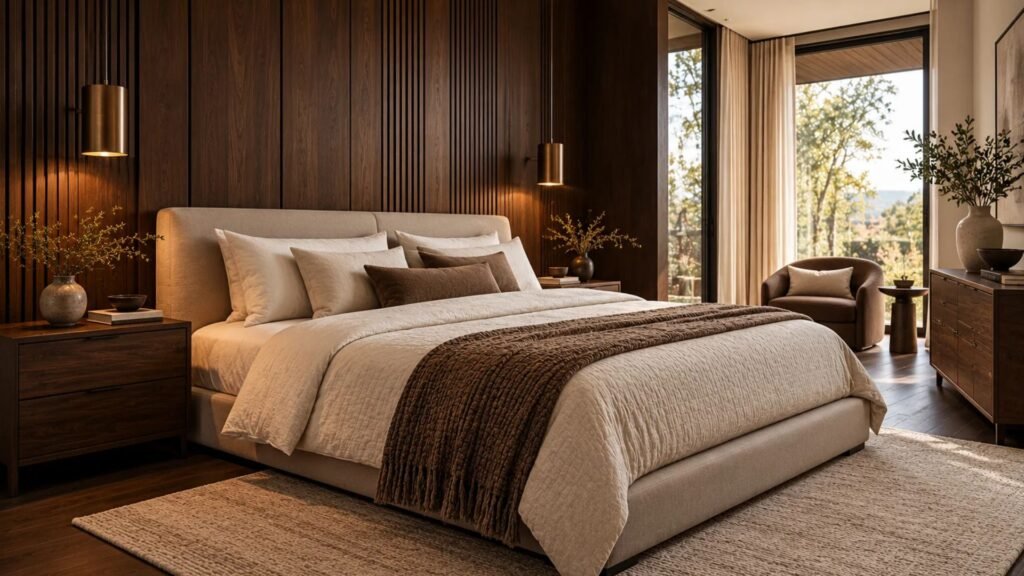
Espresso wood brings a different kind of richness to a bedroom.
Rather than relying entirely on brown paint, use dark timber paneling to introduce visible grain, architectural rhythm, and depth.
In a contemporary bedroom, an espresso-stained wall behind a low ivory bed creates striking contrast.
Choose streamlined furniture, simple lighting, and a restrained palette of espresso, warm white, and muted stone.
The wood should remain the main visual feature.
Avoid adding several other dark wood patterns that compete with the paneling. A simple pale rug and minimal bedside furniture can give the room a cleaner appearance.
This design works particularly well in bedrooms with strong architectural lines and generous natural light.
Recreate the look: Use espresso-stained wood panels or suitable wood-look wall panels behind the bed. Keep the surrounding walls light and introduce ivory upholstery or bedding to balance the darker surface.
3. Bring in caramel leather for mid-century character
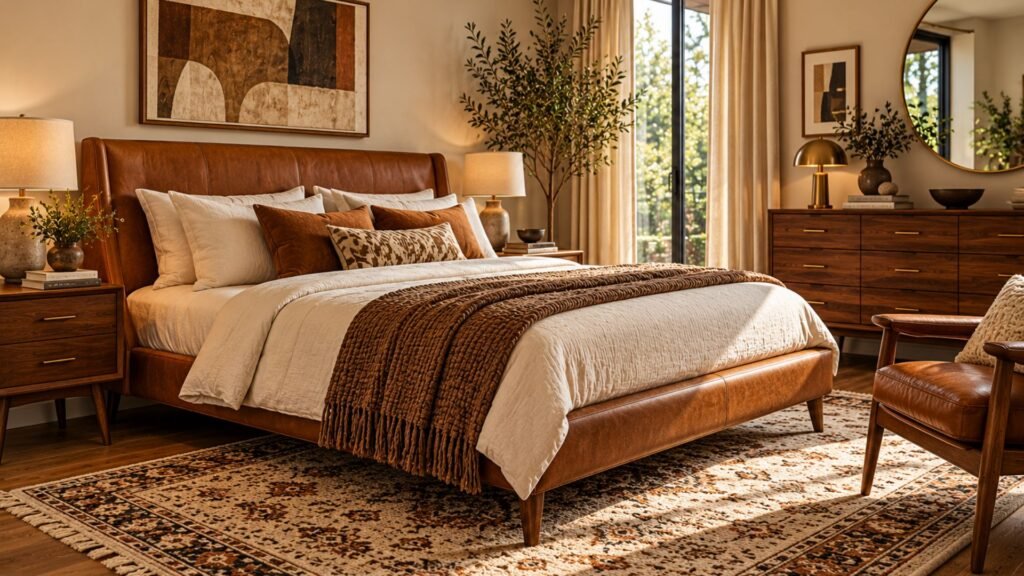
Caramel and cognac shades bring a lighter, golden interpretation of brown into the bedroom.
These colors are particularly effective through leather upholstery, vintage timber furniture, and carefully chosen textiles.
For a mid-century-inspired bedroom, try a caramel leather headboard against warm off-white walls.
Pair it with a teak dresser, tapered-leg bedside furniture, and an understated geometric rug.
The leather becomes the focal point, while the timber reinforces the period-inspired design.
Keep bedding mostly ivory or light oatmeal so the caramel upholstery remains prominent.
Avoid matching every wooden piece perfectly. A mix of related but slightly different finishes can make the room feel more collected.
Recreate the look: Begin with a caramel leather or leather-look headboard, add one mid-century wooden furniture piece, and introduce a restrained geometric textile. Keep the walls light to emphasize the furniture.
4. Try mushroom brown for a softer contemporary bedroom

Not every brown bedroom needs to feel warm and saturated.
Mushroom brown sits closer to gray and taupe, offering a muted alternative to chocolate or caramel.
This softer interpretation works beautifully in contemporary spaces where architectural texture matters more than decorative accessories.
Consider mushroom-brown plaster walls, a charcoal upholstered platform bed, and dark ceramic lighting.
The combination remains neutral but offers more definition than an all-beige interior.
Introduce subtle texture through the wall finish, matte upholstery, or a low-pile woven rug.
The result should feel restrained rather than overly decorated.
Recreate the look: Choose a muted mushroom-brown wall shade and compare it with your flooring. Add a darker bed frame or headboard, then use pale bedding to keep the furniture clearly defined.
5. Pair chocolate brown with slate blue

Brown and slate blue create a beautiful contrast between warmth and coolness.
The combination works especially well in transitional or traditional bedrooms with tailored furniture and substantial architectural details.
Deep chocolate walls can provide the background for a slate blue upholstered bed or distinctive blue curtains.
The blue should be muted rather than overly bright, allowing the brown to remain the dominant color.
Add pale bedding, dark wooden furniture, and understated metal lighting.
This combination feels more structured than an earthy brown-and-green palette and can bring a refreshing alternative to familiar neutral bedrooms.
Recreate the look: Choose a deep brown foundation and introduce slate blue through one substantial element, such as the headboard or curtains. Use pale bedding to separate the two colors and avoid introducing several additional accent shades.
6. Soften deep brown with dusty rose

Deep brown can create a beautiful backdrop for soft, muted pink.
Rather than using bright blush or saturated rose, choose a dusty pink with gray or brown undertones.
A cocoa-painted bedroom with a dusty rose upholstered bed can feel sophisticated and slightly vintage.
Introduce dark wooden furniture, simple artwork, and a patterned rug that contains small amounts of both colors.
The goal is to create a thoughtful contrast rather than decorating the entire space in pink.
A dark bronze lamp or antique wooden chest can help connect the softer upholstery with the deeper wall color.
Recreate the look: Keep brown as the dominant wall or furniture color, introduce dusty rose through the headboard or one substantial textile, and use warm ivory bedding to balance the palette.
7. Introduce pattern with chocolate brown wallpaper
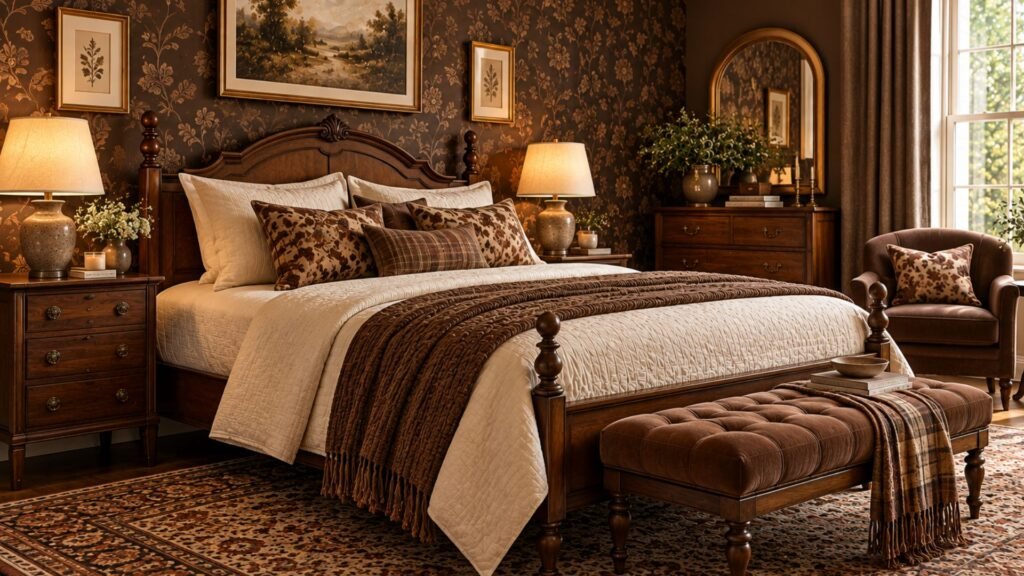
A patterned wallcovering can introduce brown without making the room feel like a solid block of color.
This approach works particularly well in English country, heritage, and traditional bedrooms.
Choose a chocolate-and-ivory geometric wallpaper, a small-scale vintage print, or a subtle repeating motif.
Pair the wallpaper with a wooden bed, simple cream bedding, and antique furniture.
The contrast between the detailed walls and plain fabrics keeps the room balanced.
Avoid introducing another dominant pattern through the duvet, curtains, and rug simultaneously.
One decorative pattern should lead the design, while the surrounding textiles support it.
Recreate the look: Select a brown wallpaper with a restrained repeating pattern. Use it behind the bed or throughout the room if the scale allows, then keep bedding mostly plain and introduce a vintage bedside piece.
8. Paint the ceiling tobacco brown for unexpected depth
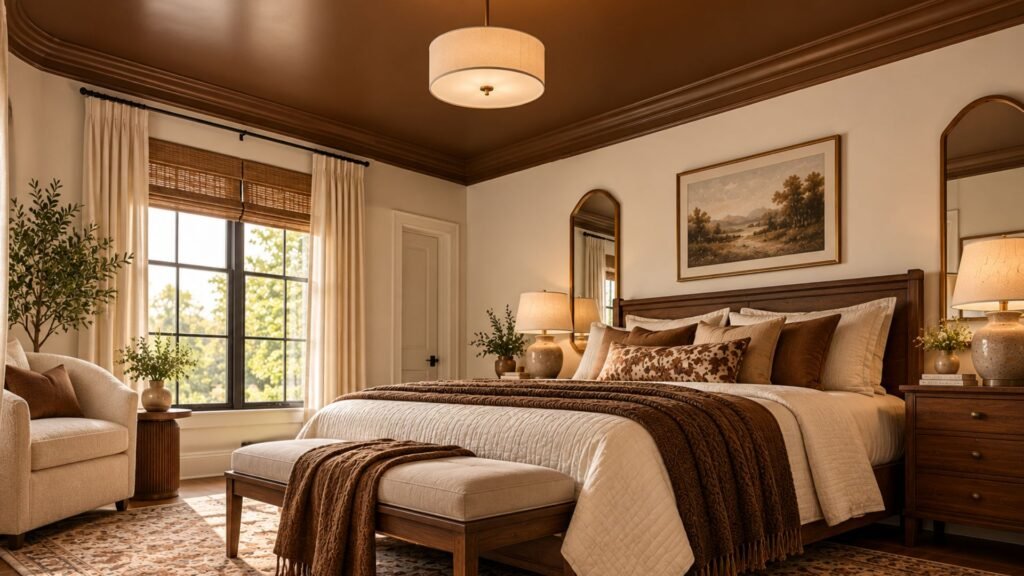
Brown does not have to appear on the walls to become the room’s defining color.
A tobacco brown ceiling can create a striking architectural feature, particularly when paired with lighter walls.
This treatment draws attention to the room’s proportions and can make simple furniture feel more intentional.
Try a deep tobacco ceiling, warm-white walls, a wooden platform bed, and understated bedding.
Keep the lighting clean and functional.
A carefully positioned pendant or wall-mounted reading light can introduce detail without competing with the ceiling.
This approach may be especially effective in bedrooms with simple wall finishes and strong ceiling geometry.
Recreate the look: Test a tobacco brown paint on a large sample and view it under daytime and evening lighting. Keep the walls lighter and use furniture with straightforward silhouettes.
9. Use dark timber for a rustic cabin bedroom

A rustic brown bedroom can take inspiration from timber cabins without relying on themed decorations.
Dark wood walls, visible roof beams, and practical furniture establish a strong architectural identity.
In a cabin-style room, pair dark timber with pale wool bedding, a simple wooden bed, and a natural woven rug.
Allow the wood grain and structural details to provide most of the visual interest.
A broad window overlooking trees or another natural setting can create contrast between the darker interior and the outdoor light.
Choose functional reading lights and avoid placing several unnecessary accessories on every surface.
Recreate the look: Use existing timber features where possible. If your room has plain walls, consider a single dark-stained wood feature wall rather than installing timber everywhere.
Balance the darker materials with pale bedding, a suitable rug, and practical lighting.
10. Add brown to a small bedroom without making it feel crowded
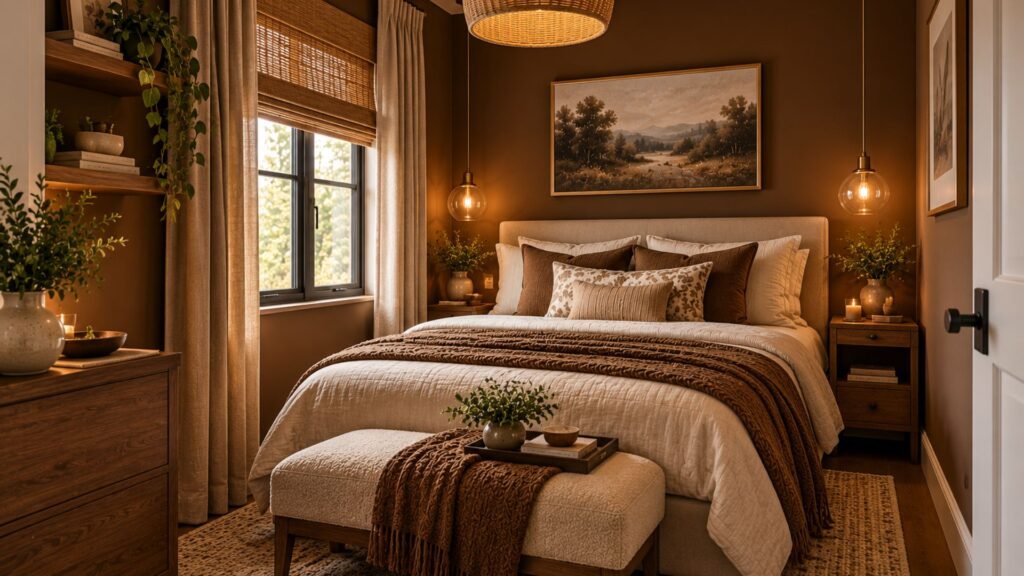
A small bedroom can incorporate deep brown without covering every wall in dark paint.
The most practical approach is often concentrating the color in one substantial furnishing.
A tobacco brown upholstered headboard, for example, creates a clear focal point against light walls.
Pair it with simple mocha or ivory bedding, a compact nightstand, and a slim reading light.
Keep the floor and circulation space as clear as possible.
There is no need for an extra bench or large accent chair if the room cannot accommodate them comfortably.
Recreate the look: Start with a brown headboard or bedcover, retain light walls, and use compact bedside furniture. Choose practical storage and avoid adding dark decorative objects simply to repeat the color.
For more space-saving decorating solutions, explore our small bedroom ideas.
The Wallsaide Brown Placement Method
Before deciding which brown paint or furniture to buy, consider where brown should appear in the room.
This is often more important than choosing between chocolate, mocha, caramel, or espresso.
The Wallsaide Brown Placement Method divides brown bedroom decorating into three practical approaches.
1. Brown as the architectural envelope
This means using brown across large surfaces such as walls, paneling, or the ceiling.
It creates the strongest visual impact.
Choose this approach when you want the room to feel deliberately rich, dramatic, or enveloping.
Deep chocolate walls and tobacco ceilings are examples.
Because brown occupies a substantial area, plan the lighting and lighter contrasting surfaces carefully.
2. Brown as the furniture anchor
Here, brown becomes prominent through a bed, dresser, wall panel, or upholstered headboard.
The surrounding walls can remain cream, white, or pale gray.
This approach works when you want the richness of brown without making the entire room dark.
Espresso wood paneling and caramel leather furniture are examples.
3. Brown through textiles and accessories
This is the lowest-commitment approach.
Chocolate bedding, mocha curtains, a tobacco-colored upholstered headboard, or a patterned rug can introduce brown without repainting.
It is particularly suitable for renters and anyone testing a darker palette.
The decision: If you want a dramatic transformation, consider brown architectural surfaces. If you prefer a balanced room with pale walls, introduce brown through one major furniture piece. If you want flexibility, begin with textiles.
These are decorating choices rather than rigid rules. More than one approach can work in the same room.
How to choose the right shade of brown for your bedroom
When exploring brown bedroom ideas, consider how chocolate, espresso, caramel, and mushroom tones interact with your existing flooring and natural light.
Brown paint colors can behave differently depending on their undertones, depth, and surrounding materials.
A rich chocolate brown may contain noticeable red undertones. Caramel and cognac lean warmer and more golden, while espresso can appear almost black.
Cooler browns, such as mushroom or certain taupes, may contain substantial gray influences.
Start with the flooring
Flooring occupies a large part of the bedroom and can strongly influence the surrounding palette.
A reddish wooden floor may emphasize the warmth of certain chocolate paints.
An orange-toned oak floor can make golden caramel walls appear more saturated.
A muted brown with gray influences may create a more balanced contrast, depending on the room.
Compare physical samples directly with the floor before making a decision.
Consider how dark the brown should be
Dark brown paint will reflect less light than a pale cream or beige.
This does not mean dark colors are unsuitable for bedrooms, but they require deliberate lighting and contrast.
A dark brown bedroom can still feel comfortable when it contains pale bedding, a sufficiently light ceiling, and practical bedside lighting.
Benjamin Moore’s brown paint color guide explains the range of brown undertones and provides examples of lighter and deeper shades.
Test brown under artificial light
Brown may look different under daylight and evening lamps.
Some shades become warmer or more reddish under warm lighting, while others appear deeper or nearly black in shadow.
Paint large sample areas or use movable painted boards, then inspect them at different times of day.
Sherwin-Williams’ room orientation guide explains how daylight exposure and light reflectance can influence paint selection.
Do not rely entirely on an online paint swatch.
The best colors to pair with brown bedroom walls
Many brown bedroom ideas become more distinctive when paired with contrasting colors such as ivory, slate blue, dusty rose, or muted green.
Brown can act as a neutral foundation, but the supporting colors determine whether the bedroom feels traditional, contemporary, or expressive.
| Brown combination | Overall effect | Recommended application |
|---|---|---|
| Chocolate + ivory | Rich and balanced | Dark walls with light bedding |
| Espresso + warm white | Modern and architectural | Dark wood with pale upholstery |
| Caramel + charcoal | Mid-century and tailored | Leather furniture with darker accents |
| Brown + slate blue | Sophisticated contrast | Cocoa walls with muted blue upholstery |
| Cocoa + dusty rose | Soft and artistic | Brown walls with rose textiles |
| Tobacco + cream | Warm and understated | Brown ceiling or furniture with light walls |
Avoid selecting combinations solely because their individual colors look attractive.
The undertones and relative lightness of each surface matter just as much.
For a broader selection of bedroom palettes, see our bedroom color ideas.
Brown vs. beige bedroom ideas: Which should you choose?
Brown and beige belong to related neutral color families, but they produce different visual effects.
Beige usually creates a lighter and more understated backdrop. Brown introduces greater depth and can become a stronger architectural feature.
Choose beige when you want a pale, flexible foundation for a wide range of furniture and textiles.
Choose deeper brown when you want the walls, woodwork, or furniture to play a more prominent visual role.
However, the two colors can work beautifully together.
A brown bed against beige walls, for example, can create definition without requiring a dramatic color scheme.
For lighter neutral decorating approaches, explore our beige bedroom ideas and neutral bedroom ideas.
How to make a dark brown bedroom feel balanced
Dark brown bedroom ideas work particularly well when lighter bedding, thoughtfully positioned lighting, and contrasting materials prevent the room from feeling visually heavy.
A dark brown bedroom becomes difficult to decorate when too many major surfaces have almost identical depth.
For example, espresso walls, dark wooden flooring, dark furniture, and chocolate bedding may blend together.
The solution is to introduce clear separation.
Use light bedding. Ivory, warm white, or pale stone-colored bedding can help define the bed.
Consider a lighter ceiling. It can provide contrast with deep brown walls and establish a clear boundary between surfaces.
Choose an appropriate rug. A pale or medium-toned rug can separate dark furniture from dark flooring.
Plan useful lighting. Bedside reading lights, ambient lighting, and general illumination should serve practical purposes rather than simply look decorative.
Keep a clear focal point. Avoid giving every furniture piece equal visual weight. Decide whether the bed, wall treatment, or architectural detail should attract attention first.
The goal is not to brighten every dark brown room until it resembles a beige interior.
It is to create enough contrast for the darker design to feel deliberate.
Brown bedroom decorating ideas on a budget
Budget-friendly brown bedroom ideas can start with simple changes such as chocolate bedding, a secondhand wooden dresser, or a freshly painted accent wall.
You can introduce brown without replacing your entire bedroom.
Start with one meaningful change rather than purchasing a collection of matching accessories.
- Change the duvet cover. Chocolate or mocha bedding can introduce a stronger color direction without repainting.
- Use existing wooden furniture. A dresser or bed frame may already contain the brown tones needed for your design.
- Paint one feature wall. A chocolate or mushroom wall can establish a focal point at a lower cost than installing wood paneling.
- Reupholster or cover a headboard. A suitable brown fabric can change the bed’s appearance without replacing the frame.
- Introduce one patterned textile. A rug or curtain with brown details can connect furniture and flooring.
- Improve bedside lighting. Properly positioned lights can make darker colors more functional and visually interesting.
Avoid buying decorative objects merely because they match the color palette.
A bedroom should remain comfortable and practical after the styling is complete.
Common mistakes when decorating a brown bedroom
Using too many similar dark surfaces
Dark walls, bedding, furniture, and flooring can merge visually.
Introduce contrast through one or two substantial lighter elements rather than adding several small accessories.
Choosing the wrong brown undertone
A reddish brown may clash with certain orange wood finishes, while an overly golden brown can exaggerate warmth in a sunlit room.
Test the color against permanent surfaces before committing.
Making everything rustic
Brown does not automatically require distressed wood, woven baskets, and farmhouse decorations.
Modern brown bedrooms can use smooth paneling, metal, leather, and clean-lined furniture.
Ignoring the ceiling
The ceiling can significantly influence how a dark brown bedroom feels.
Consider whether you want a light contrasting surface or a more continuous, enveloping color scheme.
Using decorative lighting instead of functional lighting
Attractive bedside lamps are not always positioned correctly for reading.
Choose fixtures that illuminate useful areas and work with the room’s darker surfaces.
Overcrowding a small brown bedroom
Large upholstered benches, extra chairs, and oversized dressers can make compact rooms difficult to navigate.
Prioritize essential furniture and clear walking space.
Frequently asked questions
Is brown a good color for a bedroom?
Yes. Brown can work beautifully in bedrooms when its shade, undertone, and placement suit the room. Dark chocolate creates a dramatic backdrop, while caramel, walnut, and mushroom tones offer lighter or more understated alternatives.
What colors go best with brown bedroom walls?
Ivory, cream, warm white, slate blue, dusty rose, muted green, and certain gray shades can complement brown walls. The best choice depends on the brown’s undertone and the contrast you want to create.
How do I make a brown bedroom look modern?
Use clean-lined furniture, restrained accessories, and a clear contrast between dark and light surfaces. Espresso wood, simple upholstered beds, sculptural lighting, and smooth wall finishes can create a contemporary appearance.
Will dark brown walls make a small bedroom look smaller?
Dark brown can make wall boundaries less visually prominent in some lighting conditions, while also making a room feel more enclosed. Neither effect is universal. Furniture scale, window placement, lighting, and contrasting surfaces are more useful considerations than room size alone.
What color bedding looks best with chocolate brown walls?
Ivory, warm white, stone, and soft gray bedding can provide useful contrast. Muted blue or dusty rose can also work if you want a more colorful scheme.
Can brown and gray work together in a bedroom?
Yes. Mushroom brown, taupe, and other muted brown shades can coordinate with gray. Compare the undertones and lightness of the materials together rather than assuming all browns and grays will match.
Is chocolate brown suitable for a modern bedroom?
Yes. Chocolate brown can look distinctly modern when combined with simple furniture, architectural lighting, clean wall treatments, and restrained textiles. It does not have to create a traditional or rustic appearance.
How can I decorate with brown without painting the walls?
Introduce brown through a headboard, wooden furniture, bedding, curtains, or a rug. One substantial brown element often creates more visual impact than several small decorative accessories.
Final thoughts
Brown bedroom ideas offer far more variety than a traditional dark wood furniture scheme.
Chocolate walls create an enveloping atmosphere, espresso paneling brings architectural depth, and caramel leather adds warmth and mid-century character.
Muted mushroom brown provides a softer contemporary approach, while slate blue, dusty rose, and patterned textiles create more expressive combinations.
The most important step is deciding how brown should function in your room.
Choose whether it belongs on the walls, in the furniture, or through textiles. Then balance the shade with appropriate lighting, contrasting materials, and useful furniture.
A beautiful brown bedroom should feel rich and personal without sacrificing everyday comfort.
About the author
Emma Carter writes interior design inspiration and practical decorating guides for Wallsaide. Her articles help readers understand how color, materials, lighting, and furniture choices work together to create beautiful, functional homes.