Author: Lauren Johnson

  • Living Room Ideas: A Complete Design & Decorating Guide

    Living Room Ideas: A Complete Design & Decorating Guide

    The most useful living room ideas do more than show you a beautiful sofa and a good paint color. They show how the whole room works together: where the furniture sits, how the palette is balanced, where the eye lands, and what makes the space comfortable after the photograph is taken.

    If you’re starting from scratch, choose a visual direction first. Then work through the room in a practical order: function and layout, color, major furniture, lighting, and finally the smaller details.

    8 living room ideas to help you find your direction

    Before measuring coffee tables or choosing curtain fabric, decide what kind of room you’re trying to create. These eight directions use different combinations of color, texture and furniture rather than relying on accessories alone.

    1. Build a warm-neutral room around natural materials

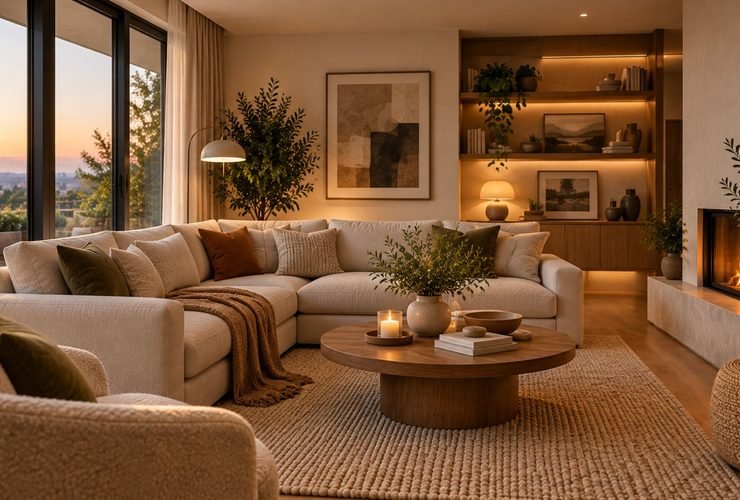
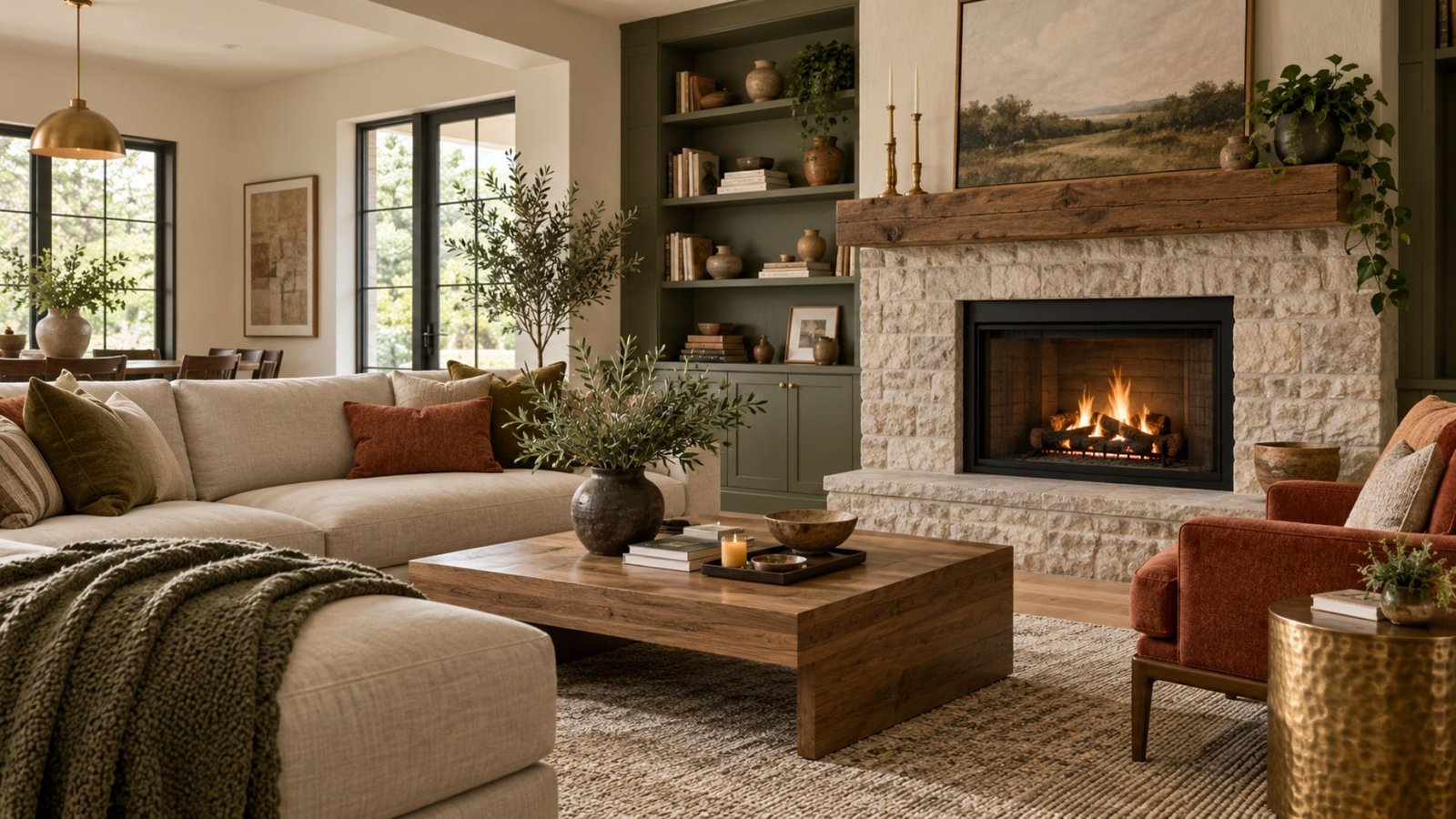
    Warm neutral living room layered with linen, oak, wool, stone and ceramic textures.

    Start with warm beige, cream or muted taupe and introduce contrast through wood, stone, linen, wool and darker accents.

    The reason this approach works is that the variation comes from texture and material, not from filling the room with unrelated colors.

    Room recipe: warm neutral walls + oatmeal or cream sofa + medium oak + textured rug + dark bronze or black details + soft, layered lighting.

    This is a useful direction if you like calm interiors but do not want the room to feel plain.

    2. Pair sage green with cream for softer color

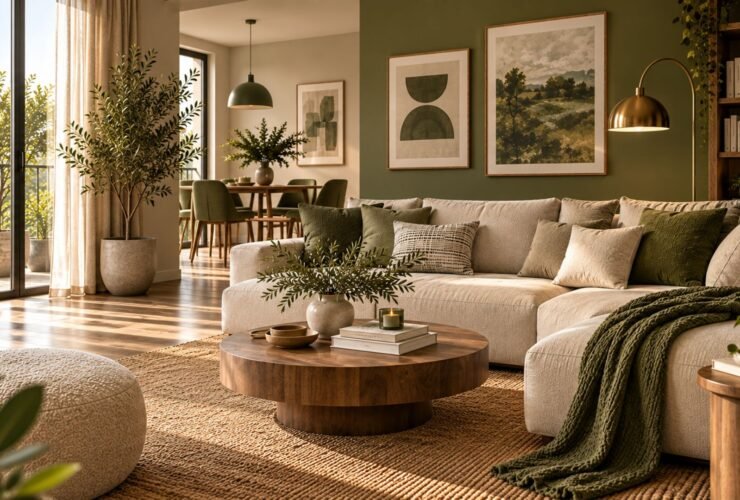
    Sage green and cream living room with warm oak furniture and restrained brass accents.

    Sage gives a room visible color without requiring the rest of the palette to become equally strong.

    Use cream or warm off-white across larger surfaces, bring sage into a wall, sofa or pair of chairs, then anchor the combination with natural wood. A small amount of black, aged brass or deep brown can keep the palette from becoming overly pale.

    This approach can move from traditional to contemporary simply by changing the furniture shapes.

    3. Use organic modern design when you want simplicity without starkness

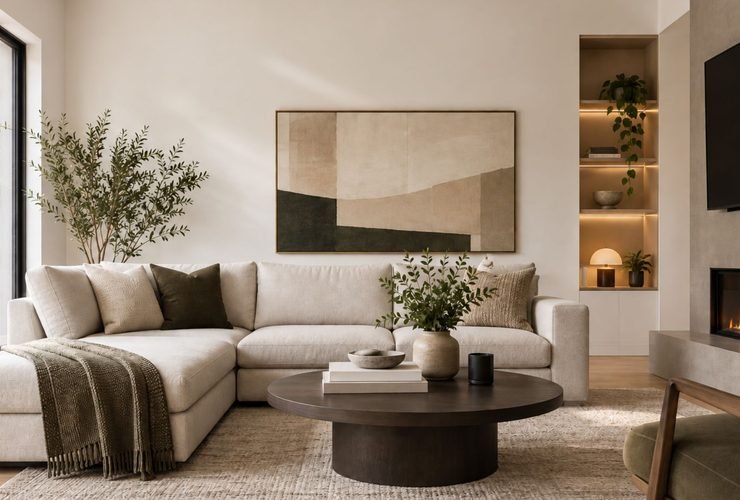
    Organic modern living room with curved seating, natural wood, stone, linen and a textured wool rug

    Organic-modern living rooms combine relatively simple furniture forms with tactile materials.

    Think linen upholstery, oak or walnut, stone, ceramic, woven textiles and softer curves rather than glossy finishes or heavy ornament.

    The key is restraint: a few substantial materials used repeatedly usually create more cohesion than a large number of small decorative objects.

    4. Make a cozy living room through layers, not clutter

    Cozy living room layered with a textured rug, curtains, soft textiles and warm lamp lighting.

    A cozy room does not need to be crowded.

    Begin with comfortable seating, then build depth through a substantial rug, curtains, cushions in different textures, a throw, and several pools of light instead of depending on one bright ceiling fixture.

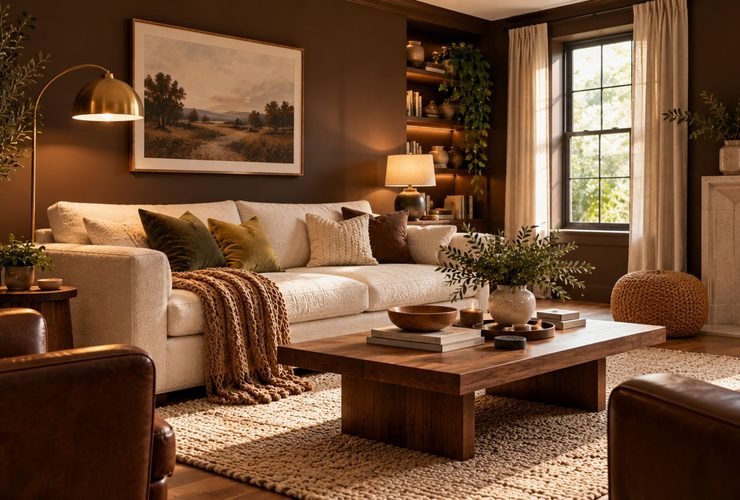
    A deeper wall color or richer upholstery can make the room feel more enveloping, but texture and lighting often contribute just as much as color.

    5. Let a small living room breathe

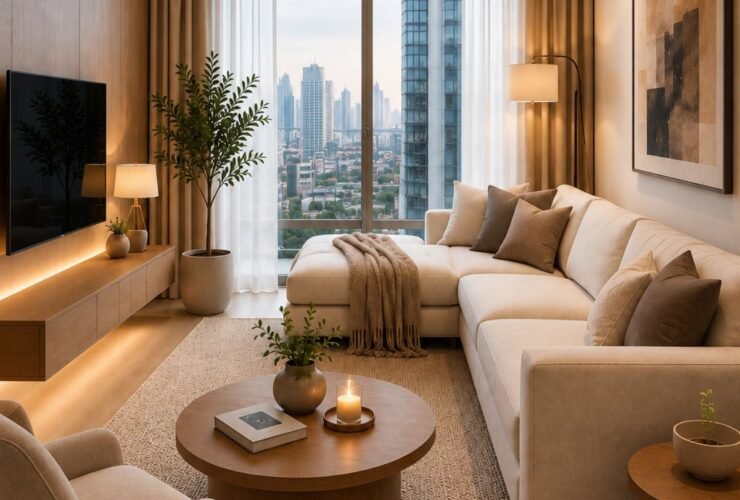
    Compact apartment living room with carefully scaled furniture and a clear walking path.

    In a compact room, furniture scale matters more than the number of decorating tricks you use.

    Choose pieces with dimensions that suit the actual floor plan. Preserve a clear route through the room, avoid blocking doors and key openings, and think carefully before adding furniture simply because a standard living room is “supposed” to have it.

    A small room may work better with a compact sofa and movable side table than with a sofa, two armchairs and a large coffee table.

    Use the room you have rather than trying to reproduce a larger-room layout at a smaller scale.

    6. Go dark without making every surface dark

    Dark living room with deep olive walls, a light sofa, walnut furniture and layered warm lighting.

    A dark living room can feel sophisticated and comfortable when the room still contains visual relief.

    Deep olive, brown, navy or charcoal walls can sit alongside a lighter sofa, pale stone, warm wood, metallic details or lighter artwork. Lamps become especially important because they create smaller areas of brightness after sunset.

    The result feels intentional rather than simply dim.

    7. Create a colorful living room with a controlled palette

    Colorful living room combining muted blue, terracotta and green with wood furniture and patterned textiles.

    Colorful does not have to mean random.

    Choose one or two colors to carry most of the visual weight, then allow artwork, textiles and objects to introduce smaller supporting colors.

    One useful approach is to begin with a patterned rug or artwork you genuinely like and pull several colors from it rather than selecting every color independently.

    This gives a collected room a common thread.

    8. Use Japandi ideas for a quieter living room

    Japandi-inspired living room with low furniture, pale wood, linen textiles and a muted earth-tone palette.

    Japandi-inspired rooms combine Scandinavian warmth with the restrained character associated with Japanese interiors.

    Low or visually light furniture, timber, muted earth tones, simple ceramics and uncluttered surfaces create much of the look.

    Avoid treating Japandi as a shopping checklist. The stronger idea is intentional reduction: fewer pieces, better spacing and materials that carry visual interest without needing excess decoration.

    Decide what the living room actually needs to do

    Now move from inspiration to execution.

    A living room used for evening television, children’s play and weekend guests has different requirements from a room used mainly for reading and conversation.

    Before buying anything, note:

    • who regularly uses the room;
    • the activities that need to happen there;
    • whether a TV, fireplace or view needs to influence the layout;
    • whether the room also needs dining, work, storage or play space.

    These constraints give you a much better starting point than choosing furniture in isolation.

    Plan the layout before buying major furniture

    Living room floor-plan diagram showing a focal point, conversation area and clear circulation route.

    Start with the fixed features: doors, windows, radiators or vents, fireplaces, built-ins and any location where a television genuinely needs to sit.

    Then define the main seating zone.

    A focal point can help organize the room, but it does not have to be a fireplace or television. It could be a large window, artwork, shelving or simply the relationship between the sofa and chairs.

    The important part is that the furniture appears to belong to the same conversation area rather than sitting independently around the perimeter.

    Preserve a comfortable path through the room and measure the narrowest circulation points before choosing oversized pieces. If accessibility is a specific requirement, use the standards applicable to your home and location rather than generic decorating measurements.

    Build a color palette without overcomplicating it

    A useful decorating guideline is the 60/30/10 approach: roughly 60 percent dominant color, 30 percent secondary color and 10 percent accent.

    Living room diagram illustrating the 60/30/10 color guideline with dominant, secondary and accent colors.

    It is a heuristic, not a mathematical rule.

    For example:

    Dominant: warm off-white walls and a large cream sofa.

    Secondary: medium oak and a muted green rug.

    Accent: dark bronze lighting and small rust-colored details.

    The value of the guideline is not the precise percentages. It is the idea that colors should have different visual roles instead of competing equally for attention.

    You can also ignore the formula entirely if another palette structure better suits the room.

    Current 2026 color signals include renewed attention to warm, earthy neutrals, but the broader direction is not simply “beige is back.” More expressive color, vintage influence, pattern and personality are also prominent.

    Choose the palette that suits the room and your taste rather than decorating around a forecast.

    Choose the major furniture by scale and function

    There is no universal checklist that every living room needs.

    Start with the pieces that support the activities you identified earlier.

    For many rooms that means a sofa first. After that, the right combination might include an armchair, coffee table, side table, ottoman, media unit, shelving or additional flexible seating.

    Sofa

    Measure the room and access route before ordering.

    Look at the sofa’s full width and depth, not simply its seating capacity. A deep sectional can be comfortable but may leave a compact room with little usable circulation.

    Coffee table

    A coffee table should relate comfortably to the seating around it and remain easy to reach without blocking movement.

    The often-used suggestion that a coffee table be around two-thirds the sofa’s length can be a useful visual starting point, but it is not a requirement. Room shape, sectional configuration and how the table will be used matter more than following the ratio exactly.

    Rug

    Treat the rug as part of the furniture arrangement rather than an isolated rectangle in the middle of the floor.

    A common approach is to choose a rug large enough for at least the front portion of the main seating to overlap it, but other arrangements can work depending on room size and furniture placement.

    What matters visually is that the rug relates to the seating group instead of looking disconnected from it.

    Layer the lighting

    Living room diagram showing ambient, task and accent lighting layers.

    A single ceiling fixture may provide enough general illumination, but it rarely gives a living room much flexibility after dark.

    Think in layers:

    Ambient light provides the general illumination.

    Task light supports something specific, such as reading beside a chair.

    Accent light adds localized brightness to artwork, shelving or a darker corner.

    A floor lamp beside a chair and a table lamp on the opposite side of the room can make the lighting feel much more dimensional than simply increasing the brightness overhead.

    For relaxing spaces, many people prefer warmer-looking light to very cool white light. The right choice still depends on the finishes in the room, the amount of daylight and personal preference.

    Finish the room with texture before adding more objects

    When a living room feels unfinished, the missing ingredient is not necessarily more décor.

    First look for contrast in:

    • fabric texture;
    • wood or stone;
    • curtain softness;
    • rug texture or pattern;
    • lighting;
    • artwork;
    • plants or natural forms.

    A cream sofa against cream walls can still feel rich if linen, wool, timber, ceramic and subtle tonal variation create depth.

    This is often more effective than filling every surface with accessories.

    Use curtains to shape the architecture

    Curtains affect more than privacy.

    They introduce vertical lines, soften hard surfaces and influence how tall or wide a window appears.

    Choose their position and fullness in relation to the actual window and wall rather than automatically copying a photograph from a room with different proportions.

    In rental spaces where installing hardware is limited, alternative window treatments may be more practical.

    Treat wall art as part of the composition

    Artwork should relate to the furniture below or around it.

    One large piece can create a cleaner focal point; a gallery arrangement can introduce more personality and variety.

    Before making multiple holes, lay a gallery arrangement on the floor or mock it up using paper templates.

    The objective is not perfect symmetry. It is a composition whose scale feels connected to the wall and surrounding furniture.

    Common living room problems and what to check first

    Comparison showing how a small rug and a larger rug change the visual connection between living room seating.

    The room feels scattered

    Check whether the seating has a clear relationship and whether the rug, furniture and focal point form one zone.

    The room feels flat

    Look for variation in texture, height and lighting before adding another color.

    The room feels crowded

    Remove or reposition one substantial item before buying smaller furniture to compensate.

    The room feels empty

    Do not automatically add more decorative objects. First check whether the existing furniture is too small for the room or spread too far apart.

    Everything matches

    Introduce contrast through one different wood tone, aged or contemporary piece, textile, metal finish or artwork rather than replacing the entire room.

    Living room ideas on a budget

    Start with changes that cost nothing.

    Rearrange the furniture.

    Remove pieces that no longer help the room.

    Move lamps between rooms.

    Try existing art in a new position.

    Then identify the single purchase that solves the biggest visual or functional weakness.

    That might be a larger rug, a better floor lamp, curtains, one accent chair or storage.

    A focused improvement is usually more useful than buying several inexpensive accessories simply because the room feels unfinished.

    A simple order for redesigning your living room

    If the number of decisions feels overwhelming, use this sequence:

    1. Define how the room needs to function.
    2. Measure the room and fixed features.
    3. Choose a visual direction.
    4. Plan the main furniture layout.
    5. Establish the color palette.
    6. Choose the major furniture.
    7. Select the rug and window treatments.
    8. Plan several useful sources of light.
    9. Add artwork and textiles.
    10. Edit the room before adding more décor.

    The order is intentionally flexible. A rug, artwork or existing sofa may already dictate the palette, for example. The point is to make the expensive and space-defining decisions before filling the room with finishing pieces.

    Living room ideas FAQ

    Where should I start when redesigning a living room?

    Start by defining how the room needs to function and measuring the space. Then choose a visual direction and plan the main furniture layout before making large purchases.

    How can I make a living room feel more cohesive?

    Repeat a small number of colors, materials or finishes across the room and make sure the main furniture belongs to a clear seating arrangement. Cohesion usually comes from relationships between pieces, not from buying a matching set.

    How can I improve my living room without replacing all the furniture?

    Reconsider the layout first. Then look at the rug, lighting, curtains, artwork and excess furniture. Changing one weak layer can have more impact than replacing everything.

    Are warm-neutral living rooms still popular in 2026?

    Warm earthy neutrals remain visible in 2026 color forecasting, including Sherwin-Williams’ selection of Universal Khaki as its Color of the Year. At the same time, current interior coverage also emphasizes richer color, pattern, vintage pieces and more individualized rooms, so warm neutrals are one direction rather than the only current look.

    References & sources

    Sherwin-Williams. Color of the Year 2026: Universal Khaki SW 6150. Sherwin-Williams. Accessed September 2026.
    Sherwin-Williams 2026 Color of the Year. ⁠

    Petreycik C. The 60-30-10 Rule Is the Key to Choosing the Perfect Color Scheme. HGTV Magazine. Updated May 15, 2026.HGTV 60-30-10 color guide. ⁠

    About the author

    Lauren Johnson writes about interior design, home décor, color, and practical room styling for Wallsaide. She focuses on helping readers understand why design choices work and how to recreate beautiful, functional spaces at home.

  • 15 Soft Lavender and Off-White Modern Apartment Ideas for a Calm & Stylish Home

    15 Soft Lavender and Off-White Modern Apartment Ideas for a Calm & Stylish Home

    Soft lavender and off-white are a beautiful combination for creating a modern apartment that feels calm, elegant, warm, and effortlessly stylish.

    Lavender brings a gentle touch of color, while off-white keeps the space bright, airy, and sophisticated.

    The key is to avoid using lavender everywhere. Instead, treat off-white as the foundation and introduce soft lavender through furniture, cushions, curtains, artwork, rugs, bedding, and carefully chosen accessories.

    1. Soft Lavender and Off-White Living Room

    Whether you live in a small apartment or a spacious modern home, these 15 soft lavender and off-white apartment ideas can help you create a cohesive interior that feels peaceful without looking overly pastel.

    The living room is the perfect place to introduce a soft lavender color palette.

    Start with an off-white sofa and warm neutral flooring. Add lavender through accent cushions, a textured throw, artwork, or a single accent chair. Light wood furniture can add warmth and prevent the room from feeling too cool.

    For a sophisticated look, combine lavender with beige, cream, natural wood, and subtle brass details.

    Design Tip: Keep larger furniture pieces neutral and use lavender mainly as an accent color. This makes it easier to change your décor later.


    2. Elegant Lavender and Off-White Bedroom

    A bedroom designed around soft lavender can instantly create a relaxing atmosphere.

    Choose an off-white upholstered bed and layer it with cream, white, and muted lavender bedding. Add two lavender cushions or a lavender throw at the foot of the bed.

    Light oak nightstands and warm bedside lamps can make the room feel more inviting.

    For a modern finish, choose simple artwork with lavender, beige, and soft gray tones rather than heavily patterned designs.

    Design Tip: Use different textures—linen, cotton, boucle, velvet, and woven materials—to make a soft color palette feel more luxurious.

    3. Modern Lavender Kitchen

    You don’t need an entirely lavender kitchen to embrace this trend.
    One of the most stylish approaches is to use off-white cabinets as the main foundation and introduce muted lavender on an island, lower cabinets, backsplash accessories, or small decorative elements.

    Pair lavender with light marble or quartz surfaces and natural wood accents.

    Brass or brushed-metal hardware can add a subtle upscale touch.

    Design Tip: Choose a dusty or muted lavender instead of an intense purple for a more contemporary appearance.

    4. Soft Lavender Dining Area

    Create a stylish dining space by pairing an off-white or light oak dining table with lavender upholstered dining chairs.

    If you prefer a neutral dining room, keep the chairs cream and introduce lavender through the table runner, napkins, artwork, or centerpiece.

    A sculptural pendant light above the dining table can become the focal point.

    Add a simple vase filled with greenery to bring a natural element into the room.

    5. Calm Lavender Bathroom

    The bathroom is another excellent space for subtle lavender accents.

    Keep the main surfaces off-white, cream, or warm stone. Then introduce lavender through towels, bath mats, artwork, accessories, or a muted lavender vanity.

    A rounded mirror, minimalist lighting, and brushed brass fixtures can give the room a contemporary feel.For a spa-inspired atmosphere, add a small plant and natural wood accessories.

    Design Tip: Avoid combining too many pastel colors. Let lavender be the main accent.

    6. Soft Lavender Entryway

    Your entryway sets the mood for the entire apartment.

    Use warm off-white walls as the backdrop and add a slim console table in light wood.

    A lavender upholstered bench can provide a subtle pop of color.

    Complete the look with a rounded mirror, minimalist artwork, and a small ceramic vase.

    If your apartment has limited space, use wall-mounted storage to keep the entrance uncluttered.

    7. Lavender and Off-White Home Office

    A home office can benefit from the calming qualities of lavender without looking too feminine or overly decorative.

    Choose an off-white desk or light wood workstation and add a muted lavender desk chair.

    Lavender artwork, a small desk lamp, and soft textiles can continue the color palette.

    Keep storage simple and organized to maintain a clean modern appearance.

    Design Tip: Combine lavender with warm wood and black or dark metal details for more visual balance.

    8. Cozy Lavender Reading Corner

    Turn an unused corner of your apartment into a relaxing reading nook.

    Place a comfortable off-white lounge chair beside a small wooden side table.

    Add a lavender cushion and soft throw for color.A floor lamp with warm lighting can make the area especially inviting in the evening.

    Add a small bookshelf or floating shelves for books and decorative objects.

    9. Soft Lavender Hallway

    Hallways don’t need to be boring.

    An off-white hallway can be enhanced with a subtle lavender runner rug or a series of minimalist lavender-toned prints.

    Use warm lighting to make the space feel welcoming rather than stark.

    A narrow console or floating shelf can provide a place for small decorative accessories without taking up too much floor space.

    10. Lavender Accent Wall living room

    If you want a stronger use of lavender, consider creating one accent wall.

    Choose a soft, dusty lavender rather than a highly saturated purple. The remaining walls can stay off-white to maintain brightness.

    An accent wall works particularly well behind a bed, sofa, desk, or dining table.

    Design Tip: Before painting, test the color in both natural daylight and evening lighting. Lavender can look noticeably different depending on the light.

    11. Off-White Sofa With Lavender Accents

    If you’re decorating a rental apartment or prefer flexible décor, keep your major furniture pieces neutral.

    An off-white sofa can become the foundation for countless color combinations.

    Add lavender cushions in different textures and patterns, then introduce one or two complementary shades such as beige, sage, or warm brown.

    A lavender throw casually placed over one side of the sofa can make the space feel relaxed and lived-in.

    12. Lavender Curtains and Soft Textiles

    Textiles are one of the easiest ways to introduce lavender without making permanent changes.

    Try soft lavender curtains with off-white walls and neutral furniture.

    You can repeat the color through cushions, bedding, rugs, or a small upholstered chair.

    For a sophisticated apartment, choose muted lavender fabrics rather than bright purple.Layering different textures can also make a simple color palette feel much richer.

    13. Modern Lavender Balcony

    Don’t forget about your outdoor space.

    Create a calm balcony using off-white outdoor cushions, natural wood furniture, and lavender textiles.

    Add potted greenery to make the space feel connected to nature.

    A small outdoor rug can visually define the seating area, while warm lantern-style lighting creates an inviting evening atmosphere.

    For a small balcony, choose compact furniture and vertical planters to save floor space.

    14. Lavender Gallery Wall

    Artwork is a simple way to introduce color while keeping the overall apartment sophisticated.

    Create a gallery wall using abstract artwork featuring muted lavender, cream, beige, taupe, and subtle earthy tones.

    Use matching or coordinated frames to give the collection a cohesive appearance.

    This idea works particularly well above a sofa, bed, dining table, or hallway console.

    Design Tip: Repeat the same lavender shade elsewhere in the room so the artwork feels connected to the overall design.

    15. Create a Cohesive Lavender and Off-White Whole Apartment

    The most effective way to use this color combination is to create a consistent visual flow from room to room.

    You don’t need every room to look identical. Instead, repeat a few design elements throughout the apartment:

    Off-white: main walls and larger furniture

    Soft lavender: accent color

    Light wood: warmth and natural texture

    Cream and beige: supporting neutrals

    Brass or black: small modern accents

    Greenery: natural contrast

    Warm lighting: cozy atmosphere

    For example, you could use lavender cushions in the living room, lavender bedding in the bedroom, lavender accessories in the bathroom, and lavender artwork in the hallway.

    This creates a connected interior without making the entire apartment look overly coordinated.

    Off-white: main walls and larger furnitureSoft lavender: accent colorLight wood: warmth and natural textureCream and beige: supporting neutralsBrass or black: small modern accentsGreenery: natural contrastWarm lighting: cozy atmosphereFor example, you could use lavender cushions in the living room, lavender bedding in the bedroom, lavender accessories in the bathroom, and lavender artwork in the hallway.This creates a connected interior without making the entire apartment look overly coordinated.

    How to Make Lavender and Off-White Look Expensive

    A sophisticated color palette is less about expensive furniture and more about balance, texture, and consistency.

    1. Choose muted lavender

    Dusty, grayish, or slightly warm lavender usually feels more sophisticated than highly saturated purple.

    2. Use off-white as your foundation

    Off-white keeps the apartment bright and gives lavender room to stand out.

    3. Add natural materials

    Light oak, linen, cotton, woven baskets, ceramic pieces, and natural rugs can make the palette feel warm rather than cold.

    4. Layer textures

    Combine smooth surfaces with boucle, linen, velvet, knitted fabrics, and woven materials.

    5. Keep accessories intentional

    Instead of filling every shelf with lavender objects, choose a few carefully placed pieces.

    Best Colors to Pair With Soft Lavender

    Soft lavender works beautifully with several neutral and natural shades.

    Off-white + Lavender: Clean and elegant

    Cream + Lavender: Warm and cozy

    Beige + Lavender: Sophisticated and understated

    Light Oak + Lavender: Natural and modern

    Sage Green + Lavender: Botanical and calming

    Taupe + Lavender: Rich and refined

    Brass + Lavender: Elegant and luxurious

    Soft Gray + Lavender: Contemporary and minimalist

    For a modern apartment, I recommend using off-white + lavender + light wood as the primary combination, with one small accent such as brass or sage green.

    Final Thoughts

    A soft lavender and off-white modern apartment can feel incredibly stylish without becoming overwhelming.

    The secret is to let off-white create the foundation while lavender adds personality through carefully selected accents.

    From a cozy lavender living room and elegant bedroom to a modern kitchen, calming bathroom, stylish home office, and inviting balcony, these ideas can help you create a home that feels peaceful, cohesive, contemporary, and Pinterest-worthy.

    If you’re starting from scratch, begin with neutral furniture and walls, then gradually introduce lavender through textiles, artwork, lighting, and accessories.

    This approach gives you flexibility while keeping the entire apartment visually connected.

  • 11 Olive Green Modern Apartment Ideas for a Cozy and Stylish Home

    11 Olive Green Modern Apartment Ideas for a Cozy and Stylish Home

    Olive green is one of those interior colors that can instantly make a home feel warmer, calmer, and more sophisticated. From deep green walls and built-in cabinetry to natural wood, woven textures, and warm lighting, this shade works beautifully in modern apartments.

    The secret to using olive green successfully is balance. Pair it with warm neutrals, natural materials, soft textiles, plants, brass or wood accents, and layered lighting to create a space that feels modern without becoming cold.

    If you’re looking for olive green modern apartment ideas, these inspiring rooms show how the color can work throughout a home—from bedrooms and entryways to living rooms, dining areas, storage spaces, and outdoor patios.

    1. Olive Green Modern Kid’s Bedroom

    This dreamy olive green bedroom combines playful details with a sophisticated modern color palette.

    The deep olive green accent wall creates a cozy backdrop for the illuminated moon, stars, clouds, and soft teddy-bear decor. Built-in storage around the bed keeps the room organized while adding a custom-designed feel. Natural wood flooring, botanical patterns, warm lighting, and soft green bedding make this a beautiful example of a cozy olive green bedroom.

    Olive Green Kid’s Bedroom With Built-In Storage

    For a more contemporary children’s room, combine olive green cabinetry with vertical wall paneling and warm accent lighting. The built-in shelves provide practical storage while creating space to display books, toys, plants, and artwork.

    A mountain-inspired headboard adds character without making the room feel overly themed. This is a great modern green bedroom idea for families who want children’s decor that can grow with the child.

    2.Olive Green Staircase and Entryway

    An olive green hallway can transform an ordinary staircase into a striking design feature. Here, warm wooden stair treads contrast beautifully with the deep green walls and dark vertical paneling.

    An oversized arched mirror with soft backlighting adds depth while making the entryway feel brighter and more elegant. Plants, natural wood, and warm lighting complete this olive green entryway decor idea.

    Olive Green Entryway With Natural Textures

    A small apartment entryway can feel much more welcoming when olive green is paired with warm wood and natural woven textures. The built-in bench provides a convenient place to sit while the console table creates space for lighting, plants, and everyday essentials.

    A large mirror helps visually expand the hallway and reflects natural light from the glass-paneled door. This combination creates a cozy modern entryway that feels stylish but practical.

    3. Olive Green Modern Living Room

    Use olive green as the foundation for a sophisticated living room by combining it with wood, greenery, neutral flooring, and soft ambient lighting.

    The large illuminated botanical wall feature becomes the focal point without overwhelming the room. A floating wooden console adds warmth while recessed shelves provide an opportunity to display decorative objects. This look is perfect for anyone searching for olive green living room ideas with a modern, relaxing atmosphere.

    4.Olive Green Dressing Room and Vanity

    Olive green cabinetry can make a dressing room feel luxurious while still maintaining a calm, natural atmosphere. Floor-to-ceiling storage keeps beauty products and accessories organized, while integrated shelf lighting creates a boutique-inspired appearance.

    The oversized arched mirror and upholstered green chair add softness and elegance to the space. Brass hardware and warm lighting provide just enough contrast for a polished olive green vanity room with Unique mirror.

    5. Olive Green Utility and Storage Room

    A practical storage room doesn’t have to look boring. Olive green built-in cabinets, open shelving,woven baskets and warm wood countertops turn this utility space into an organized and attractive part of the home.

    Matching containers help reduce visual clutter while open shelves keep everyday essentials easy to reach. This is an excellent olive green storage room idea for apartments that need stylish organization.

    6. Olive Green Rooftop Apartment Patio

    Take the olive green palette outdoors by combining green seating, large planters, natural textures, and warm string lights. This rooftop patio feels like an extension of the interior, with comfortable seating arranged around a low coffee table.

    Layered plants add privacy and create a lush atmosphere while the city skyline adds a modern urban touch. It’s an inspiring modern apartment balcony and rooftop decor idea for relaxing or entertaining.

    7.Olive Green Outdoor Courtyard

    For a more intimate outdoor space, use olive green furniture against earthy walls and surround the seating area with layered greenery. Warm string lights, lanterns, candles, and a built-in fireplace create a welcoming evening atmosphere. Woven poufs and textured outdoor rugs add comfort while keeping the natural aesthetic consistent.

    This olive green outdoor living space shows how a small patio or courtyard can become a beautiful extension of the home.

    8.Olive Green Dining Room With Natural Wood

    Olive green walls provide an elegant backdrop for a warm wooden dining table and upholstered dinning chairs.

    The combination of dark green, natural wood, botanical artwork, and soft pendant lighting creates an intimate dining environment. Keep the table styling simple with neutral dinnerware, greenery, candles, and natural textures.

    This is a beautiful way to bring olive green interior design into a dining room without making it feel too dark.

    9. Olive Green Modern Kitchen With Natural Wood Accents

    The kitchen is one of the best places to experiment with olive green because the color pairs naturally with wood and neutral materials. Use olive green cabinets as the main feature and balance them with cream, beige, warm white, or natural stone surfaces.

    Wooden shelves and cutting boards can soften the look while brass or brushed-metal hardware adds a refined finish. For a smaller apartment, keeping the upper walls lighter can help the olive green kitchen feel spacious rather than heavy.

    10. Olive Green Bedroom for a Cozy Retreat

    An olive green bedroom can instantly create a calm, cozy, and sophisticated atmosphere.
    The bedroom shown here combines olive green walls and upholstery with cream bedding, natural wood furniture, botanical artwork, warm lighting, and soft textiles.

    The layered green and neutral bedding makes the space feel comfortable without looking overly decorated.

    11.Olive Green Aesthetic Bathroom

    Don’t overlook the bathroom when decorating with olive green.
    The olive green bathroom shown here combines green cabinetry, green shower tiles, warm brass fixtures, a rounded mirror natural textures, plants, and soft candlelight. The result is a spa-inspired bathroom that feels both modern and cozy.

    Try pairing olive green with:

    Cream or beige countertops
    Brass or antique gold fixtures
    Natural wood shelves
    Botanical plants
    Woven baskets
    Textured bath mats
    Warm lighting

    This combination gives even a small apartment bathroom a luxurious, relaxing feel.

    How to Make Olive Green Work in a Modern Apartment

    The beauty of olive green is its versatility. It can be used as a dramatic wall color, a subtle cabinet shade, an upholstery color, or simply as an accent through cushions, rugs, artwork, and plants.

    Pair olive green with warm neutrals

    Cream, beige, taupe, warm white, and natural wood help soften deeper green tones. This combination is particularly useful in apartments where you want a cozy atmosphere without making the room feel visually crowded.

    Add natural materials

    Wood, rattan, jute, linen, woven baskets, and ceramic accessories work especially well with olive green. These materials introduce texture and prevent a green room from looking flat.

    Use layered lighting

    Warm pendant lights, table lamps, recessed lighting, wall sconces, and LED shelf lighting can completely change the appearance of an olive green room. Warm illumination brings out the earthy character of the color.

    Mix different shades of green

    You don’t have to use exactly the same olive green everywhere. Mixing olive, sage, moss, and muted forest green can create depth while maintaining a cohesive color palette.

    Keep the accessories simple

    Olive green already makes a strong visual statement. Balance it with neutral fabrics, simple artwork, natural wood, and a few carefully selected decorative pieces rather than filling every surface.


    Final Thoughts

    Olive green is a beautiful choice for anyone who wants a modern apartment to feel warm, grounded, and inviting. Whether you use it on bedroom walls, built-in cabinets, a living room feature wall, an entryway, or outdoor furniture, the color works especially well with natural textures and warm lighting.

    The ideas above show that olive green home decor can be playful, elegant, minimalist, luxurious, or rustic depending on the materials and accessories you pair with it. Start with one room or one feature wall, then repeat small touches of the same color throughout your home for a cohesive modern interior.

    Which olive green apartment idea is your favorite? Save this article for your next home makeover and share it with someone who loves cozy modern interiors.

  • 21 Best Living Room Ideas for 2026: Cozy, Modern & Stylish

    21 Best Living Room Ideas for 2026: Cozy, Modern & Stylish

    The living room is becoming more than just a place for the television and sofa. In 2026, the focus is shifting toward spaces that feel comfortable, personal, functional and beautifully lived-in.

    Current design trends emphasize deeper comfort, layered materials, natural elements, interesting shapes and personality rather than perfectly coordinated rooms.

    From warm minimalist interiors to colorful spaces, olive green accents and cozy reading corners, these 21 living room ideas for 2026 will help you create a space that feels stylish without sacrificing comfort.

    1. Layered Comfort Living Room

    The layered comfort approach combines different textures, materials and lighting to create a room that feels inviting rather than overly styled.

    Think soft sofas, linen throws, textured cushions, rugs, ceramics and warm lamps.

    Mixing textures is particularly useful when working with a neutral color palette because it adds depth without requiring lots of color.

    2. Warm Neutral Living Room

    Warm neutrals remain a beautiful foundation for a timeless living room.

    Instead of relying on cool white and gray, combine cream, beige, warm white, taupe and natural wood.

    Add textured cushions, a large rug and soft lighting to prevent the room from feeling flat.

    3.Olive Green Living Room

    Olive green is an excellent choice for homeowners who want color without an overly bright interior.

    Use olive green through an accent chair, sofa, cushions, curtains or a feature wall. Pair it with cream, natural wood and brass for a sophisticated earthy look.

    Muted and muddy greens are among the living-room colors being highlighted for 2026.

    4. Earthy Modern Living Room

    Bring nature indoors with wood, stone, woven materials, earthy colors and indoor plants.

    A neutral sofa combined with wooden furniture, a jute-style rug and ceramic accessories can create a modern organic atmosphere.

    Natural materials and stronger indoor-outdoor connections are increasingly valued in contemporary home design.

    5. Curved Sofa Living Room

    Soft curves can make a living room feel more relaxed and welcoming.

    Choose a curved or rounded sofa and balance it with a round coffee table, curved floor lamp or organic-shaped mirror.

    Keep the rest of the room relatively simple so the furniture becomes the focal point.

    6.Cozy Reading Corner

    Turn an unused corner into a dedicated reading space with a comfortable chair, small side table and warm floor lamp.

    Add a throw blanket and a small bookshelf for an inviting finishing touch. This works particularly well in apartments where every corner needs to serve a purpose.

    7.Conversation-Focused Living Room

    Instead of arranging every chair toward the television, create a seating arrangement that encourages conversation.

    Place sofas and accent chairs facing one another around a central coffee table. This makes the room feel more social and works especially well when entertaining guests.

    The conversation-first living room is gaining attention as designers focus more on connection and intentional use of space.

    8.Modern Minimalist Living Room

    Minimalism in 2026 doesn’t have to mean an empty white room.

    Choose fewer but more meaningful pieces: a comfortable sofa, large rug, sculptural table, statement artwork and one or two plants.

    The result is clean without feeling cold.

    9.Vintage & Modern Mix

    Combine contemporary furniture with vintage-inspired accessories for a room that feels collected rather than overly coordinated.

    Try a modern sofa with an antique-style rug, vintage artwork, wooden side tables or decorative ceramics.

    Current interiors are increasingly mixing modern pieces with vintage and traditional details.

    10. Natural Wood Living Room

    Wood immediately adds warmth to a living room.

    Use oak or other natural-looking wood finishes for coffee tables, shelving, cabinets or accent furniture.

    Combine them with cream upholstery and soft textiles.This approach works particularly well with organic-modern interiors.

    11.Colorful Living Room

    2026 is not only about neutrals.

    Introduce color through a statement sofa, colorful artwork, patterned cushions or an accent chair.

    If you’re nervous about using bold colors, keep the walls neutral and introduce color through removable accessories.

    12. Moody Living Room

    A darker living room can feel incredibly cozy when balanced correctly.

    Try deep green, blue, brown or charcoal on the walls, then add warm lamps, lighter upholstery and natural wood to keep the room from feeling too heavy.

    13. Small Apartment Living Room

    For a small apartment, prioritize furniture that performs more than one function.

    Choose a compact sofa, nesting tables, storage ottoman, wall-mounted shelves and a large mirror.

    Keep pathways clear so the room feels more spacious.

    14. Large Area Rug Living Room

    A properly sized rug can visually connect the seating area and make the room feel more intentional.

    Rather than choosing a tiny rug that floats underneath the coffee table, look for a size that allows the main furniture pieces to sit comfortably on or around it.

    15. Statement Lighting Living Room

    Lighting can completely transform the mood of a living room.Combine overhead lighting with table lamps, floor lamps and accent lighting.

    A sculptural pendant or statement floor lamp can also become an important decorative feature.

    Layered lighting is currently being recommended as a key way to make interiors feel warmer and more welcoming.

    16. Built-In Storage Living Room

    Built-in shelving can combine storage and decoration in one feature.

    Use shelves for books, artwork, ceramics and plants while keeping closed cabinets for items you don’t want visible.

    Built-in storage and millwork are also being revisited as design elements that combine functionality with visual cohesion.

    17. Biophilic Living Room

    Bring nature inside with plants, natural wood, stone, woven textures and views toward outdoor areas.

    Even a few plants placed strategically around the room can make the space feel fresher and more connected to nature.

    18. Soft Blue Living Room

    Soft blue is another beautiful option for 2026.

    Use pale blue walls or upholstery with cream, warm white and natural wood. For a deeper look, layer different blue shades rather than using one flat tone.

    19. Cozy Boho Living Room

    Create a relaxed boho-inspired room with woven baskets, textured cushions, natural wood, plants and patterned textiles.

    Keep the color palette controlled with earthy neutrals, olive, terracotta or muted blue so the room feels curated rather than cluttered.

    20. Indoor-Outdoor Living Room

    If your home has large windows, French doors, a balcony or patio, use the connection to your advantage.

    Choose similar colors and natural materials indoors and outdoors so the two spaces visually flow together.

    Indoor-outdoor connections and natural materials are among the features receiving renewed attention in contemporary residential design.

    21. Personalized Living Room

    The best 2026 living rooms don’t necessarily look perfectly matched.

    Display books you actually enjoy, meaningful artwork, travel finds, plants, family photographs and objects with personality.

    The goal is to create a room that looks collected, comfortable and genuinely yours rather than copied from a showroom.

    How to Make Your Living Room Look More Expensive

    You don’t necessarily need expensive furniture to create an elevated interior.

    Try these simple changes:

    1. Use a larger rug

    It can visually anchor the seating area.

    2. Layer your lighting

    Combine floor lamps, table lamps and ambient lighting rather than relying entirely on one ceiling fixture.

    3. Mix textures

    Combine linen, wood, ceramics, woven materials and soft upholstery.

    4. Add greenery

    Plants bring color and natural character.

    5. Edit your surfaces

    Avoid filling every shelf and coffee table with accessories. Thoughtful editing can make a room feel more sophisticated.

    2026 Living Room Color Palette Ideas

    For Wallsaide readers who want a quick starting point, try:

    🌿 Earthy

    Olive green + cream + natural wood

    🤎 Warm neutral

    Beige + ivory + taupe + walnut

    💙 Soft contemporary

    Light blue + warm white + oak

    🧡 Earthy colorful

    Terracotta + cream + olive

    🤍 Organic modern

    Warm white + beige + wood + stone

    How to Choose the Right Living Room Style

    Before buying new furniture, think about how you actually use the room.

    If you entertain frequently, prioritize conversational seating.If you have a small apartment, prioritize multifunctional storage.I

    If relaxation is the main purpose, choose deeper seating, soft textiles and warm lighting.

    If you love changing your décor seasonally, keep larger furniture neutral and introduce color through pillows, throws, rugs and artwork.

    That balance between beauty and function is especially relevant to 2026 interiors, where comfort and livability are receiving more emphasis.

    Final Thoughts

    The best living room ideas for 2026 aren’t about following one strict decorating style. They’re about creating a space that feels comfortable, functional and personal.

    Whether you prefer olive green interiors, warm minimalism, earthy textures, colorful accents, modern furniture or vintage-inspired details, the key is to combine pieces thoughtfully.

    Start with a comfortable foundation, add natural materials and layered lighting, then introduce colors and accessories that reflect your personality.

    Your living room doesn’t need to look perfect. It needs to feel like home.